Family Trochilidae
Bronzy Hermit
Glaucis aeneus
In Spanish: Ermitaño Bronceado
- Resident
A bronze-backed hermit hummingbird of Heliconia and stream edges in the lowlands.
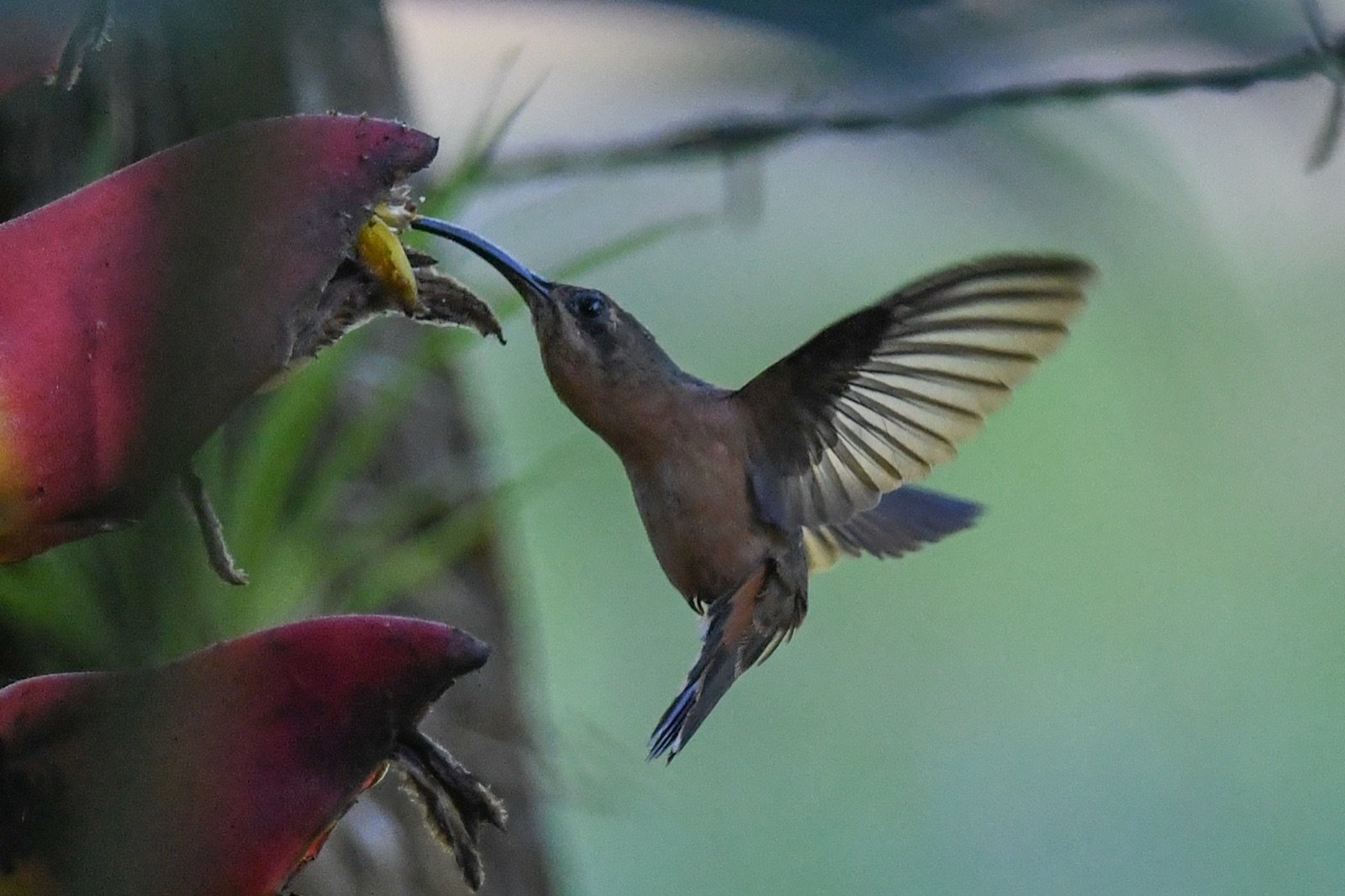
The Bronzy Hermit (Ermitaño Bronceado) is a medium-sized hermit hummingbird, about 10.5 cm long, with a bronzy green back and a moderately downcurved bill. In Costa Rica it is a widespread resident, common in some places in the Caribbean lowlands and the southern Pacific lowlands.
It is a bird of tangles: second growth, stream edges, swampy ground and forest edge, where Heliconia and banana flowers draw it in. On a trip we build, you can meet it on lowland Caribbean forest days in the La Selva area, and around Heliconia and banana plantings, forest edges and streamsides in the southern Pacific lowlands.
Costa Rica also has a special claim on it: the species was first described from a specimen collected here, so the country is its type locality.
How to find it
Start with Heliconia and banana plantings, tangled stream edges and the edge of lowland forest, where it comes for nectar. Look low, since the nest is hung at 0.5 to 6 m. Stand quietly near flowering Heliconia and watch for a bird hovering at leaves, twigs or spider webs. In thickets along streams or forest edges, listen for the high song of a male displaying alone. At La Selva, in the Caribbean lowlands, a Field Guides group saw it a couple of times in the forest. The southern Pacific lowlands are the other area to try.
How to recognise it
Look for a medium-sized hermit, about 10.5 cm long, with a moderately downcurved bill.
The field marks, one by one:
- Back: bronzy green.
- Bill: black above, dull yellowish below.
- Underparts: pale cinnamon-rufous, brightest on the chest and sides.
- Face: dark, with a buff stripe behind the eye.
- Tail: rounded, with a rufous base, a black band and a white tip.
- Feet: flesh-orange.
Young birds have a duller bronze throat and chest with buff-edged feathers. Buff edges also show on most feathers of the upperparts, including the sides of the crown.
Behaviour and diet
Bronzy Hermits live alone. Males sing and display separately from one another, usually in thickets along forest edges or streams.
For food, it visits banana and Heliconia flowers most often, taking nectar from them and from other flowers. It also eats small arthropods, usually picked while hovering at spider webs, leaves and twigs, and sometimes caught in flight.
The nest is a small cup of plant fibres, fungal threads and spider web, hung under a Heliconia or banana leaf at 0.5 to 6 m.
Where it lives
In Costa Rica the Bronzy Hermit prefers second growth, tangled stream edges, swampy areas with tall grass or herbs, and forest edge. It is a lowland bird, climbing to about 300 m and sometimes reaching 750 m in the General and Coto Brus valleys.
It is common in some places in the Caribbean lowlands and the southern Pacific lowlands. A Costa Rican natural history entry lists it in these conservation areas: Cordillera Volcanica Central, Osa, Pacifico Central, Tortuguero, Guanacaste, Huetar Norte, Amistad Pacifico, Amistad Caribe and Arenal.
When to see it
Breeding is given as January to August, which is when nests hung under Heliconia and banana leaves may be found.
Similar birds
It closely resembles the Rufous-breasted Hermit. The Bronzy Hermit is slightly smaller and more bronze-toned, while the Rufous-breasted looks warmer rufous. Judge the overall tone of the plumage and take your time over the bird.
Names and lore in Costa Rica
Costa Ricans use the Spanish name Ermitaño Bronceado. Another Spanish name is Pico de Sable Bronceado, which means bronzy sabre-bill. The INBio species page for Costa Rica also gives the names colibrí, gorrión and ermitaña morenura.
Status and conservation
The AOCR lists it as a resident (R) in Costa Rica, and the IUCN rates it Least Concern because of its very large range.
Photography tips
A Costa Rica photographer says the bird flies fast and stays only a few seconds at each flower, and that a sharp photo took some luck. Wait at flowering Heliconia or banana and be ready for a short visit.
How we know this 12 sources, each read on the date shown
- Aves de Costa Rica read 2026-11-04
https://avesdecostarica.com/Glaucis-aeneus.html - Flickr (Costa Rican natural history text, San Julian, Sarapiqui) read 2026-11-04
https://www.flickr.com/photos/jobando/48888543786 - Wikipedia read 2026-11-04
https://en.wikipedia.org/wiki/Bronzy_hermit - Field Guides Birding Tours, Costa Rica 2020 report read 2026-11-04
https://fieldguides.com/cos20p.html - Cloudbridge Nature Reserve bird list read 2026-11-04
https://www.cloudbridge.org/wp-content/uploads/2020/04/Bird-Species-List-Costa-Rica-13-April-2020.pdf - Beauty of Birds read 2026-11-04
https://beautyofbirds.com/bronzyhermits.html - thewebsiteofeverything.com (IUCN summary) read 2026-11-04
https://thewebsiteofeverything.com/animals/birds/Apodiformes/Trochilidae/Glaucis-aeneus - Avibase read 2026-11-04
https://avibase.bsc-eoc.org/species.jsp?avibaseid=2ABFB40A638B22E5 - Encyclopedia of Life (citing INBio) read 2026-11-04
https://eol.org/pages/45509489/articles?locale_code=q29507 - Wikipedia (Spanish) read 2026-11-04
https://es.wikipedia.org/wiki/Glaucis_aeneus - My Beautiful World blog read 2026-11-04
https://mybeautifulworldblog.com/tag/glaucis-aeneus/ - Cornell Birds of the World read 2026-11-04
https://birdsoftheworld.org/bow/species/broher/cur/introduction