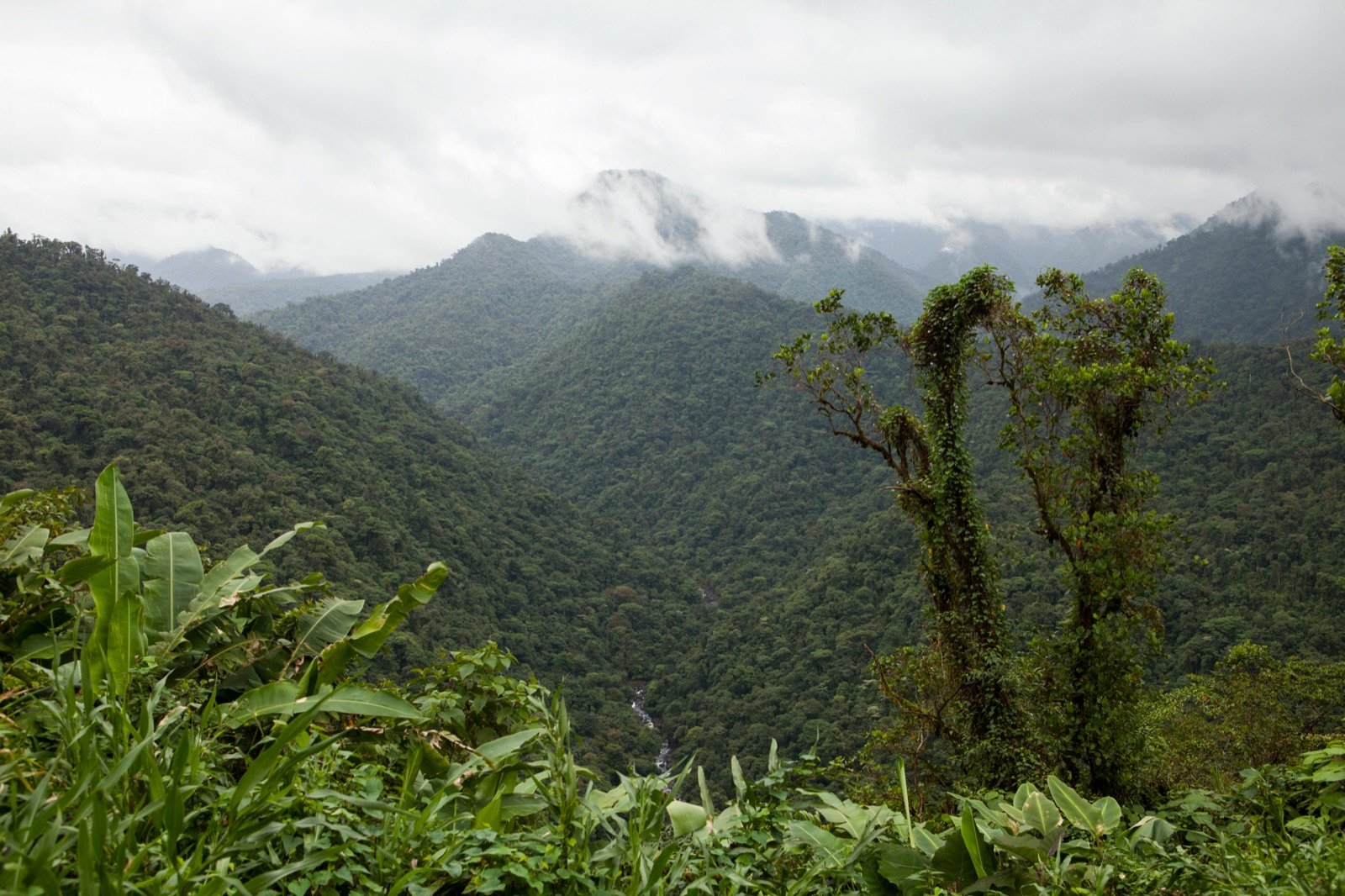
The wet slope above Turrialba, where the Talamanca mountains drop toward the Caribbean. It is the smallest of our five zones and the one with the biggest reputation among birders, because one lodge made it famous: Rancho Naturalista, 125 acres of protected foothill forest half an hour from town, with hummingbird feeders on the balcony from the first breakfast and forest pools where the Snowcap comes to bathe in the late afternoon.
The foothills sit between the lowlands and the cloud forest, so you get birds from both: tanagers and toucans in the valley, the highland species on the ridge at Cerro Silencio. Five of our 45 most recent birding itineraries sleep at the ranch, more than at any lodge but Arenal Observatory, and its resident bird guides are the ones a client of ours called "absolutely stellar".
Two and a half hours from the San José airport, so it is usually the first or second stop of a trip, and it pairs with the Highlands or the Caribbean Lowlands in a week.
The map
Where the Caribbean Foothills are
Each number is one of the places worth the mornings below; the small dots are the 2 lodges we use here.
1Rancho Naturalista's own reserve. 125 acres of forest with trails from the door, the balcony feeders at dawn and the hummingbird pools below the lodge in the late afternoon, with a bird list over 450 species long. Most of the zone's birding happens here.
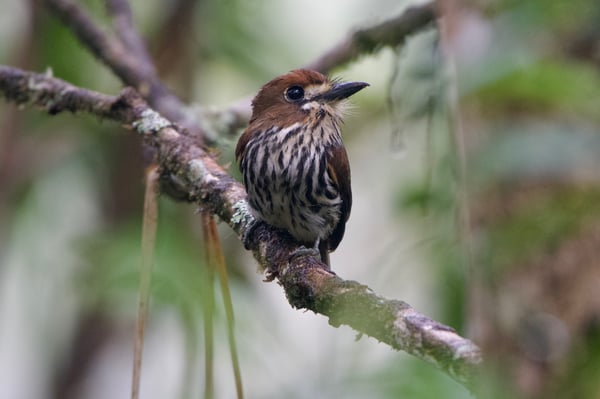
2The Río Tuis valley. The trail into the forest reserve below the lodge, a few hours or the whole day. Tanager flocks, and the valley's reputation as the most reliable place in the country for the Lanceolated Monklet.
3Cerro Silencio. A whole-day hike at the base of the hill, higher than the lodge: tanager flocks, Red-fronted Parrotlet and both hawk-eagles, birds that are easier here than at the ranch because of the altitude.
4La Angostura lake and the Turrialba farmland. The lake beside Casa Turire and the open country between the two lodges, with toucans and parakeets in the hotel gardens and water birds on the lake.
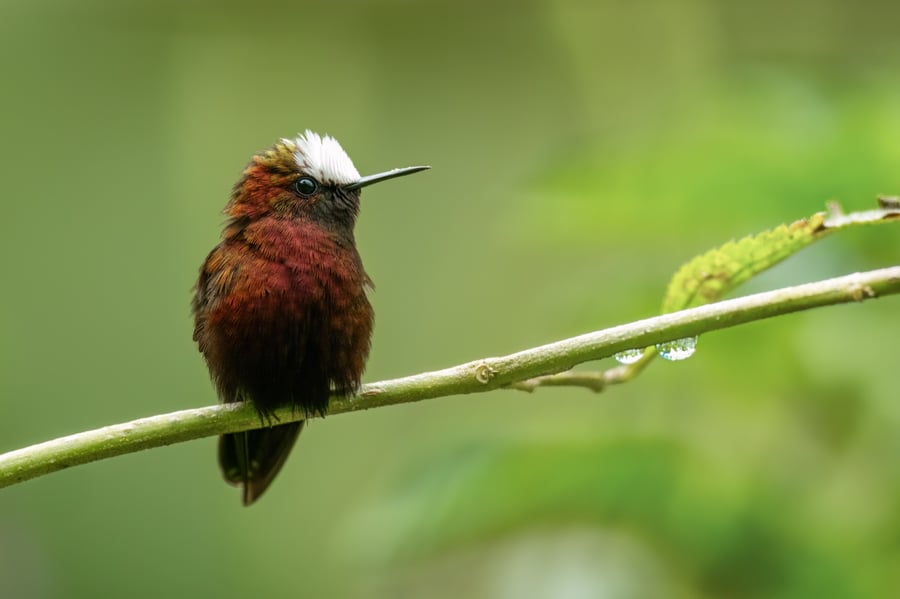
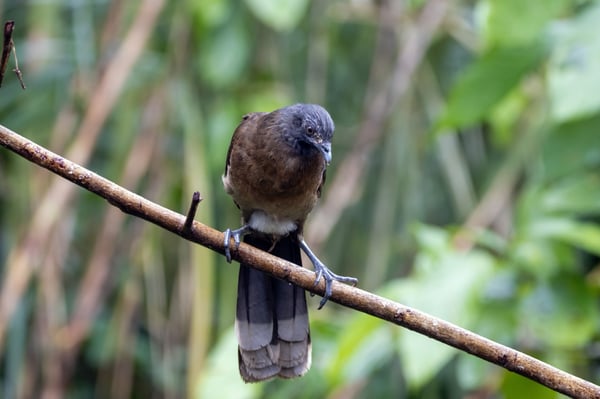
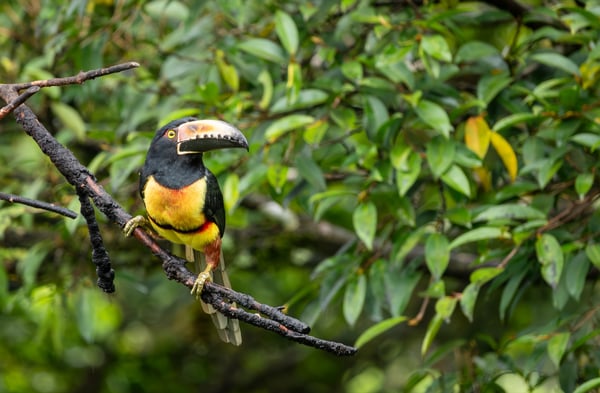
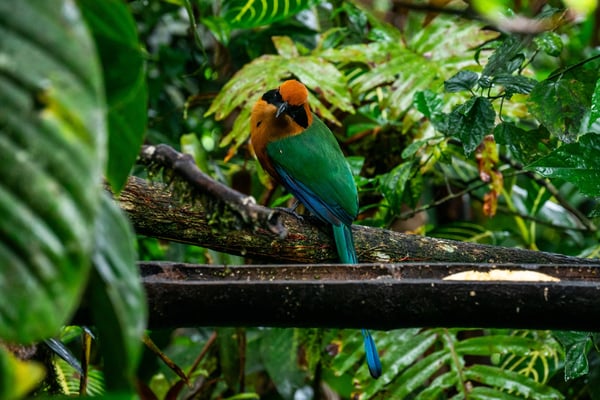
The Snowcap first: a tiny wine-coloured hummingbird with a white cap, a regional endemic, and the bird people come to this zone for. The forest pools below the lodge in the late afternoon are where it bathes. At the morning feeders Gray-headed Chachalaca, Collared Aracari, Rufous Motmot and the Red-headed Barbet, the male with a head that looks painted on.
In the Río Tuis valley the Lanceolated Monklet and the tanager flocks. On Cerro Silencio Red-fronted Parrotlet and both hawk-eagles, Black Hawk-Eagle and Ornate Hawk-Eagle, the one bird on most lists you cannot plan for; a guide who knows the territories is the difference.
And the one a lister comes here for: the Tawny-chested Flycatcher, a small bird of these wet foothills that carries the official list's regional endemic flag, with the hummingbirds at the feeders by the dozen.
Hotspots in this zone
Each place below has its own page: the birds to look for, getting there, when to go and the lodges we use nearby.
125 acres of Caribbean foothill forest above Turrialba with a bird list over 450: the Snowcap at the pools, the feeders, the trails and how to get there.
Cerro El Silencio above Turrialba, higher and more open than Rancho Naturalista: Red-fronted Parrotlet, both hawk-eagles and tanager flocks, and our trip.
La Angostura lake and the farmland around Turrialba: toucans and parakeets in the gardens, birds on the water, and the country hotel we use by the lake.
Two of our lodges are in this zone: the ranch itself, and a country hotel on a working farm a few minutes from Turrialba for the birder who wants a proper bed between the foothill mornings.
Intimate Location full of luxury in Verdant, Exotic Turrialba!
★★★★
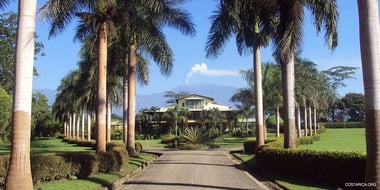
A twelve-room country hotel on a working farm a few minutes from Turrialba, beside La Angostura lake, with toucans and parakeets in the gardens and Rancho Naturalista's forest up the valley. Where we put birders who want a proper bed between the foothill mornings.
A Birder's Paradise Awaits in the Central Valley Near Turrialba
★★★
125 acres of protected Caribbean foothill forest half an hour from Turrialba, hummingbird feeders on the balcony from the first breakfast, and resident bird guides our clients called "absolutely stellar". Five of our 45 recent birding itineraries sleep here, behind only Arenal Observatory and Trapp Family Lodge.
Fly into San José. Turrialba is about two and a half hours from the airport by road, and the south Caribbean coast is about three and a half hours on from the ranch, which is how two of the trips above are built. The foothills are wet all year: a rain layer whatever the month, and boots you have already walked in.
Questions birders ask
Why do birders talk about Rancho Naturalista so much?
The feeders and the pools. Your list starts from the balcony before the guide has finished his coffee, and in the afternoon the Snowcap comes to you instead of you going to it. Resident guides, trails from the door, and a list over 450.
How many nights?
Three. The morning tour, the Río Tuis day and Cerro Silencio each take a dawn.
Can I combine it with the Highlands?
Yes, and it is the shape of our Eco-Zones trip: three nights here, three at San Gerardo de Dota for the quetzal, three on the Pacific at Carara for the macaws.
Which of these mornings is yours?
A few minutes on the form, and one of our Costa Rica specialists comes back to you personally with a first itinerary: the foothills in the right order with whatever else is on your list, and how many nights each stop really needs. That first version is just a place to start.