Costa Rica bird species · Cuckoos, nightjars, potoos and swifts
Cuckoos, nightjars, potoos and swifts in Costa Rica: all 39 species
39 species, 3 found only in this corner of the world, and the potoo that looks like a broken stump.
Costa Rica's official list has 39 birds in this group, in 5 families, about one bird in every 24 on it: 13 cuckoos, including the anis, 11 nightjars and nighthawks, 3 potoos, the Oilbird and 11 swifts. This is our thinnest bird page, and we say so plainly: one species has a page of ours so far, and only 2 hotspot pages name a bird from the group, both for the same potoo. We add a place to a bird only when a guide or a hotspot page can name it, so the full list below carries the rest.
The one we know is the Great Potoo, 48 to 60 cm. By day it perches upright on a stump and holds still, and people pass it by because it looks like part of the wood. At night it gives itself away with a moaning growl and eyes that shine back in a light. At Selva Verde, at dusk, it sits on a dead snag, and at Tortuguero it is on the list for the trees along the water.
Three of the 39 are regional endemics, which means they live only in this small corner of the world: the Cocos Cuckoo, the Dusky Nightjar and the Costa Rican Swift. The status column does real work on this page. 5 of the 39 are plain migrants, several carry two statuses at once, the Oilbird is Resident (uncertain) and Migrant (uncertain), and 3 are accidental, which is three birds recorded once or very few times.
Where to see them
These are the 9 places where we name them, from our hotspot pages and each bird's own page.
- Place where we name them
- Highlands
- Caribbean Foothills
- Caribbean Lowlands
- Northern Pacific Lowlands
- Central and Southern Pacific Lowlands
- 1Cerro de la Muerte and the km 70 lookoutsHighlandsDusky Nightjar
- 2Selva Verde, on the Sarapiquí RiverCaribbean LowlandsGreat Potoo
- 3La Selva Biological Station, SarapiquíCaribbean LowlandsShort-tailed Nighthawk
- 4Tortuguero National Park and its canalsCaribbean LowlandsGreat Potoo, Gray-rumped Swift
- 5Palo Verde National Park and the Tempisque RiverNorthern Pacific LowlandsCommon Pauraque
- 6Carara National ParkCentral and Southern Pacific LowlandsLesser Nighthawk, Common Pauraque
- 7The Tárcoles River mangroves, by boatCentral and Southern Pacific LowlandsStriped Cuckoo, Lesser Ground-Cuckoo, Lesser Nighthawk
- 8Piedras Blancas National Park and the Golfo DulceCentral and Southern Pacific LowlandsCosta Rican Swift
- 9Wilson Botanical Garden and Las CrucesCentral and Southern Pacific LowlandsVaux's Swift
The 3 regional endemics
The three you can only see in this part of the world.
All 39 cuckoos, nightjars, potoos and swifts on the list
The full group as Costa Rica's official list has it, in the list's own order. Tick them off on the printable checklist.
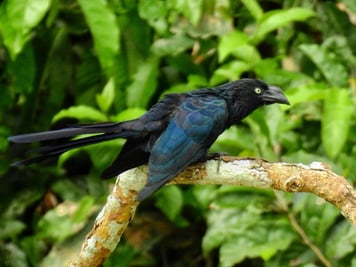 Greater AniCrotophaga majorA rare, white-eyed, blue-black ani of mangroves and waterside thickets.
 Smooth-billed AniCrotophaga aniAll-black, long-tailed ani of south Pacific pastures, often beside grazing cattle.
 Groove-billed AniCrotophaga sulcirostrisShaggy black ani of pastures and roadsides, often beside cattle.
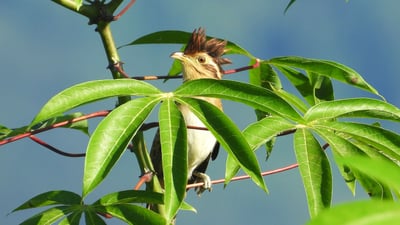 Striped CuckooTapera naeviaSeen at Tárcoles River Mangroves
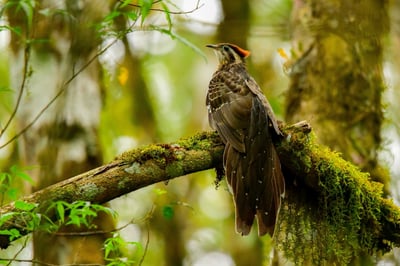 Pheasant CuckooDromococcyx phasianellusA secretive, long-tailed ground cuckoo, very rare here and found by its call.
 Lesser Ground-CuckooMorococcyx erythropygusSeen at Tárcoles River Mangroves
 Rufous-vented Ground-CuckooNeomorphus geoffroyiA shaggy-crested ground bird that trails army ant swarms in primary forest.
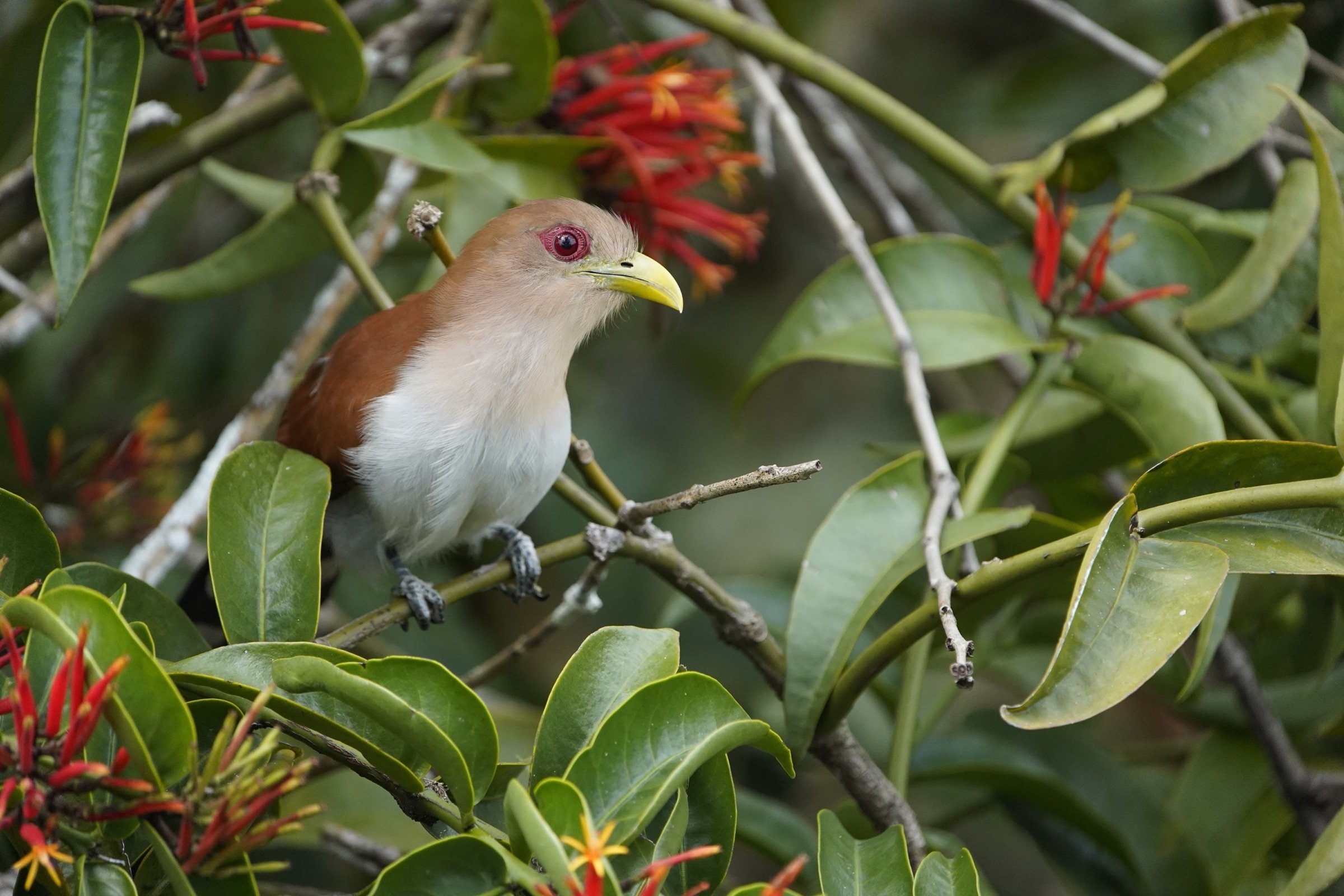
 Common Squirrel-CuckooPiaya cayanaA rufous cuckoo that runs along branches like a squirrel
 Dark-billed CuckooCoccyzus melacoryphusAn accidental cuckoo, first documented near Ciudad Neily in the far south.
 Yellow-billed CuckooCoccyzus americanusA shy migrant cuckoo with bold white tail spots, passing through.
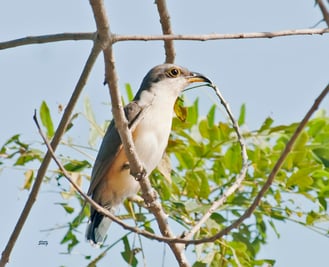 Mangrove CuckooCoccyzus minorSecretive masked cuckoo of Pacific mangroves and dry forest, here December to June.
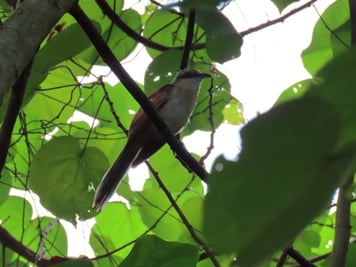 Cocos CuckooCoccyzus ferrugineusA peach and brown cuckoo found only on Isla del Coco, far out in the Pacific.
 Black-billed CuckooCoccyzus erythropthalmusA rare, silent passing migrant with a red eye ring and a black bill.
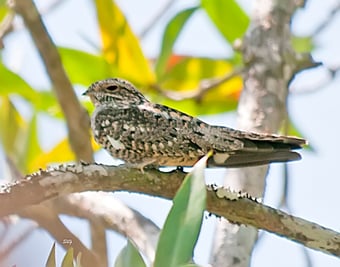 Lesser NighthawkChordeiles acutipennisSeen at Carara National Park, Tárcoles River Mangroves
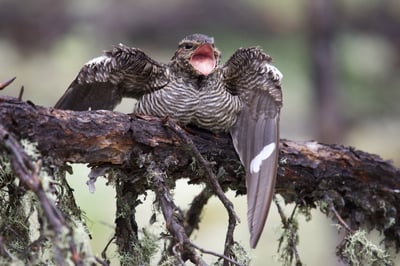 Common NighthawkChordeiles minorBat-like dusk flier, best seen on autumn and spring migration
 Short-tailed NighthawkLurocalis semitorquatusSeen at La Selva Biological Station
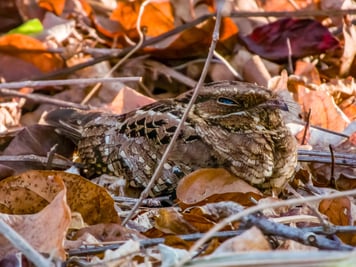 Common PauraqueNyctidromus albicollisSeen at Carara National Park, Palo Verde National Park
 White-tailed NightjarHydropsalis cayennensisA slim, rufous-collared nightjar of open Pacific slope country, met after dark.
 Ocellated PoorwillNyctiphrynus ocellatusA small, eye-spotted nightjar with one known Costa Rican breeding area.
 Chuck-will's-widowAntrostomus carolinensisA large winter nightjar, easy to overlook by day, found by eyeshine at night.
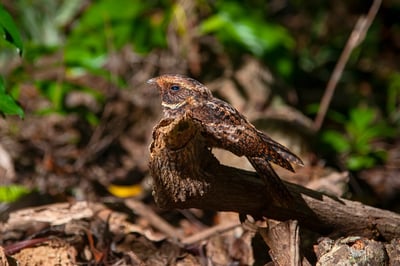 Rufous NightjarAntrostomus rufusA rare, local nightjar of the southern lowlands, found by ear after dark.
 Buff-collared NightjarAntrostomus ridgwayiA rare nightjar of dry Guanacaste, best found by its strange rising song.
 Eastern Whip-poor-willAntrostomus vociferusA very rare winter nightjar, heard far more often than seen.
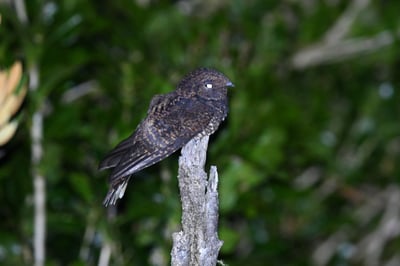 Dusky NightjarAntrostomus saturatusSeen at Cerro de la Muerte
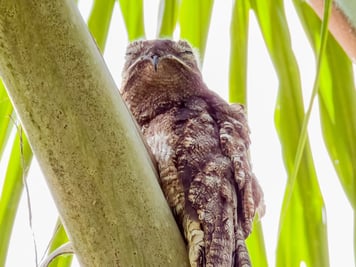 Great PotooNyctibius grandisSeen at Selva Verde, Tortuguero
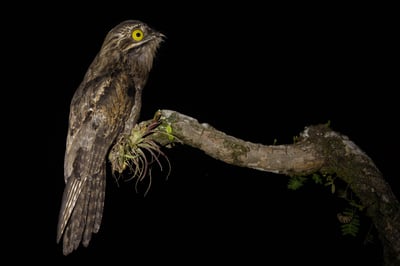 Common PotooNyctibius griseusThe stump that opens its eyes: a night bird that hides in plain sight.
 Northern PotooNyctibius jamaicensisA bark-coloured night bird that sleeps upright on stumps in the northwest.
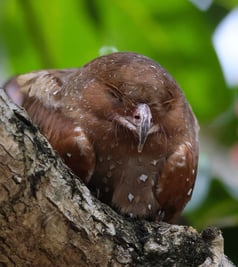 OilbirdSteatornis caripensisA rare night-flying fruit eater, a lucky extra and never a target.
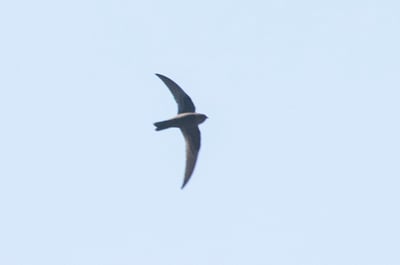 Black SwiftCypseloides nigerA sooty, cigar-shaped swift of the highlands, a summer resident here.
 White-chinned SwiftCypseloides cryptusA small sooty swift that nests in moss cups beside Costa Rican waterfalls.
 Spot-fronted SwiftCypseloides cherrieiA small blackish swift of waterfall canyons, first described from Irazú.
 Chestnut-collared SwiftStreptoprocne rutilaA small dark mountain swift that drops low under cloud and rain
 White-collared SwiftStreptoprocne zonarisBig black swift with a white collar, wheeling over waterfalls and valleys.
 Gray-rumped SwiftChaetura cinereiventrisSeen at Tortuguero
 Costa Rican SwiftChaetura fumosaSeen at Piedras Blancas
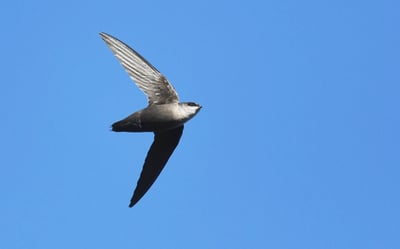 Chimney SwiftChaetura pelagicaA sooty, cigar-shaped migrant swift, mostly seen over the Caribbean slope.
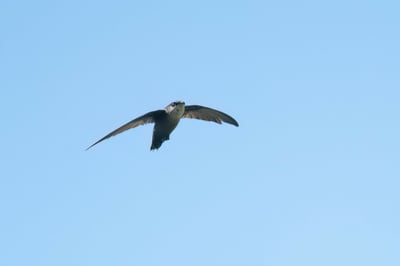 Vaux's SwiftChaetura vauxiSeen at Wilson Botanical Garden
 Lesser Swallow-tailed SwiftPanyptila cayennensisA glossy blue-black swift with a white throat and a long forked tail.
 Great Swallow-tailed SwiftPanyptila sanctihieronymiA rare visitor: big black swift, white scarf throat, deeply forked tail.
Names and status: AOCR Lista Oficial 2025-2026, June 2026 update.
Trips that find them
These trips name a potoo on the way: the Great Potoo, or the Northern Potoo in the dry northwest.
- Dancing with QuetzalsSee the itinerary
- Coast to Coast Birding, Tortuguero to the OsaSee the itinerary
- Costa Rica's Top Birding SpotsSee the itinerary
- Sarapiquí, Arenal and CararaSee the itinerary
- Caribbean Lowlands Birding TourSee the itinerary
- Best of Birding in Costa Rica's CaribbeanSee the itinerary
- Northern Volcanoes and WetlandsSee the itinerary
- Dry Forest and the Gulf of NicoyaSee the itinerary
Is this bird on your list?
Tell us the birds you most want to see, your dates and how you like to travel, and one of our Costa Rica specialists comes back to you personally with a first itinerary built around them. That first version is just a place to start.
Or call us: 1 (800) 996-1139 from the US and Canada, +506 4052-2140 in Costa Rica.