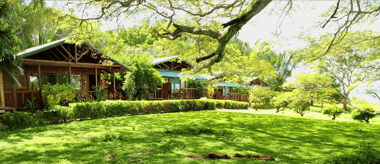
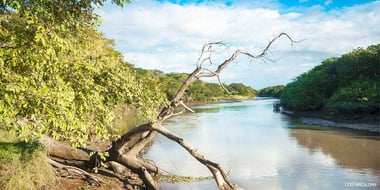
The dry side. Guanacaste and the Nicoya Peninsula, tropical dry forest that drops its leaves in the dry season from December to April, and the wetlands of Palo Verde along the Tempisque River. The birding here is open and easy on the legs: the trees are lower and barer than on the wet side, so you see what you hear.
Fly into Liberia and this zone is the start of the trip. Fly into San José and it is the last stop before a short flight home from Tambor, which is how our Nicoya trip is built.
The map
Where the Northern Pacific Lowlands are
Each number is one of the places worth the mornings below; the small dots are the 4 lodges we use here.
1Palo Verde National Park and the Tempisque River. Dry forest, mangroves and wetland in one park, a half day that puts the boat on the Tempisque together with a walk in the park, and the Mangrove Hummingbird with luck. Then the wetlands from Rancho Humo's own safari jeeps for the storks and herons.
2Curú Wildlife Refuge. On the Nicoya coast near Tambor, about 230 species of birds, and the only population of Scarlet Macaws on the peninsula.
3The Río Pochote. A boat into the forest along the river from Tambor: trogons, motmots, kingfishers, hummingbirds and woodpeckers from the water.
4Rincón de la Vieja National Park. An active volcano with sulphur lagoons and mud springs, and Hacienda Guachipelín at its foot, 22 km from Liberia, a 3,400-acre working ranch with over 300 species of birds on it.
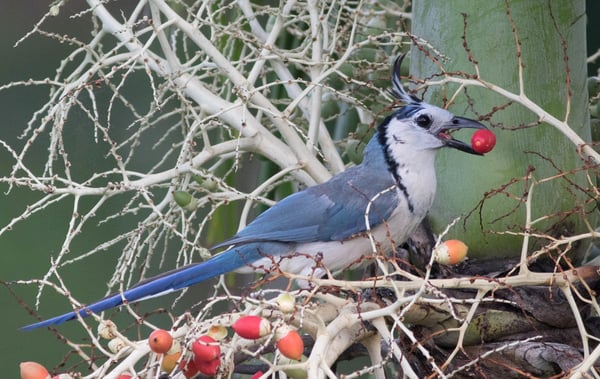
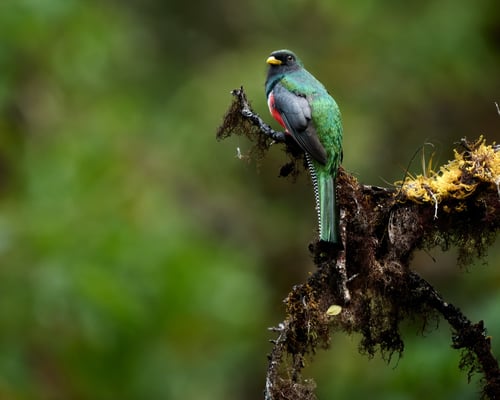
The Turquoise-browed Motmot first, on wires and fence posts along every dry-forest road, and the Long-tailed Manakin, famous for the dance two males perform side by side for one female. White-throated Magpie-Jay in noisy family groups, Double-striped Thick-Knee in the pasture at dusk, Black-headed Trogon and Elegant Trogon in the dry forest, Streak-backed Oriole and Spot-breasted Oriole in the gardens.
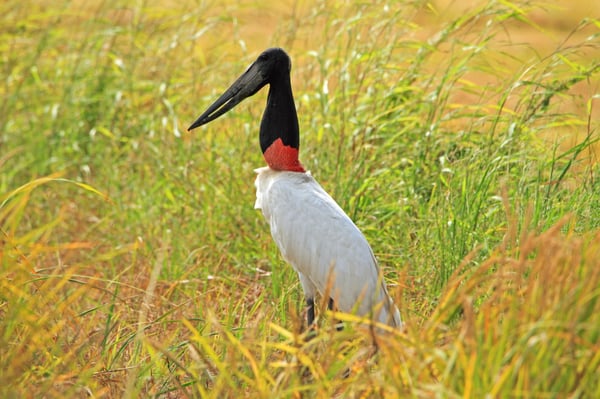
On the water, the big birds of the Tempisque: Jabiru, Wood Stork, Roseate Spoonbill and Bare-throated Tiger-Heron from the boat, and the Mangrove Hummingbird, a regional endemic of the Pacific mangroves, with luck.
At Curú the Scarlet Macaw, the only population on the peninsula, and on the Pochote trogons, motmots and kingfishers along the river.
Hotspots in this zone
Each place below has its own page: the birds to look for, getting there, when to go and the lodges we use nearby.
Dry forest, mangrove and wetland on the Tempisque River: Jabiru, storks and spoonbills from the boat, the Mangrove Hummingbird with luck, and our lodge.
An active volcano with sulphur lagoons and mud springs, and a 3,400-acre ranch at its foot with over 300 bird species: the birds, the lodge, the way in.
Santa Rosa and Guanacaste National Parks in the far north: dry forest with trees at least 500 years old and 250 bird species, a guided day from Liberia.
Four of our lodges are in this zone: a private reserve at Palo Verde, a working ranch under Rincón de la Vieja, a 1,000-acre ranch on the Gulf of Nicoya, and a beach resort on the Nicoya coast for the end of the trip.
A Great Property with A Host of Exciting Activities On-Site
★★★
A 3,400-acre working ranch on the slopes of Rincón de la Vieja, 22 km from Liberia, with dry forest, 32 rivers coming off the volcano and birding from the ranch's own trails. Good when the birder travels with people who do not bird: canopy, horses and hot springs on the same property.
A private reserve on the Tempisque at Palo Verde, a cattle ranch one family has turned back into wetland, mangrove and dry forest. Migrating birds stop here, and so do we, for the water birds of the dry side.
A Sophisticated Nicoya Beachfront Resort with Fabulous Ocean Views
★★★★
Beachfront on Quizales beach on the Nicoya coast, 35 suites and bungalows, four pools and a nine-hole golf course through grounds full of birds. The end-of-trip lodge, for the shore birds and a rest.
Fly into Liberia (LIR) for this zone: Rincón de la Vieja is 22 km from the airport. From Arenal, Rancho Humo is about four hours by road, which is why the Northern Zone and Nicoya trips cross to the dry side last. From the Nicoya coast you can fly home through the Tambor airstrip to San José instead of driving back. The dry season, December to April, is when the forest is barest and the birding easiest.
Questions birders ask
Liberia or San José?
Liberia if the dry side is the point of the trip or you want a Guanacaste beach at the end. San José if you are combining it with the Highlands or the Caribbean; then the dry side comes last and you fly home from Tambor. Have you looked into flights yet, or is there an airport you have in mind?
When is it best?
The dry season, December to April, when the trees are bare and the birds are easy to see. Resident birds are here every month, and the migrants pass through from August to December and again from January to May.
My partner is not a birder.
This is the zone for that trip: the beach at Tango Mar, the hot springs and horses at Guachipelín, and the boat on the Tempisque that everyone enjoys.
Which of these mornings is yours?
A few minutes on the form, and one of our Costa Rica specialists comes back to you personally with a first itinerary: the dry side in the right order with whatever else is on your list, and how many nights each stop really needs. That first version is just a place to start.