Family Psittacidae
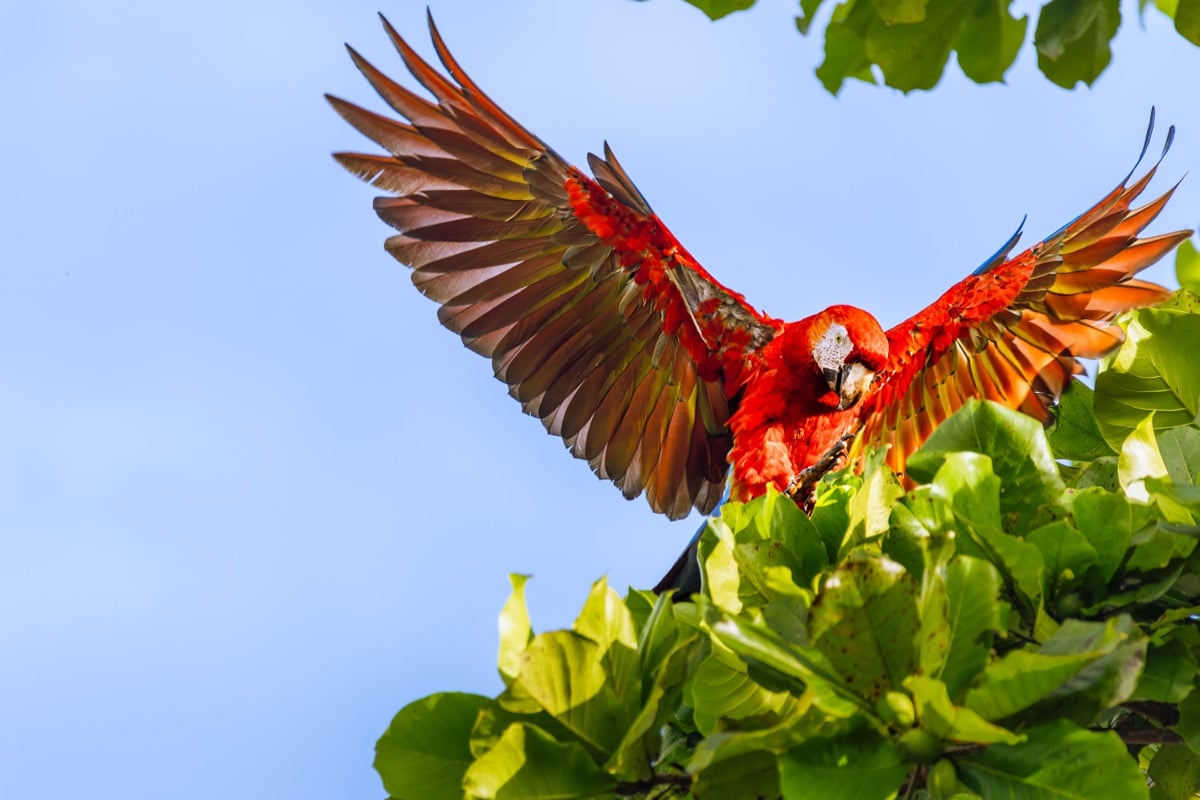
Scarlet Macaw
Ara macao
In Spanish: Guacamayo Rojo (Lapa Roja, Lapa Colorada)
- Resident
Pairs crossing Carara and the Tárcoles River at dawn and dusk; Curú, the Golfo Dulce, the Osa. All year.
First the noise: throaty squawks over the Tárcoles River at first light, the kind made to carry for kilometres. Then two red birds come over the treeline together, each trailing a tail longer than the rest of its body.
On the Pacific side the Scarlet Macaw lives in a few separate pockets: around the Nicoya Peninsula, at Carara and on the Osa. Carara is where we take people for it. SINAC, the national parks service, calls the park the main conservation and breeding core of the species in Costa Rica, and the pairs cross over it at dawn and at dusk.
Where to see it
- Hotspot page
- Named place
- Nearby lodge (numbers match the cards)
- Carara National Parkpairs over the park and the river at dawn and dusk.
- The Tárcoles River mangroves, by boatoverhead from the boat, crossing between Carara and the river.
- Curú Wildlife Refuge and the Río Pochotethe only population on the Nicoya Peninsula, and why our Nicoya trip ends here.Not on the map above: it sits too far away to show at this zoom.
- Corcovado National Park and the Osathe bird the park is known for.Not on the map above: it sits too far away to show at this zoom.
- Piedras Blancas National Park and the Golfo Dulceloud and red over the gulf.Not on the map above: it sits too far away to show at this zoom.
- Golfito Wildlife Refugeover the Golfo Dulce, by the airstrip we fly birders into.Not on the map above: it sits too far away to show at this zoom.
Nearby lodges
Within 20 km of a place on the map, in the same zone.
- 1Photo comingSanta Lucía Jungle Hacienda, Autograph Collection2.7 km from Carara National ParkSee the lodge
- 2
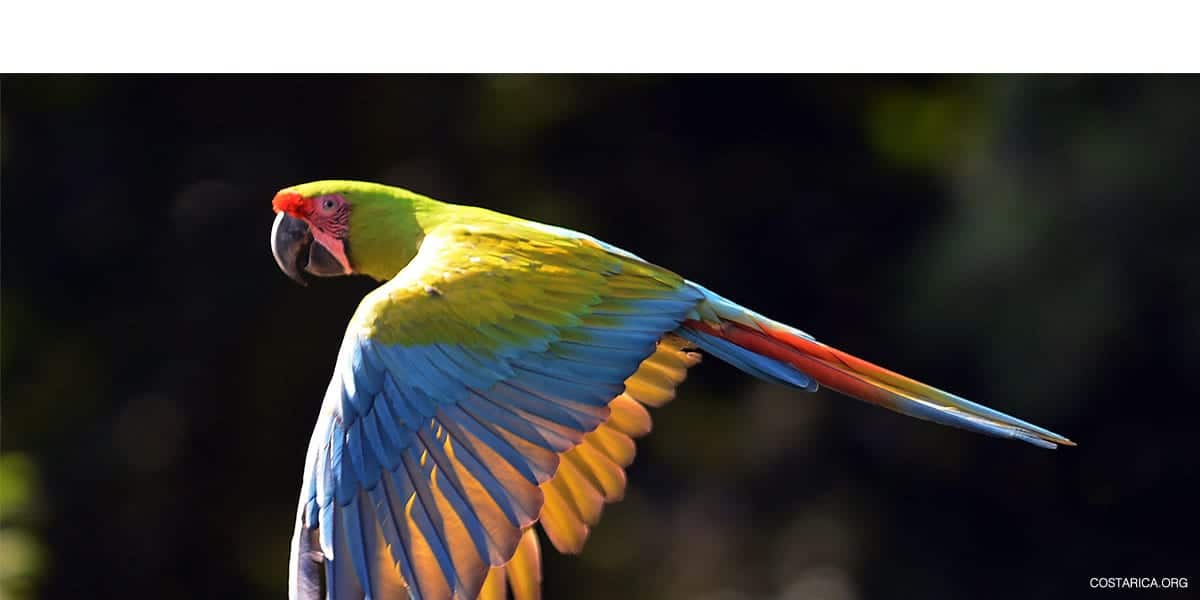 Cerro Lodge1.1 km from The Tárcoles River mangroves, by boatSee the lodge
- 3
 Tango Mar Resort15.7 km from Curú Wildlife Refuge (off the map)See the lodge
- 4
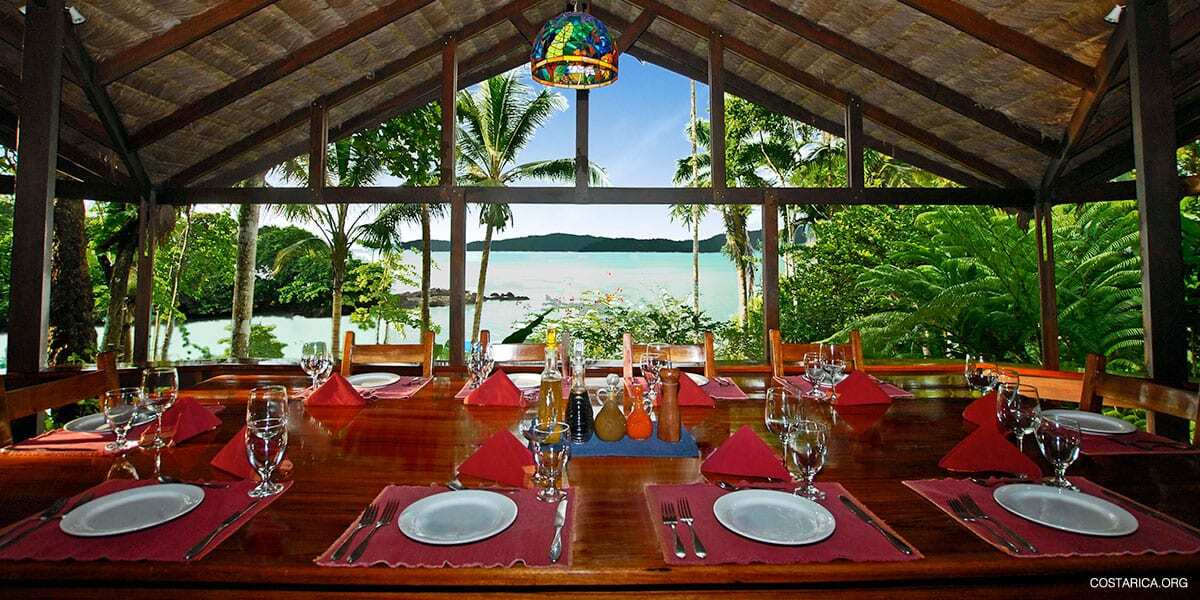 Aguila de Osa Inn18.5 km from Corcovado National Park (off the map)See the lodge
- 5
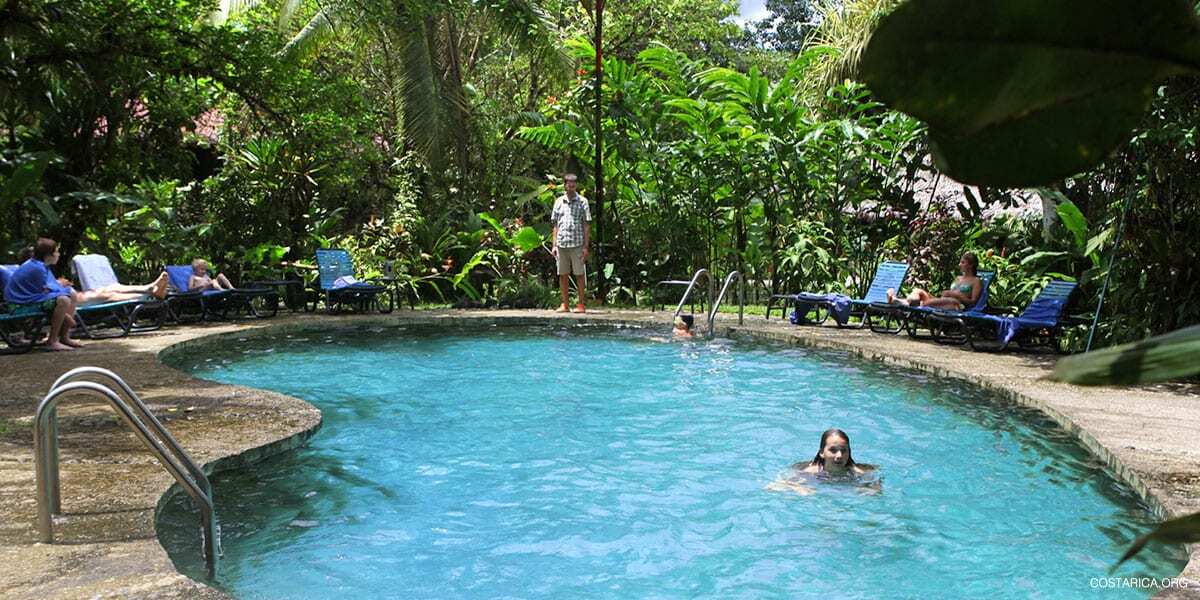 Esquinas Rainforest Lodge0.4 km from Piedras Blancas National Park (off the map)See the lodge
How to recognise it
About 84 cm, close to three 30 cm school rulers laid end to end, and more than half of that is the long, pointed tail. It weighs about a kilo.
Mostly scarlet, with light blue on the rump and the feathers over the base of the tail, and yellow across the upper wing. Up close, the mark that settles it is the bare white skin around the eye, running down to the bill.
In the air you usually hear it first: squawks, squeaks and screams, high and low, most often from two birds flying together.
Where it lives
Humid lowland forest, open woodland, river edges and savanna, up to about 1,000 metres. Studies here found the birds spend nearly all their time high in the canopy, and in the Central Pacific they have learned to feed on two introduced trees, teak and the beach almond.
When to see it
All year. At Carara the pairs cross at dawn and dusk in every month.
Trips that find it
- Best of Birding in Costa Rica9 to 10 nightsSee the trip
- The Southern Highlands and Pacific9 nightsSee the trip
- Birding in Costa Rica's Eco-Zones11 nightsSee the trip
- Dancing with Quetzals11 nightsSee the trip
- Costa Rica's Top Birding Spots11 nightsSee the trip
- Birding in Costa Rica's Nicoya Peninsula11 nightsSee the trip
Tell us when you are travelling and our team in Costa Rica builds the trip around the birds you want to see.
Plan my birding tripHow we know this 1 sources, each read on the date shown
- Wikipedia: Scarlet macaw read 4 November 2026
https://en.wikipedia.org/wiki/Scarlet_macaw