 Bare-throated Tiger-Heron
Costa Rica bird species · Herons, storks, ibises and marsh birds
Herons, storks, ibises and marsh birds in Costa Rica: all 51 species, and where to see them
51 herons, storks, ibises and marsh birds, watched mostly from a boat, from the Tempisque to Tortuguero.
Costa Rica's official list has 51 herons, storks, ibises and marsh birds, spread over nine families: 20 herons, egrets and bitterns, 17 rails, crakes and gallinules, 6 ibises and spoonbills, 3 storks, and one each for the Sunbittern, the Limpkin, the Sungrebe, the Sandhill Crane and the American Flamingo. The Jabiru is the one people ask for: up to 140 cm, the tallest flying bird in Central or South America, with a bill as long as 35 cm and wings 2.3 to 2.8 m across.
None of the 51 is a regional endemic, so the draw here is size, colour and the way we watch them. Twenty-six are plain residents, and six are accidental, recorded once or very few times: the Sandhill Crane, American Flamingo, Maguari Stork, Bare-faced Ibis, Whistling Heron and Striated Heron.
We watch most of them from a boat. On the Tempisque at Palo Verde the Jabiru stands with the Wood Stork, the Roseate Spoonbill and the Bare-throated Tiger-Heron, and December to April is the easy time to be there. Caño Negro is 9,960 hectares of wetland near the Nicaraguan border with more than 350 species recorded, and the boat there is how we find the Agami Heron. The Boat-billed Heron rests in the Tárcoles mangroves by day and works the Tortuguero canals after dark. And the Sunbittern, folded, is a quiet pattern of black, grey and brown on a river edge; spread, its wings show eyespots in red, yellow and black.
Where to see them
Water decides it, so the places are the rivers, canals and wetlands where our boats go. These are the 9 places where we name them, from our hotspot pages and each bird's own page.
- Place where we name them
- Highlands
- Caribbean Foothills
- Caribbean Lowlands
- Northern Pacific Lowlands
- Central and Southern Pacific Lowlands
- 1Arenal Volcano National ParkCaribbean LowlandsUniform Crake, White-throated Crake, Bare-throated Tiger-Heron
- 2Caño Negro Wildlife Refuge and the Río FríoCaribbean LowlandsAmerican Coot, Jabiru, Roseate Spoonbill, Agami Heron, Great Blue Heron
- 3Selva Verde, on the Sarapiquí RiverCaribbean LowlandsSunbittern
- 4Tortuguero National Park and its canalsCaribbean LowlandsCommon Gallinule, Sungrebe, Sunbittern, Green Ibis, Roseate Spoonbill, Bare-throated Tiger-Heron, Boat-billed Heron, Black-crowned Night Heron, Green Heron
- 5Tirimbina Biological Reserve, SarapiquíCaribbean LowlandsSunbittern
- 6Palo Verde National Park and the Tempisque RiverNorthern Pacific LowlandsRusset-naped Wood-Rail, Maguari Stork, Jabiru, Wood Stork, White Ibis, Roseate Spoonbill, Bare-throated Tiger-Heron, Black-crowned Night Heron, Snowy Egret, Great Egret
- 7Curú Wildlife Refuge and the Río PochoteNorthern Pacific LowlandsBare-throated Tiger-Heron
- 8Carara National ParkCentral and Southern Pacific LowlandsRufous-necked Wood-Rail, Gray-cowled Wood-Rail, Boat-billed Heron, Black-crowned Night Heron
- 9The Tárcoles River mangroves, by boatCentral and Southern Pacific LowlandsRufous-necked Wood-Rail, Gray-cowled Wood-Rail, White Ibis, Bare-throated Tiger-Heron, Boat-billed Heron, Yellow-crowned Night Heron, Black-crowned Night Heron, Tricolored Heron, Reddish Egret, Great Egret
All 51 herons, storks, ibises and marsh birds on the list
The full group as Costa Rica's official list has it, in the list's own order. Tick them off on the printable checklist.
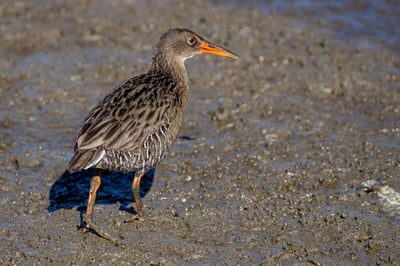 Mangrove RailRallus longirostrisA shy rail of the northwest Pacific mangroves, nesting at Chomes.
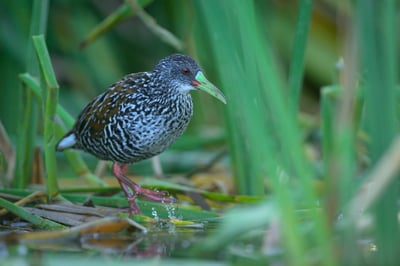 Spotted RailPardirallus maculatusA black and white marsh rail that steps out of the reeds when the water drops.
 Paint-billed CrakeMustelirallus erythropsA small, very furtive crake of wet rice fields and ditches.
 Uniform CrakeAmaurolimnas concolorSeen at Arenal Volcano National Park
 Rufous-necked Wood-RailAramides axillarisSeen at Carara National Park, Tárcoles River Mangroves
 Russet-naped Wood-RailAramides albiventrisSeen at Palo Verde National Park
 Gray-cowled Wood-RailAramides cajaneusSeen at Carara National Park, Tárcoles River Mangroves
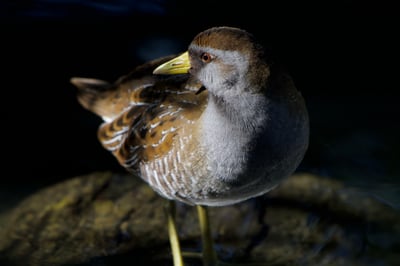 SoraPorzana carolinaA small, secretive marsh rail that winters in Costa Rican lowlands.
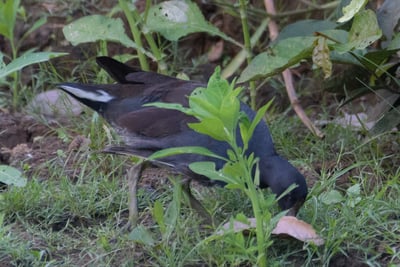 Common GallinuleGallinula galeataSeen at Tortuguero
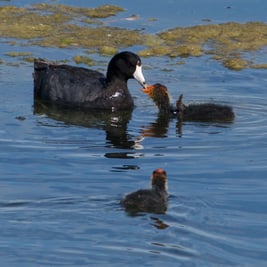 American CootFulica americanaSeen at Caño Negro
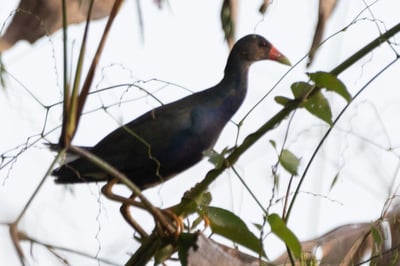 Purple GallinulePorphyrio martinicaViolet-blue marsh walker of lily-pad lagoons, best met by boat
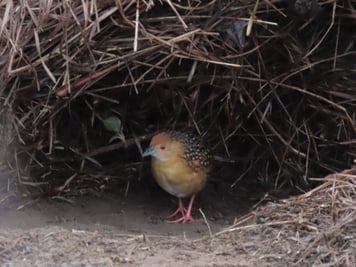 Ocellated CrakeRufirallus schomburgkiiA tiny, mouse-like grassland crake of the south, heard far more easily than seen.
 Yellow-breasted CrakeLaterallus flaviventerA tiny marsh crake that steps into view on boat trips in the far north.
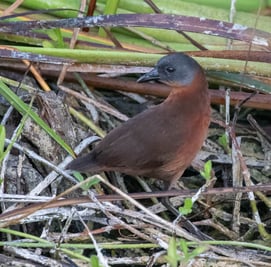 Ruddy CrakeLaterallus ruberA rare chestnut marsh crake, easier to hear than to see.
 White-throated CrakeLaterallus albigularisSeen at Arenal Volcano National Park
 Gray-breasted CrakeLaterallus exilisA tiny, secretive crake of wet pastures, heard far more often than seen.
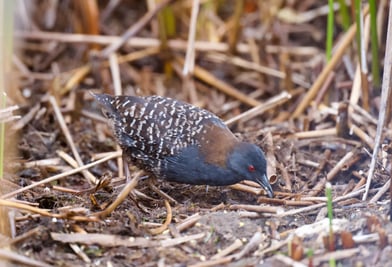 Black RailLaterallus jamaicensisA tiny blackish rail with a chestnut nape, known mostly by its call.
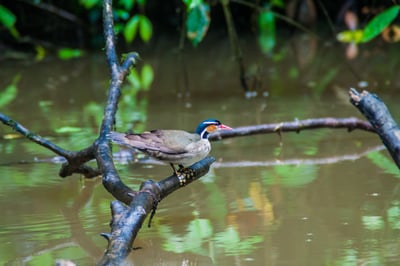 SungrebeHeliornis fulicaSeen at Tortuguero
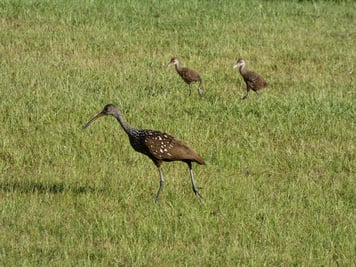 LimpkinAramus guaraunaA heron-shaped wetland bird with a wild wail and a taste for apple snails
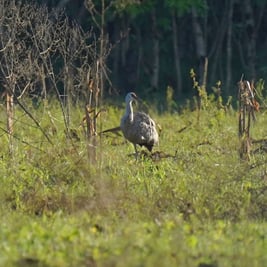 Sandhill CraneAntigone canadensisA tall gray vagrant that overwintered in Costa Rican farm fields in 2025 and 2026.
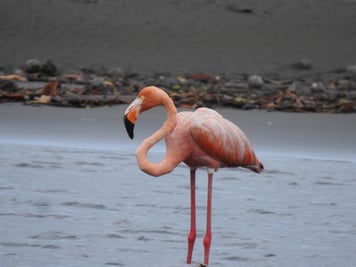 American FlamingoPhoenicopterus ruberAccidental stray: Costa Rica's first flamingo appeared at Moín in 2024.
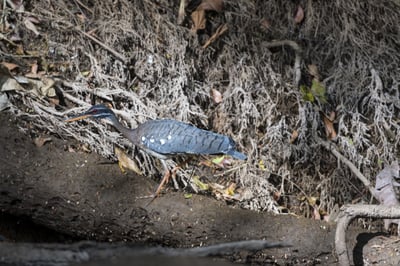 SunbitternEurypyga heliasSeen at Selva Verde, Tirimbina, 1 more
 Maguari StorkCiconia maguariSeen at Palo Verde National Park
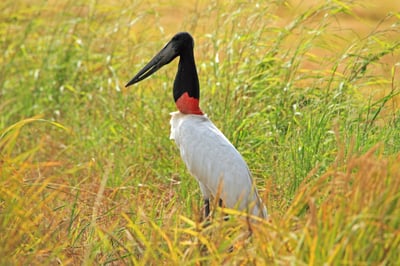 JabiruJabiru mycteriaSeen at Caño Negro, Palo Verde National Park
 Wood StorkMycteria americanaSeen at Palo Verde National Park
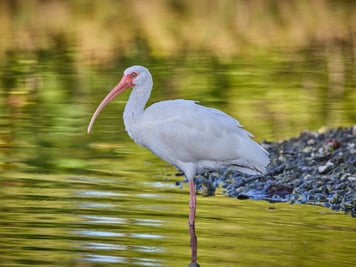 White IbisEudocimus albusSeen at Palo Verde National Park, Tárcoles River Mangroves
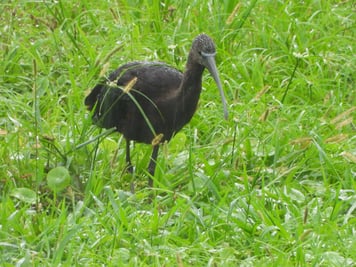 Glossy IbisPlegadis falcinellusA dark marsh ibis, locally common in Guanacaste and nesting at Isla Pájaros.
 White-faced IbisPlegadis chihiA rare, uncertain migrant that is easy to mistake for the Glossy Ibis.
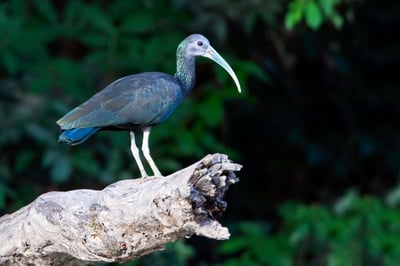 Green IbisMesembrinibis cayennensisSeen at Tortuguero
 Bare-faced IbisPhimosus infuscatusA small, dark, pink-faced ibis, and a rare visitor to Costa Rica.
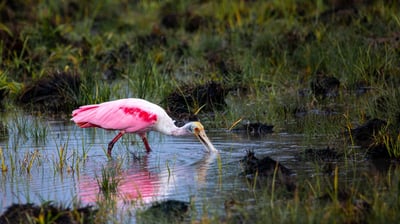 Roseate SpoonbillPlatalea ajajaSeen at Caño Negro, Palo Verde National Park, 1 more
 Rufescent Tiger-HeronTigrisoma lineatumA secretive chestnut heron of shaded lowland streams, lagoons and canals.
 Bare-throated Tiger-HeronTigrisoma mexicanumSeen at Arenal Volcano National Park, Curú Wildlife Refuge, 3 more
 Fasciated Tiger-HeronTigrisoma fasciatumA stocky heron that stands like a rock beside fast foothill streams.
 Boat-billed HeronCochlearius cochleariusSeen at Carara National Park, Tárcoles River Mangroves, 1 more
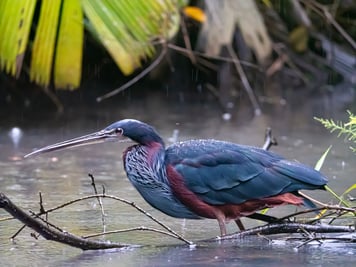 Agami HeronAgamia agamiSeen at Caño Negro
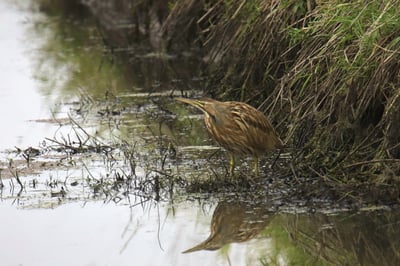 American BitternBotaurus lentiginosusA rare, reed-hiding winter heron with very few Costa Rican records.
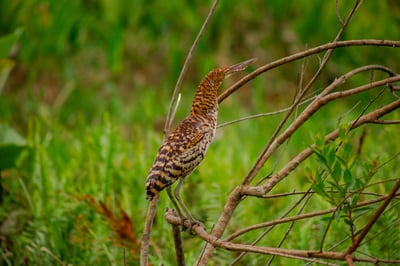 Pinnated BitternBotaurus pinnatusA straw-colored marsh heron of the northern lowlands, best looked for at Medio Queso.
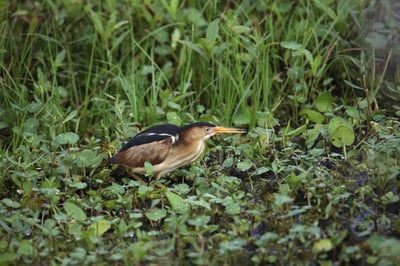 Least BitternBotaurus exilisTiny, shy marsh heron, best found by boat at Medio Queso
 Yellow-crowned Night HeronNyctanassa violaceaSeen at Tárcoles River Mangroves
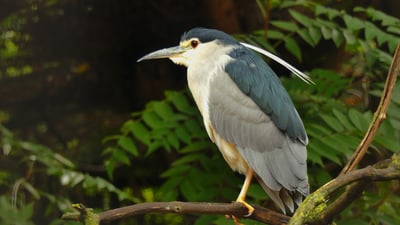 Black-crowned Night HeronNycticorax nycticoraxSeen at Carara National Park, Palo Verde National Park, 2 more
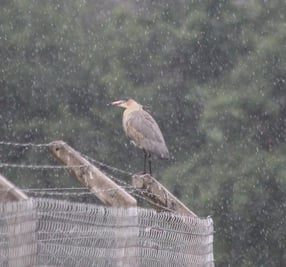 Whistling HeronSyrigma sibilatrixA pink-billed grassland heron, new to Costa Rica in 2016.
 Little Blue HeronEgretta caeruleaA slate-blue heron whose white young often pass for Snowy Egrets.
 Tricolored HeronEgretta tricolorSeen at Tárcoles River Mangroves
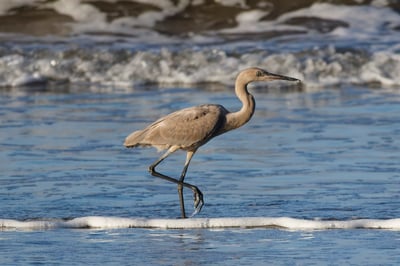 Reddish EgretEgretta rufescensSeen at Tárcoles River Mangroves
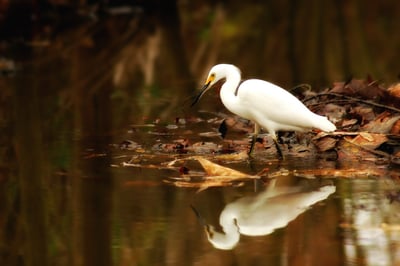 Snowy EgretEgretta thulaSeen at Palo Verde National Park
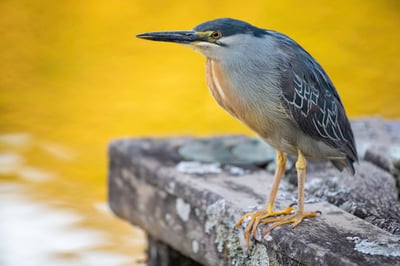 Striated HeronButorides striataA small mangrove heron, listed as accidental and often mistaken for Green Heron.
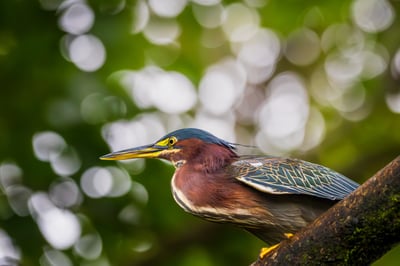 Green HeronButorides virescensSeen at Tortuguero
 Western Cattle-EgretArdea ibisThe small white heron with a yellow bill that walks beside Costa Rica's cattle.
 Great EgretArdea albaSeen at Palo Verde National Park, Tárcoles River Mangroves
 Great Blue HeronArdea herodiasSeen at Caño Negro
Names and status: AOCR Lista Oficial 2025-2026, June 2026 update.
Trips that find them
These trips name at least one of them on the way.
- Dry Forest and the Gulf of NicoyaSee the itinerary
- Northern Volcanoes and WetlandsSee the itinerary
- Costa Rica Classic Birding, All InclusiveSee the itinerary
- Birding in Costa Rica's Northern ZoneSee the itinerary
- Dancing with QuetzalsSee the itinerary
- Sarapiquí, Arenal and CararaSee the itinerary
- Coast to Coast Birding, Tortuguero to the OsaSee the itinerary
- Birding in Costa Rica's Nicoya PeninsulaSee the itinerary
- The Grand Birding CircuitSee the itinerary
- Arenal, the Pacific and the Quetzal ValleySee the itinerary
- Costa Rica's Top Birding SpotsSee the itinerary
- Caribbean Lowlands Birding TourSee the itinerary
- Best of Birding in Costa Rica's CaribbeanSee the itinerary
- Best of Birding in Costa RicaSee the itinerary
- Birding in Costa Rica's Eco-ZonesSee the itinerary
- Carara, the Osa and the QuetzalSee the itinerary
- Three Slopes and ArenalSee the itinerary
- Birding in Costa Rica's Top Three DestinationsSee the itinerary
- The Deep South: Quetzals, San Vito and the Golfo DulceSee the itinerary
Is this bird on your list?
Tell us the birds you most want to see, your dates and how you like to travel, and one of our Costa Rica specialists comes back to you personally with a first itinerary built around them. That first version is just a place to start.
Or call us: 1 (800) 996-1139 from the US and Canada, +506 4052-2140 in Costa Rica.