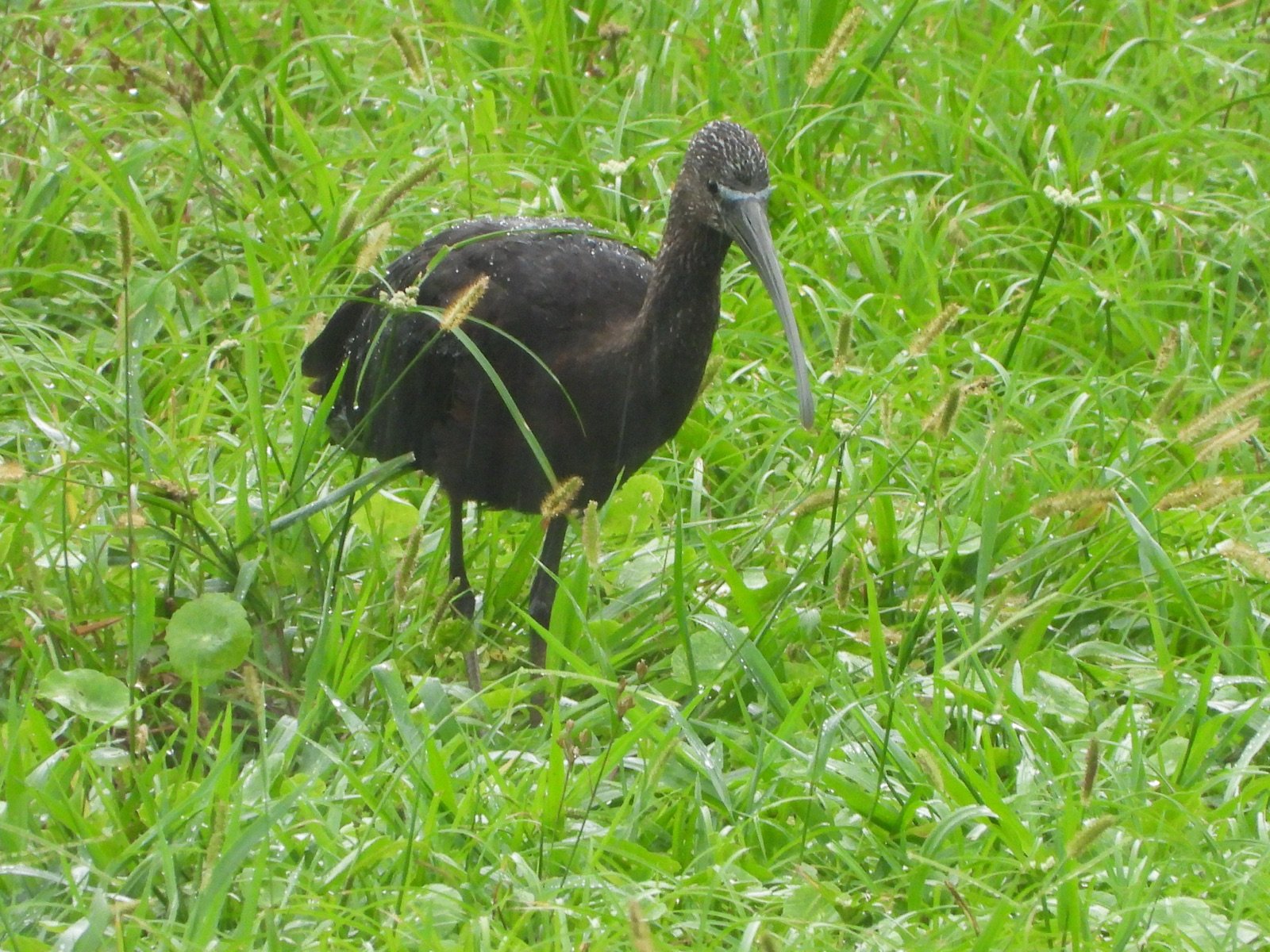
Family Threskiornithidae
Glossy Ibis
Plegadis falcinellus
In Spanish: Ibis Morito (Coco Negro)
- Resident
A dark marsh ibis, locally common in Guanacaste and nesting at Isla Pájaros.
From far away an adult Glossy Ibis simply looks black. Up close it is dark chestnut with a bronze sheen. In Costa Rica it is locally common in Guanacaste, and breeding has been recorded since 1978 at Isla Pájaros, in the Tempisque Basin.
Costa Rica is the southern end of the breeding range, which runs from the northeastern United States down to our country. The page we draw on notes that the range has been growing in recent years.
On a trip we build, your best chances come with marshes and boats: Palo Verde, the Tempisque River and Caño Negro.
How to find it
Search freshwater marshes, pond edges and aquatic vegetation, where it probes soft mud and shallows. Check groups of White Ibis and herons, since it sometimes feeds alongside them. Boat trips are a good way to see wetland birds. Boats to Isla Pájaros leave from the dock at Puerto Humo, on the Nicoya side of the Río Tempisque, and it helps to ask the boatman ahead of time for a close look at the island. Scan the sky at dusk too, because a single Glossy Ibis flew over during an evening boat trip at Caño Negro.
How to recognise it
At a distance an adult looks black. Up close, look for these marks:
- dark chestnut plumage with a bronze sheen
- blackish wings and tail with green gloss
- fine streaks on the head and neck
- grey face skin with a bluish edge
Immature birds look like non-breeding adults but are duller, greyish brown below with a slight chestnut tint.
Next to a White Ibis, the Glossy Ibis is darker and has no white on the body. That helps with young White Ibis, which are mostly brown with a white rump and belly.
In flight, ibises hold their necks and legs stretched out, unlike herons.
What it sounds like
Recording: nikita_gerasin, CC BY 4.0, source, read 4 Nov 2026.
Behaviour and diet
The Glossy Ibis feeds alone or in groups, sinking its bill into soft mud and shallow marsh water. Sometimes it joins White Ibis or herons, so mixed flocks of wading birds are worth a slow scan.
In Costa Rica the nest is a compact platform of dry reeds with a slight dip in the middle. It sits about 2 to 5 m up, on the crown of a mangrove. The usual clutch is 3 dark bluish-green eggs.
Birds also make strong seasonal movements that follow changes in water level in their wetland habitat. Groups often fly in a V formation.
Where it lives
This is a bird of freshwater marshes, pond edges and aquatic vegetation. In Costa Rica it is locally common in Guanacaste, in the Tempisque Basin.
On the Caribbean slope there are reports, probably of a rare migrant, and it is regular only in the Río Frío region in the north. A Costa Rican species account also links it to the Huetar Norte, Tempisque, Arenal, Guanacaste and Cordillera Volcánica Central conservation areas, and lists Isla del Coco.
When to see it
In Costa Rica it breeds from June to September, which is the rainy season. At Palo Verde, wet-season floods spread into marshes and the December to May dry season shrinks them to isolated pools, which matters because the ibis moves with water levels.
Similar birds
Next to the White Ibis, the Glossy Ibis is darker and has no white on the body. Winter sightings away from Guanacaste are hard to tell from White-faced Ibis, and they may not be certain Glossy Ibis records.
Names and lore in Costa Rica
In Costa Rica the species is called Coco Negro as well as Ibis Morito. The official AOCR list gives Ibis Morito with Coco Negro in brackets.
Status and conservation
The AOCR list marks it as a resident (R), and it is locally common in Guanacaste.
Photography tips
Boat trips are a good way to see wetland birds. At Caño Negro, a tour group saw a single Glossy Ibis fly over during an evening boat trip, so scan the sky at dusk.
How we know this 17 sources, each read on the date shown
- Cornell Birds of the World read 2026-11-04
https://birdsoftheworld.org/bow/species/gloibi/cur/distribution - Flickr (Costa Rica natural history account, Glossy Ibis) read 2026-11-04
https://www.flickr.com/photos/jobando/40137571201 - ArgentiNat (Spanish Wikipedia text) read 2026-11-04
https://www.argentinat.org/taxa/3756-Plegadis-falcinellus - Flickr (Costa Rica natural history account, White Ibis) read 2026-11-04
https://www.flickr.com/photos/jobando/33224445850 - Costa Rica Guide read 2026-11-04
https://costa-rica-guide.com/nature/national-parks/palo-verde/ - Enjoy Costa Rica read 2026-11-04
https://www.enjoycostarica.com/what-to-do-in-costa-rica/birding-in-costa-rica/ - Stay Tamarindo read 2026-11-04
https://stayintamarindo.com/blog/tamarindo-day-trip-guide-to-palo-verde-national-park - Field Guides trip list read 2026-11-04
https://fieldguides.com/triplists/cr217.html - Enciclopedia Virtual de los Vertebrados Españoles read 2026-11-04
https://digital.csic.es/bitstream/10261/283438/3/plefal_v1.pdf - Costa Rican natural history species account (Flickr post) read 2026-11-05
https://www.flickr.com/photos/jobando/28356927189 - Costa Rica Focus read 2026-11-05
https://www.costaricafocus.com/birding-palo-verde-national-park-costa-rica-a-complete-guide/ - Exotic Birding (Caño Negro checklist) read 2026-11-05
https://www.exoticbirding.com/costarica/cano-negro/checklist.html - Lista Oficial de las Aves de Costa Rica (AOCR) read 2026-11-05
https://listaoficialavesdecostarica.wordpress.com/lista-oficial/lista-oficial-online/ - Birds Colombia read 2026-11-05
https://birdscolombia.com/2020/03/09/ibis-pico-de-hoz-glossy-ibis-plegadis-falcinellus/ - Ecoregistros read 2026-11-05
https://www.ecoregistros.org/ficha/Plegadis-falcinellus - Mass Audubon read 2026-11-05
https://www.massaudubon.org/our-work/birds-wildlife/bird-conservation-research/breeding-bird-atlases/find-a-bird-bba1?id=41 - Wikipedia read 2026-11-05
https://en.wikipedia.org/wiki/Glossy_ibis