Costa Rica is small enough to drive across in a day and varied enough that the birds change every hour of that drive. We work it as five zones.
This page is the map of the five. Each zone below has its own page: the parks worth your mornings, the birds to look for, the lodges we use there, and the trips we have built through it. Most of our birding trips combine two or three zones in ten to twelve nights; the five together is a different trip, and we have built that too.
Birding zones, approximate. Each round dot is one of our birding hotspots. Each square is a lodge we use.
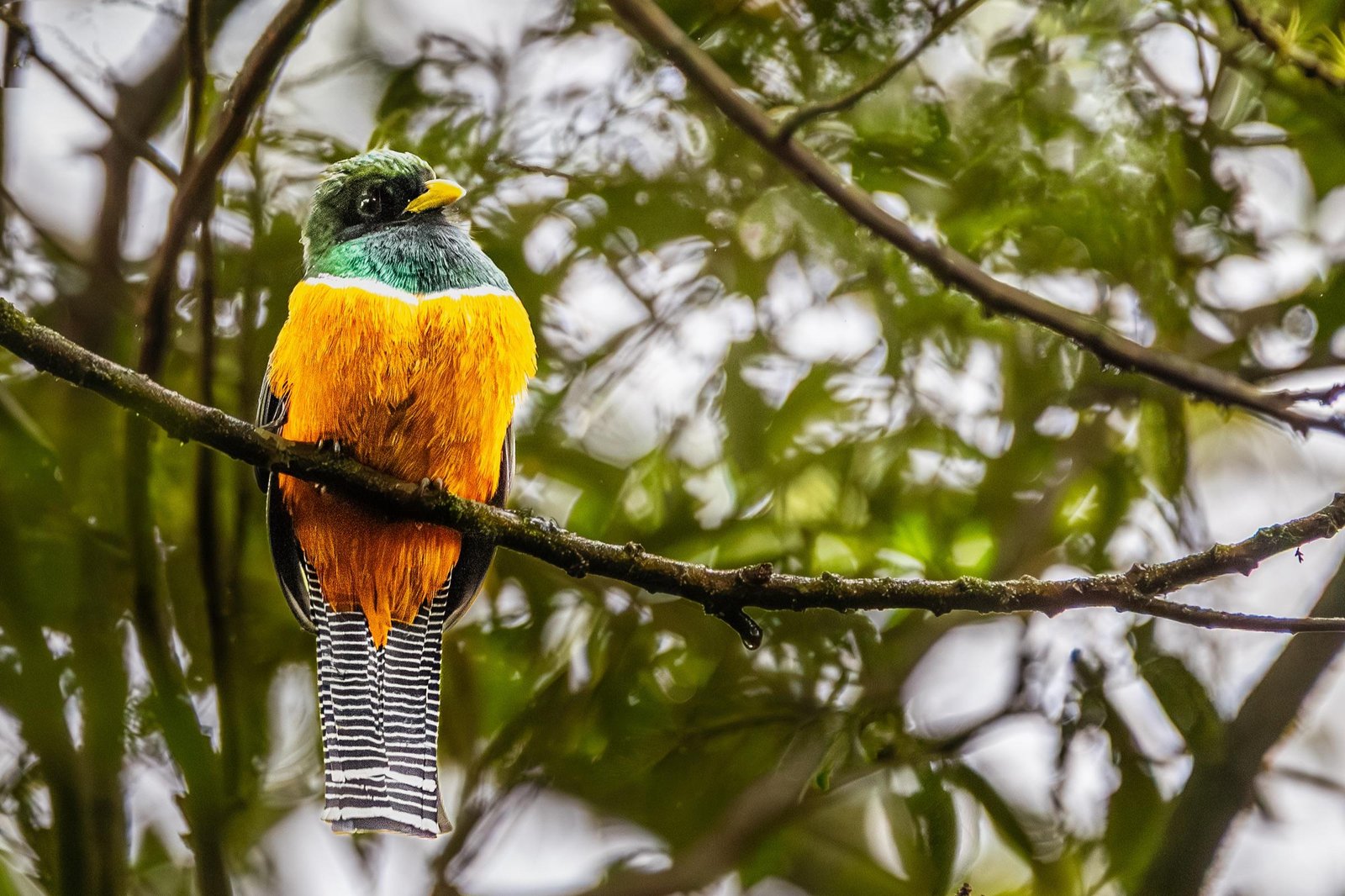
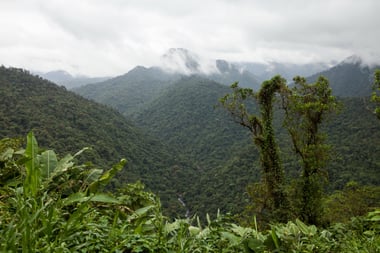
The cloud forest and the high oak forest down the spine of the country, from the Talamanca ridge to the volcanoes. This is the Resplendent Quetzal's home, and San Gerardo de Dota is where we send people who have crossed an ocean to see one: the valley is in the book "Fifty Places to Go Birding Before You Die" and the guides there work the wild avocado trees the quetzals feed on. Fiery-throated Hummingbird, Black Guan and Emerald Toucanet come with the same mornings. Lodges we use: Trogon Lodge and Savegre Lodge in San Gerardo de Dota, Paraíso Quetzal Lodge up on the ridge, and Quelitales for Tapantí.
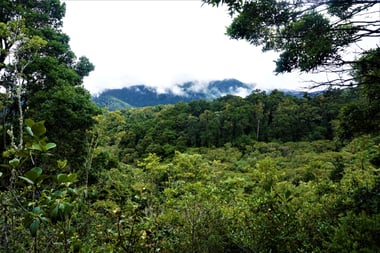
The wet slope above Turrialba, where the Talamanca mountains drop toward the Caribbean. One lodge made this zone famous: Rancho Naturalista, with hummingbird feeders on the balcony at dawn and forest pools where the Snowcap comes to bathe in the late afternoon. The Rio Tuis valley below it is the most reliable place in the country for the Lanceolated Monklet, and the higher ground at Cerro Silencio brings tanager flocks and both hawk-eagles. Lodges we use: Rancho Naturalista and Casa Turire.
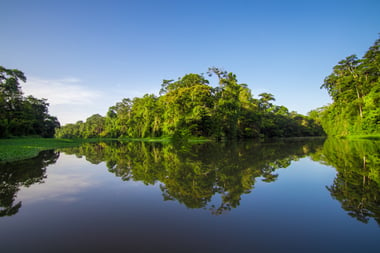
The biggest zone and the wettest, from the Arenal volcano and the wetlands at Caño Negro across Sarapiquí to the Tortuguero canals and the south Caribbean coast. Great Green Macaw, Great Potoo, Sunbittern and Keel-billed Toucan country, and in autumn the Keköldi ridge near Cahuita is one of the best places on earth to watch raptors migrate. Tortuguero is birded by boat, which suits a lot of our clients who have had enough of trails. Lodges we use: Arenal Observatory Lodge, next to Arenal Volcano National Park, Selva Verde Lodge in Sarapiquí, Laguna del Lagarto at Boca Tapada, and Selva Bananito on the south Caribbean coast.
The dry side. Guanacaste and the Nicoya Peninsula, tropical dry forest and the wetlands of Palo Verde along the Tempisque River. The birding here is open and easy on the legs, and it is where you see the species that do not reach the wet side: Turquoise-browed Motmot, Long-tailed Manakin, White-throated Magpie-Jay, Double-striped Thick-knee, and Jabiru, Roseate Spoonbill and Wood Stork on the water. Lodges we use: Rancho Humo Estancia on its own reserve at Palo Verde, and Tango Mar on the Nicoya coast for the end of the trip.
From the Tárcoles River south to the Osa Peninsula. Carara National Park, where the dry forest meets the wet, is the surest place in the country for Scarlet Macaws, and the mangrove boat on the Tárcoles adds the water birds. Further south, the Osa and Golfo Dulce are the wildest forest we sell: Fiery-billed Aracari, Ornate Hawk-Eagle, Riverside Wren. Lodges we use: Cerro Lodge and Macaw Lodge at Carara, Cristal Ballena and La Cusinga on Bahía Ballena, Hacienda Barú at Dominical, and Esquinas Rainforest Lodge at Piedras Blancas.
Wherever your target bird lives. The quetzal is in the Highlands, the Scarlet Macaw at Carara, the Great Green Macaw in the Caribbean Lowlands, the dry forest birds in Guanacaste. A trip that touches two or three zones in ten to twelve nights sees more of the list than any single place.
Can one trip cover all five zones?
Yes, and we have built it: the five together is a longer trip than most, because every zone needs its own dawns. Most of our birding trips combine two or three.
Which zone should a first trip start in?
The Highlands. The quetzal is the first thing most birders ask us for, and the Savegre valley is about 2½ hours from the San José airport.
Tell us what you want to see. We will build the trip around it.
A few minutes on the form, and one of our Costa Rica specialists comes back to you personally with a first itinerary. No fixed dates, no bus, no obligation.