
Family Momotidae
Turquoise-browed Motmot
Eumomota superciliosa
In Spanish: Momoto Cejiceleste (Pájaro Bobo)
- Resident
Fence posts and wires on Guanacaste's dry-forest roads: Palo Verde, Rincón, Santa Rosa, Curú. All year.
On a fence post by a Guanacaste road, a bird swings its long tail from side to side like a clock pendulum. Ask the driver to stop.
The tail feathers end in paddle shapes, called rackets, on long bare shafts, and male and female both carry them and wag them the same way. Locally it is the pájaro bobo, the foolish bird, and the official list keeps that name. On the dry side of the country it is the motmot on the wire, sitting out in the open along the roads.
Where to see it
- Hotspot page
- Named place
- Nearby lodge (numbers match the cards)
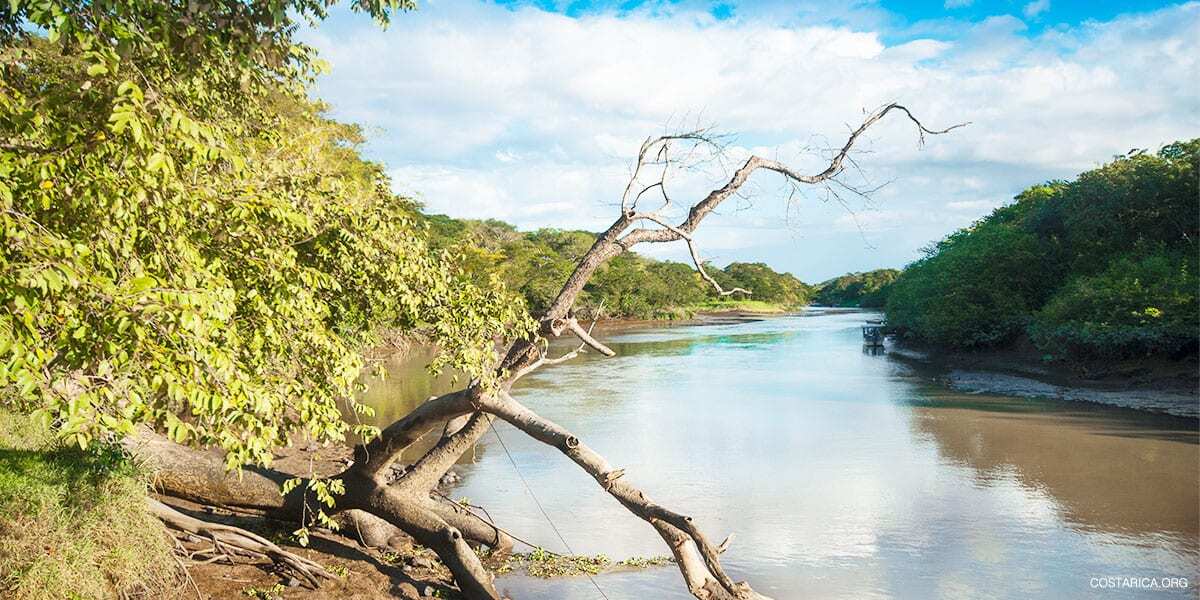
- Palo Verde National Park and the Tempisque Riveron the wires and fence posts of the dry forest.
- Rincón de la Vieja National Parkon the fence posts, one of the birds of the whole dry side.Not on the map above: it sits too far away to show at this zoom.
- Santa Rosa and Guanacaste National Parkswith the dry-forest trogons and the Long-tailed Manakin, easiest when the trees are bare.Not on the map above: it sits too far away to show at this zoom.
- Curú Wildlife Refuge and the Río Pochotefrom the Pochote boat, the motmot that sits on every wire and fence post on the dry side.Not on the map above: it sits too far away to show at this zoom.
Nearby lodges
Within 20 km of a place on the map, in the same zone.
- 1
 Rancho Humo Estancia5.9 km from Palo Verde National ParkSee the lodge
- 2
 Hacienda Guachipelin4.0 km from Rincón de la Vieja National Park (off the map)See the lodge
- 3
 Tango Mar Resort15.7 km from Curú Wildlife Refuge (off the map)See the lodge
How to recognise it
About 34 cm and 65 grams. Male and female look alike, rackets and all.
The body is mostly grey-blue, with a rufous, rusty orange-brown, back and belly. A bright blue strip runs above the eye, the turquoise brow of the name, and a black throat patch is edged in blue.
The mark that settles it is the tail. The bare shafts before the rackets are longer than on any other motmot, so the paddles seem to dangle off the end of the bird.
Its call is a nasal croak that carries a long way.
Where it lives
Fairly open country: forest edge, gallery forest along rivers, scrub, and above all dry forest. In Costa Rica that puts it in the Northern Pacific Lowlands, the Guanacaste side, where it is common.
When to see it
All year. At Santa Rosa the dry-forest birds are easiest when the trees are bare.
Trips that find it
- Birding in Costa Rica's Northern Zone11 nightsSee the trip
- Birding in Costa Rica's Nicoya Peninsula11 nightsSee the trip
- Costa Rica Classic Birding, All Inclusive8 nightsSee the trip
Tell us when you are travelling and our team in Costa Rica builds the trip around the birds you want to see.
Plan my birding tripHow we know this 1 sources, each read on the date shown
- Wikipedia: Turquoise-browed motmot read 4 November 2026
https://en.wikipedia.org/wiki/Turquoise-browed_motmot