The Costa Rica bird checklist: 944 species
944 species on the official list, in a country you can drive across in a day. Here are the ten most of our clients come for, where we find them, and when to come.
The list
- 944species
- 655resident
- 222migrants
- 105regional endemics
The official list of the birds of Costa Rica, kept by the Asociación Ornitológica de Costa Rica, stands at 944 species on its June 2026 update. We did not count them. The AOCR's committee did, and their citation is at the foot of this page. Of the 944, 655 are marked resident, 222 are migrants that spend part of the year here, and 105 carry the list's endemic flag: birds found only in Costa Rica and the region around it.
What the number does not tell you is how close together they live. The cloud forest where the quetzal feeds and the dry forest where the Long-tailed Manakin dances are a morning's drive apart, and the Caribbean lowlands sit on the other side of the same mountains. That is why a ten-night trip here can hold three zones, and why we build it that way.
This page is the short version: ten birds, the families, the timing, and the five zones we work. The whole list, with a tick box for every one of the 944, is right below, as a printable checklist.
The checklist
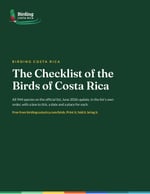
Take the whole list with you.
Every one of the 944 species, in the official list's own order, with a box to tick and a line for the date and the place. We built it for the lodge balcony and the back seat of the van, and it prints clean on a home printer. The same list is there as a spreadsheet if you keep yours on a laptop.
- 944 species
- 37 pages
- PDF, 2.9 MB
Open your birding account and it is yours, as a PDF to print and as a spreadsheet, with our guide beside it.
The names, the order and the status flags are the AOCR's, from the June 2026 update; the tick box, the date and place columns and the layout are ours.
How the list marks each bird, in the AOCR's own codes. R: resident, breeds in Costa Rica and is here all year. RR: breeds here, then migrates south. R?: not migratory, breeding here not yet confirmed. M: migrant, spends part of the year here, no breeding record. M?: migrant status uncertain. A: accidental, recorded once or very few times, far from its normal range. END: endemic to Costa Rica and the region. SC: on the list without a voucher specimen or photo yet. A bird can carry two, R,M, when it has a resident population and a migrant one.
Ten birds to look for
The same ten we have put in front of birders since 2017, with the names as the official list writes them today. These are not the rarest birds in the country. They are the ones that make a first trip, and each one says where we actually go to find it.
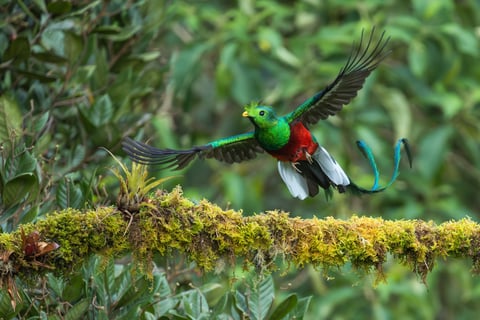
Resplendent Quetzal
Pharomachrus mocinno, resident
The bird most of our birding clients open the conversation with. A trogon, the biggest one here, the male with a red breast and tail streamers that can be longer than the rest of the bird. We send people to San Gerardo de Dota in the Highlands, where the guides work the wild avocado trees the quetzals feed on and know this season's fruiting trees.
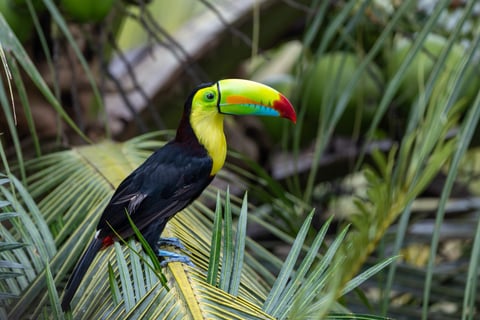
Keel-billed Toucan
Ramphastos sulfuratus, resident
The toucan on every poster, with the rainbow bill. The Caribbean Lowlands and Arenal are where we see them most, usually in the morning at the top of a bare tree. One of six toucans on the list; the Yellow-throated Toucan, bigger and darker, is often on the same branch.
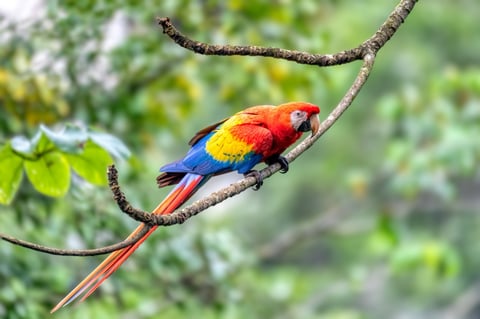
Scarlet Macaw
Ara macao, resident
Loud, red, and flying in pairs. Carara National Park and the Tárcoles River on the Central Pacific are where we take people for them, and the Osa Peninsula further south has them too. You hear them before you see them.
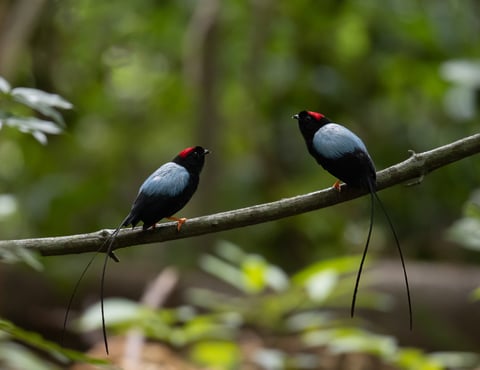
Long-tailed Manakin
Chiroxiphia linearis, resident
A small black bird with a sky-blue back and two long tail feathers, known for the dance two males perform side by side for one female. The dry forest of Guanacaste and the Nicoya Peninsula is its home on our side of the country.
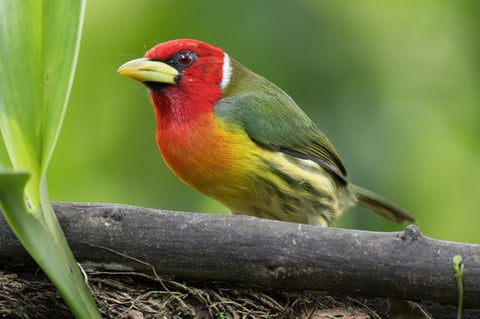
Red-headed Barbet
Eubucco bourcierii, resident
A stocky little bird of the wet foothills, the male with a red head that looks painted on. The Caribbean Foothills above Turrialba are where our clients most often get it, at a lodge feeder.
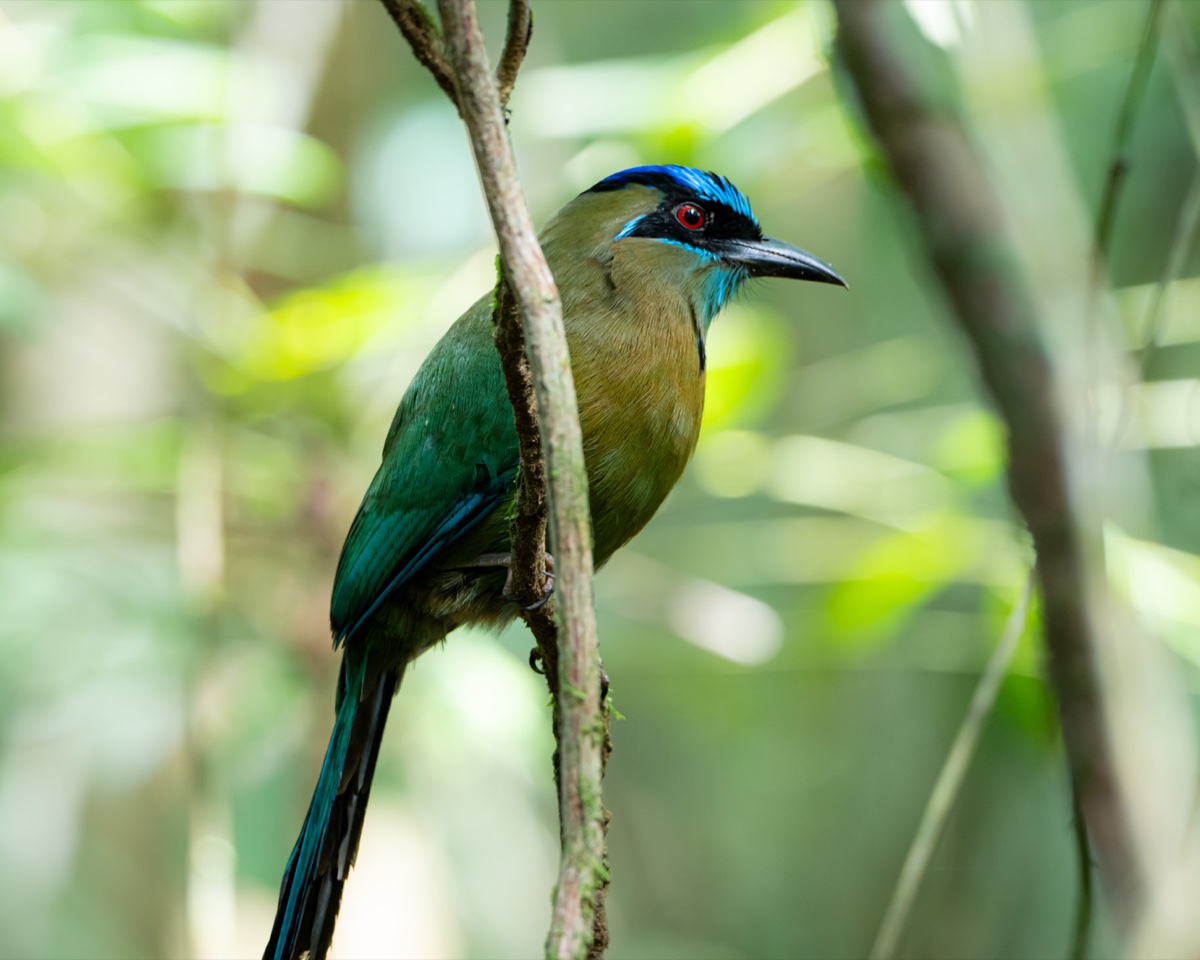
Lesson's Motmot
Momotus lessonii, resident
Older field guides call this the Blue-crowned Motmot. The official list split that bird years ago and ours is now Lesson's Motmot, so if your book is older than the name, it is the same bird. Common in the Central Valley, including gardens around San José, with the racket-shaped tail that swings like a pendulum.
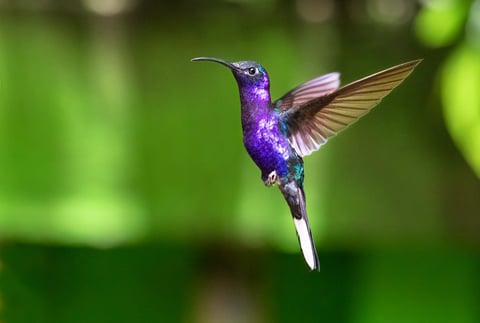
Violet Sabrewing
Campylopterus hemileucurus, resident
The biggest hummingbird you will see here, a deep violet male that owns the feeder it chooses. Cloud forest and highland lodges, San Gerardo de Dota and Monteverde among them.
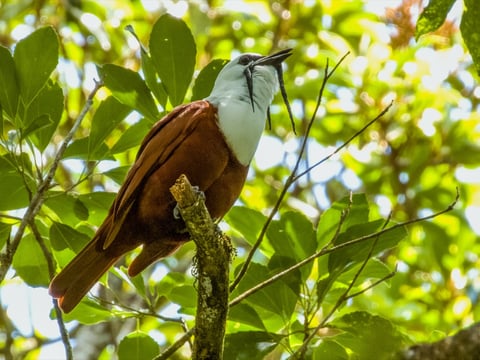
Three-wattled Bellbird
Procnias tricarunculatus, resident, a regional endemic
Three wattles hanging from the bill and a call like a hammer on an anvil that carries across a valley. You hear it long before you see it. A bird of the cloud forest, Monteverde above all, that moves to lower ground part of the year.
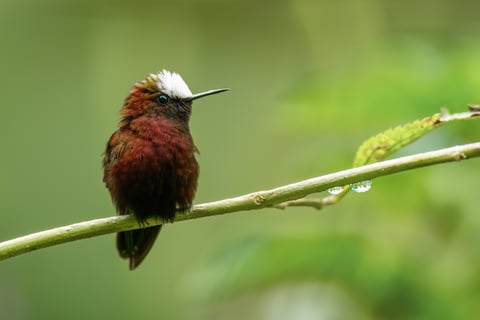
Snowcap
Microchera albocoronata, resident, a regional endemic
A tiny wine-coloured hummingbird with a white cap. The Caribbean Foothills are the place: forest pools below the lodge, where it comes to bathe late in the afternoon.
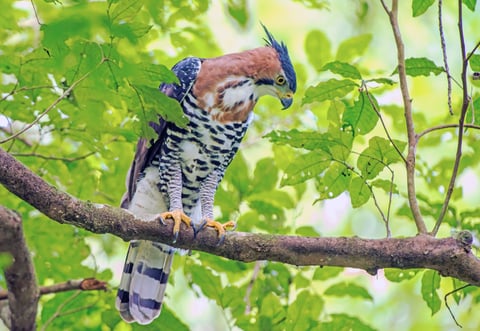
Ornate Hawk-Eagle
Spizaetus ornatus, resident
The crested eagle of the wet forest, and the one bird on this list you cannot plan for. The Osa Peninsula and the Caribbean Foothills give the best chances; a guide who knows the territories is the difference.
Names and status from the Lista Oficial de las Aves de Costa Rica 2025-2026, June 2026 update, by the AOCR's Comité Científico. "Regional endemic" is the list's END flag: endemic to Costa Rica and the region, not to Costa Rica alone.
The families
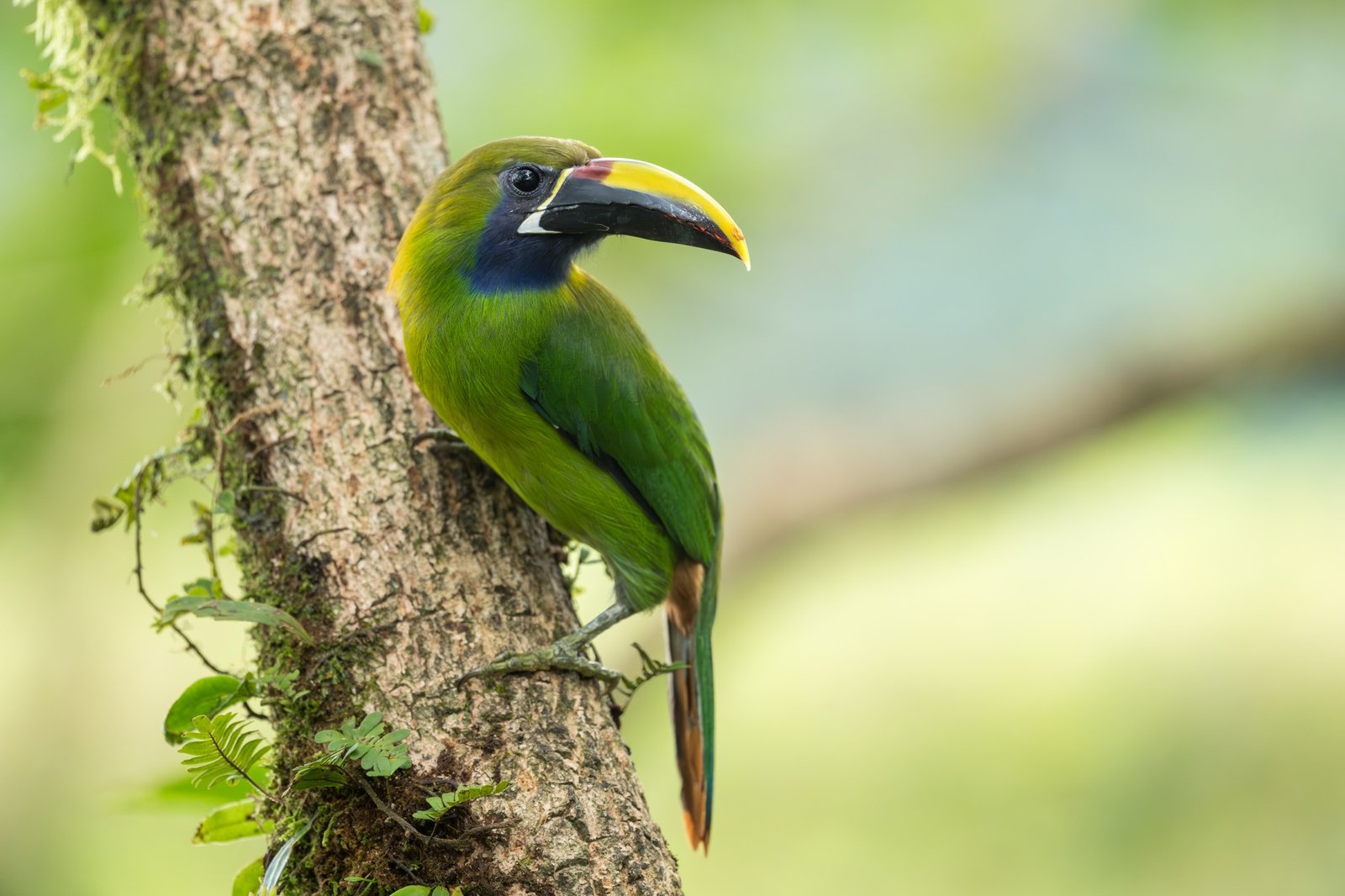
Fifty-two hummingbirds, 19 of them regional endemics, and the lodges we use put feeders out before sunrise, so you meet a dozen of them over your first coffee. Six toucans, from the Northern Emerald-Toucanet to the Keel-billed. Nine trogons, the quetzal among them. Six motmots. Eighteen parrots and macaws, the Scarlet and the Great Green among them. Fifty-one tanagers and 51 New World warblers, most of the warblers migrants from the north. Those are counts by family from the official list, not our guess.
And the national bird is none of these. It is the Clay-colored Thrush, plain brown, chosen because its song opens the rainy season.
Browse all 944 by type
We sort the list into 19 types a birder would recognise in the field. Each one has its own page with every species on the list, the regional endemics marked, and where we find them.
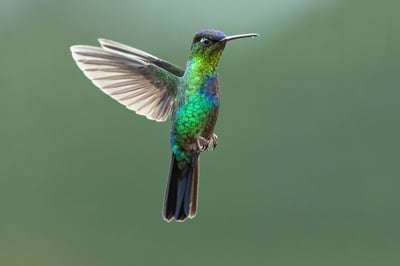 Hummingbirds52 species, 19 found only in this corner of the world, and most of them easy to watch at a feeder.
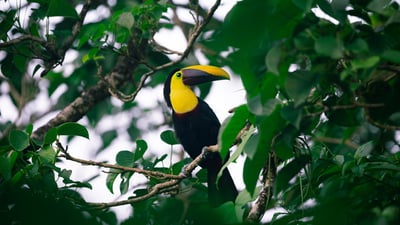 Toucans and barbets8 species, 2 found only in this corner of the world, and the bill to know each one by.
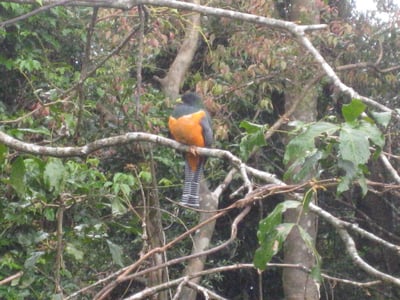 Trogons and the quetzal9 species, 2 found only in this corner of the world, and the tail to look under for each one.
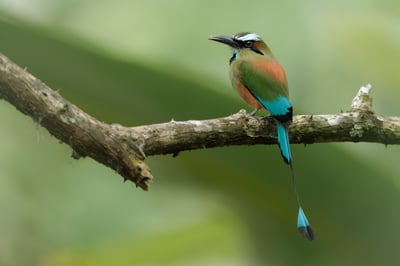 Motmots, kingfishers, jacamars and puffbirds19 species, 6 motmots among them, and the one that swings its tail like a clock pendulum.
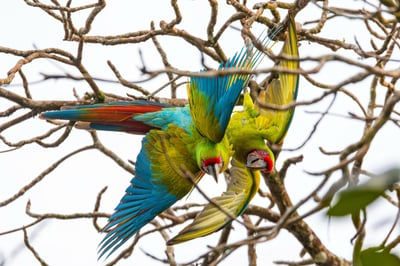 Parrots and macaws18 species, only 2 of them macaws, and a river at dawn where one of them crosses.
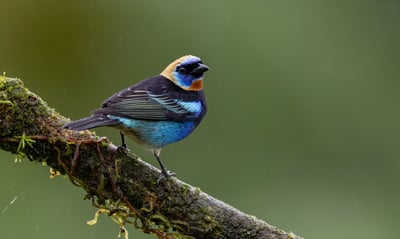 Tanagers, honeycreepers, euphonias and finches113 species, 24 found only in this corner of the world, from garden fruit trees to the cloud forest canopy.
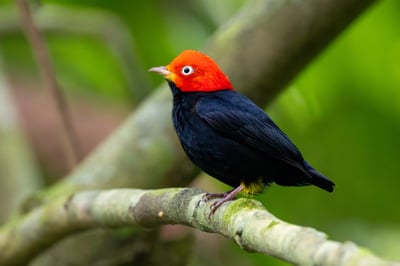 Cotingas, manakins and tityras30 species, 6 found only in this corner of the world, and a call heard from 800 metres away.
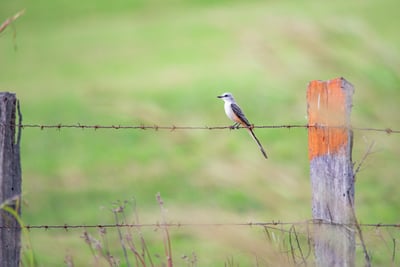 Flycatchers81 species in one family, 6 found only in this corner of the world, and 52 of them here all year.
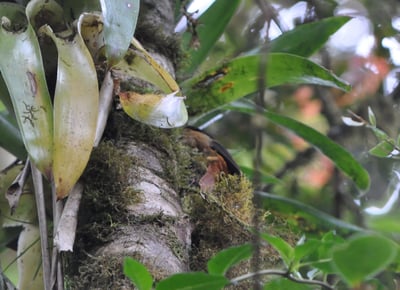 Antbirds, ovenbirds and woodcreepers66 species, 8 found only in this corner of the world, and not one of them a migrant.
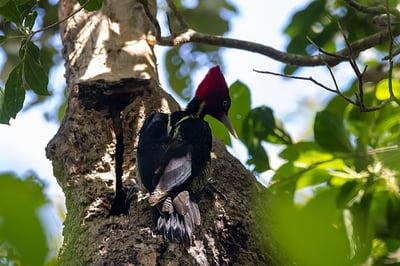 Woodpeckers16 species, 3 found only in this corner of the world, and 12 of them here all year.
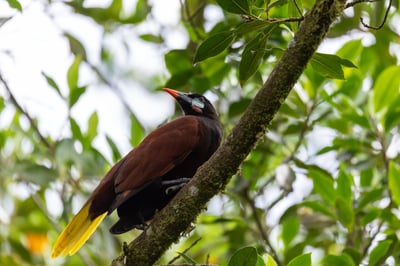 Warblers, vireos, orioles and oropendolas92 species, 6 found only in this corner of the world, and 45 of them migrants that visit.
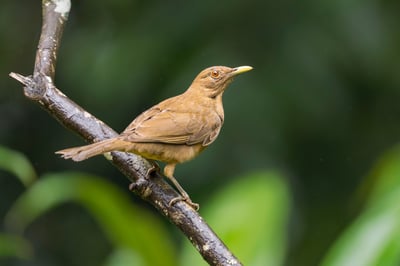 Wrens, thrushes, jays and other songbirds71 species, 15 found only in this corner of the world, from the Clay-colored Thrush in the garden to the Wrenthrush on the ridge.
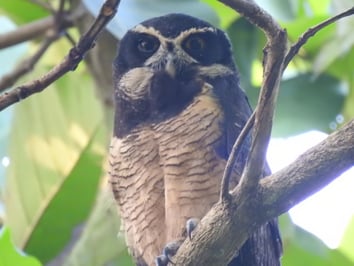 Raptors and owls75 raptors and owls, and the three found only in this corner of the world are all owls.
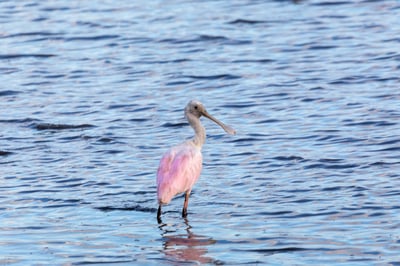 Herons, storks, ibises and marsh birds51 herons, storks, ibises and marsh birds, watched mostly from a boat, from the Tempisque to Tortuguero.
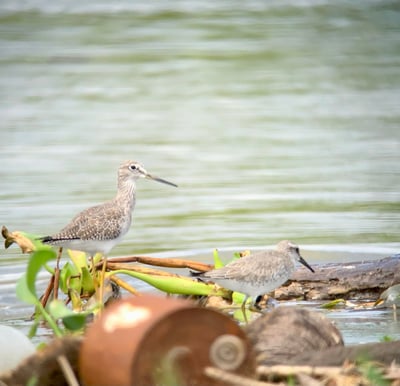 Shorebirds48 shorebirds, 37 of them migrants, and the few places where we have written one down.
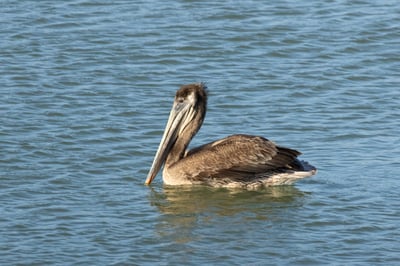 Seabirds84 seabirds, and 31 of them, 37 percent, are accidental: recorded once or very few times.
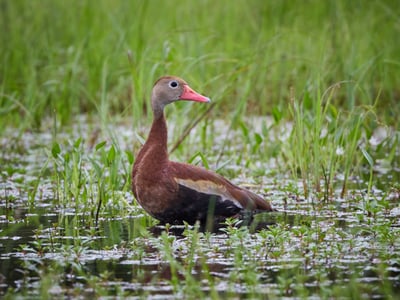 Ducks and grebes27 ducks, geese and grebes, 11 of them accidental, and none yet with a place in our notes.
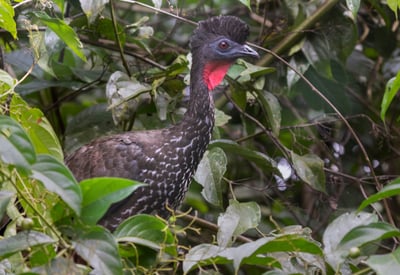 Guans, curassows, quail, tinamous and doves45 guans, curassows, quail, tinamous and doves, 5 found only in this corner of the world.
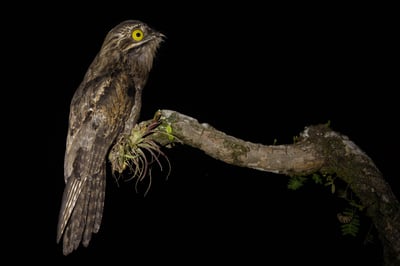 Cuckoos, nightjars, potoos and swifts39 species, 3 found only in this corner of the world, and the potoo that looks like a broken stump.
When to come
All year, honestly. Resident birds, 655 of the 944, are here every month. The northern migrants pass through from August to December and again from January to May on their way back, so a trip in those windows adds the warblers and the raptors on the move: in autumn the Keköldi ridge on the south Caribbean coast is one of the most important raptor migration routes in the world.
December to April is the dry season on the Pacific side. The Caribbean keeps its own calendar and is at its best in September and October.
The quetzal is the question we get every week, and the honest answer is that it is there all year with a guide, and best in the nesting season. Tell us your dates and we will tell you what the San Gerardo guides are seeing that month.
Start early and stop by ten. The birds are busiest in the first three hours of light, and so is our driver, which is why he leaves when you say. If your dates touch a busy week like Easter or Christmas, you are right to be planning now.
Where the birds are
Costa Rica is small enough to drive across in a day and varied enough that the birds change every hour of that drive. We work it as five zones, and each zone has its own page with its parks and hotspots. Under each one here are the lodges we use there, 53 in all, every one with its own page: the birding on the property, the birds to look for, and the trips that stay there.
The Highlands
The cloud forest and the high oak forest down the spine of the country. Resplendent Quetzal, Fiery-throated Hummingbird, Black Guan.
Where we stay:
 Trogon Lodge
 Dantica Cloud Forest Lodge
 Mirador de Quetzales
 Poás Volcano Lodge
 Trapp Family Lodge
 Villa Blanca Cloud Forest Hotel
 Hotel Bougainvillea
 Senda Monteverde Hotel
The Caribbean Foothills
The wet slope above Turrialba. Snowcap, Red-headed Barbet, tanager flocks and both hawk-eagles.
Where we stay:
 Rancho Naturalista
The Caribbean Lowlands
Arenal, Sarapiquí, Caño Negro and the Tortuguero canals, birded by boat. Great Green Macaw, Great Potoo, Sunbittern, Keel-billed Toucan.
Where we stay:
 Arenal Observatory Lodge
- Arenal Oasis Ecolodge & Wildlife Refuge
- Chachagua Rainforest Hotel & Hacienda
 Caño Negro Natural Lodge
 Evergreen Lodge
 La Selva Biological Station
 Laguna Lodge
 Maquenque Eco Lodge
 Mawamba Lodge
 Pachira Lodge
 Selva Bananito Lodge
 Selva Verde Lodge
 Tapirus Lodge
 Celeste Mountain Lodge
 Finca Luna Nueva Lodge
The Northern Pacific Lowlands
The dry side, Guanacaste, Nicoya and the wetlands of Palo Verde. Turquoise-browed Motmot, Long-tailed Manakin, White-throated Magpie-Jay, and Jabiru, Roseate Spoonbill and Wood Stork on the water.
Where we stay:
 Hacienda Guachipelín
 Rancho Humo Estancia
 Tango Mar Resort
 La Ensenada
The Central and Southern Pacific Lowlands
From the Tárcoles River south to the Osa Peninsula. Scarlet Macaw, Fiery-billed Aracari, Ornate Hawk-Eagle, Riverside Wren.
Where we stay:
 Aguila de Osa Inn
 Drake Bay Wilderness Resort
 Bosque del Río Tigre
 Esquinas Rainforest Lodge
 Hacienda Barú Lodge
 Cerro Lodge
 Bosque del Tolomuco
- Santa Lucía Jungle Hacienda
- Hotel Punta Leona
 Macaw Lodge
- Hotel Cristal Ballena
 La Cusinga Lodge
 Las Cruces Biological Station
 Talari Mountain Lodge
 Lapa Rios Ecolodge
 Tiskita Jungle Lodge
 Playa Nicuesa Lodge
- Corcovado Wilderness Lodge
 Playa Cativo Eco-Lodge
Questions birders ask us
Do I need a guide?
You can bird on your own at any lodge we use. But a local guide finds in a morning what takes a visitor a week, and for the quetzal, the hawk-eagle and most of the hummingbirds we book one every time. We contract the guides directly.
How many nights do I need?
Three nights in a zone gives you two full dawns there. A week holds two zones, ten days holds three. Longer than twelve nights and most people want a beach at the end.
I am a birder, my partner is not. Does that work?
It is one of the trips we build most. The lodges we use have pools, hot springs or a beach nearby, the driver stops wherever you ask, and we put the non-birding days where they do the most good. Say so on the form and we plan for two people, not one.
Which airport?
San José for the Highlands, the Caribbean and the Pacific south. Liberia for the dry side and the Guanacaste beaches. Have you looked into flights yet, or is there an airport you have in mind? Tell us and we will advise.
Tell us what is on your list. We will build the trip around it.
A few minutes on the form, and one of our Costa Rica specialists comes back to you personally with a first itinerary. No fixed dates, no bus, no obligation. Or call us: 1 (800) 996-1139 from the US and Canada, +506 4052-2140 in Costa Rica.
Species names, counts and status on this page are from: Garrigues, Richard, P. Camacho-Varela, J. Corrales, R. Jiménez, P. O'Donnell, D. Rodríguez (2026). Lista Oficial de las Aves de Costa Rica 2024-2025 – Actualización Junio 2026. Comité de Especies Raras y Registros Ornitológicos de Costa Rica (Comité Científico), Asociación Ornitológica de Costa Rica. https://listaoficialavesdecostarica.wordpress.com/