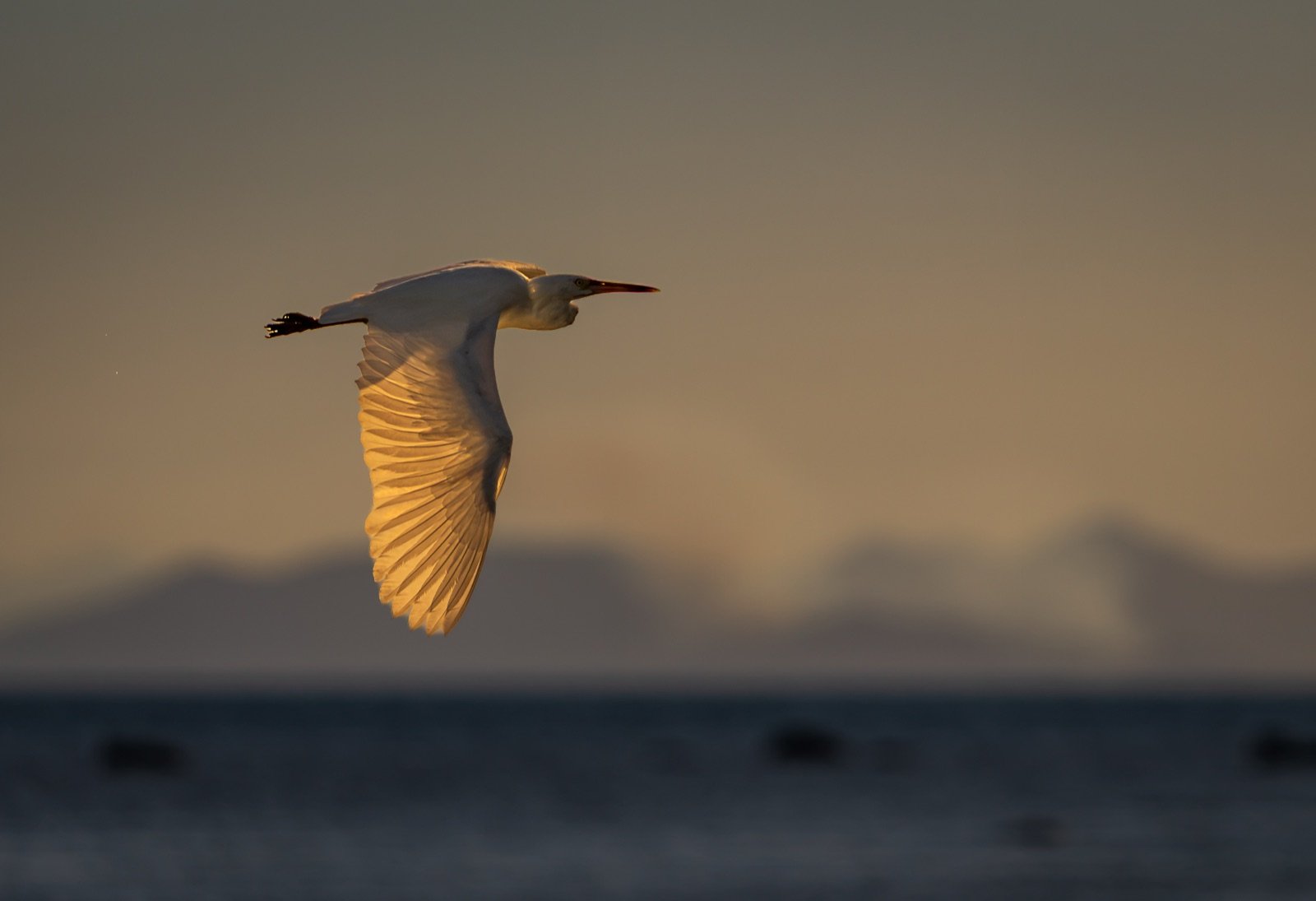
 Great Egret
Family Ardeidae
Great Egret
Ardea alba
In Spanish: Garceta Grande (Garza Real)
- Resident
Tall white heron with a yellow bill and black legs, found wherever there is water
The Great Egret is the largest all-white member of the heron family, and in Costa Rica you can find it almost anywhere there is water. That makes it a friendly first heron for a beginning birder.
On a trip we build, a boat on the Tárcoles River mangroves is one easy way to meet it. The Tempisque wetlands around Palo Verde are another, and Isla Pájaros is the main nesting colony in the country.
Some birds live here all year, and their numbers grow a lot from October to April, when migrants arrive from other areas.
Where to see it
How to find it
Go where there is water. A boat tour on the Tárcoles River is one easy option. A guided boat trip to Isla Pájaros on the Tempisque River in Palo Verde National Park reaches a nesting island used by Great Egrets and many other waterbirds, and the island can only be reached by boat. Dry-season boat trips on the Bebedero and Abangares river deltas near the Gulf of Nicoya also work well, because the wetland shrinks as the season advances and packs the birds together. A guided birding boat trip in the northern plains is a place to see large numbers of Snowy and Great Egrets, with Roseate Spoonbill and Anhinga there too. A January tour on a far north route called Great Egret very common.
How to recognise it
Learn these marks and the bird is easy to name:
All white plumage.
Yellow bill.
Black legs and feet.
About 80 to 104 cm long across its range, the largest all-white heron.
In flight it pulls its neck back into an S shape. Storks, cranes, ibises and spoonbills fly with the neck stretched out instead, so the neck is a useful clue when a white bird passes overhead. Its flight is distinctive, with slow wingbeats and easy glides.
In breeding season it grows long ornamental plumes. Breeding birds at one northern wetland also grow a green mask around the eyes between June and September, and the mask then fades.
What it sounds like
Behaviour and diet
The Great Egret stands still in shallow water, then spears its prey with its bill. A Costa Rican naturalist describes how it wades slowly to the water's edge, stands framed in front of the camera, then stabs suddenly. Single birds are the norm, and it is normally seen alone.
It will feed in flocks with other herons, cormorants or ibis, yet it always keeps its own space while feeding. As the dry season shrinks Guanacaste water holes to puddles, a noisy crowd of waterbirds forms and many Great Egrets compete for the trapped aquatic prey.
Where it lives
Look in marshes, estuaries, lake and lagoon edges, salt pans, saltwater pools and rivers. It prefers shallow water about 10 to 30 cm deep.
It is common in the lowlands and sometimes turns up at mid elevations in the Central Valley. The National Museum lists it from sea level to 1500 m.
In Tortuguero National Park it lives in swampy areas, lowland forest and savannas. It is also known from the Tempisque Valley near Palo Verde, the Sierpe mangroves and Boca Tapada.
When to see it
Egrets and herons gather at Laguna Palo Verde from September through March to feed and nest, a good window for large numbers there. Great Egrets nest from March to August on small islets in the Gulf of Nicoya.
Similar birds
At Tortuguero, tell Great Egret from Snowy Egret by bill and foot colour. Great has a yellow bill and black feet, while Snowy has a black bill and yellow feet. Great is also the larger of the two. The Cattle Egret is much smaller and stockier, and the other white herons differ in leg or bill colour.
Names and lore in Costa Rica
The AOCR Spanish name is Garceta Grande, and Costa Ricans also call it Garza Real. The first name points to its height and the second suggests it belongs among bird royalty. Museum and natural history pages also use plain Garza.
Status and conservation
The AOCR lists it as R,M, a resident and migrant, and the National Museum rates it Least Concern.
Photography tips
Its slow wade to the water's edge, then sudden stab, suits patient photographers. In breeding season the long ornamental plumes make it a showier subject. Single birds are the norm, so work with one bird at a time.
How we know this 26 sources, each read on the date shown
- Birds of the World (Cornell Lab) read 2026-11-04
https://birdsoftheworld.org/bow/species/greegr/cur/distribution - Trek Zone read 2026-11-04
https://trek.zone/en/costa-rica/animals/great-egret - My Tan Feet read 2026-11-04
https://mytanfeet.com/costa-rica-wildlife-and-nature/birds-of-costa-rica/ - Retired in Costa Rica read 2026-11-04
https://www.charliedoggett.net/2021/10/31/fave-birds-great-egret/ - Costa Rica Guide read 2026-11-04
https://costa-rica-guide.com/photos/wildlife-reserves/cano-negro-photos/attachment/great-egret-2/ - Tortuguero Info read 2026-11-04
https://www.tortugueroinfo.com/great_eagret_tortuguero.html - National Wildlife Foundation species page read 2026-11-04
https://nwlfd.org/species/great-egret - Wikipedia read 2026-11-04
https://en.wikipedia.org/wiki/Great_egret - Retired in Costa Rica read 2026-11-04
https://www.charliedoggett.net/2023/03/05/the-other-2-white-birds/ - BirdBot read 2026-11-04
https://www.bird.bot/post/great-egret - Birds of Hawaii read 2026-11-04
https://www.birdsofhawaii.info/p/great-egret.html - Simple English Wikipedia read 2026-11-04
https://simple.wikipedia.org/wiki/Great_Egret - Audubon Field Guide read 2026-11-04
https://www.audubon.org/field-guide/bird/great-egret - Tico Times read 2026-11-04
https://ticotimes.net/2024/03/04/costa-rica-birding-meet-the-great-egret - Costa Rica Experts read 2026-11-04
https://costaricaexperts.com/costa-rica-travel-blog/palo-verde-national-park-birding-wetlands/ - Aves de Costa Rica read 2026-11-04
https://www.avesdecostarica.com/Ardea-alba.html - El Norte Hoy CR read 2026-11-04
https://elnortehoycr.com/2020/03/22/conozca-al-garza-real-habitante-del-refugio-cano-negro/ - Birding Craft read 2026-11-04
https://birdingcraft.com/wordpress/2023/05/02/the-northern-wetlands-with-the-costa-rica-birding-club/ - Naturalist Journeys read 2026-11-04
https://www.naturalistjourneys.com/tours/2027/03/18/costa-rica-monteverde-more - Field Guides tour report read 2026-11-04
https://fieldguides.com/triplists/cr217.html - Naturalist Journeys read 2026-11-04
https://www.naturalistjourneys.com/tours/2027/02/03/costa-rica-birding-nature - Museo Nacional de Costa Rica read 2026-11-04
https://www.museocostarica.go.cr/wp-content/uploads/Investigaciones/historia-natural/garzas/diversidad/catalogo-garzas-cr-mncr.pdf - Gallery of Birds read 2026-11-04
http://www.galleryofbirds.com/costarica/Herons.htm - Nicoya Peninsula Waterfalls (nicoyapeninsula.com) read 2026-11-04
https://nicoyapeninsula.com/wildlife/herons/ - Museo Nacional de Costa Rica read 2026-11-04
https://www.museocostarica.go.cr/nuestro-trabajo/investigaciones/historia-natural/garzas/historia-natural/ - AvesTikas read 2026-11-04
https://avestikas.com/2022/04/20/ardea-alba/