Family Rallidae
Common Gallinule
Gallinula galeata
In Spanish: Gallareta Frentirroja (Gallineta)
- Resident
A red-shielded, duck-like marsh bird of ponds, backwaters and slow rivers.
The Common Gallinule is a dark, duck-like water bird with a bright red bill and forehead shield. In Costa Rica it is a resident found across the country, from the lowlands up to about 1,500 m, though it is uncommon and local in most areas.
It lives where still water and tall water plants meet, so boat trips are one of the best ways to meet it. On a trip we build around the northern wetlands, a boatman who knows the channels can make the difference between hearing a cackle in the reeds and seeing the bird.
How to find it
Scan the edges of ponds, marshes and slow streams with plenty of water plants. Boat trips are a main way to reach Costa Rican wetland birds, and the two most popular are the Río Frío in the north and the lagoon and canals of Tortuguero. Boat tours in the north usually leave Los Chiles at 7:00 to 8:00 AM, during the most active morning hours before the heat builds. A naturalist guide spots wildlife while the captain steers through the channels. At Medio Queso and a neighbouring northern wetland, a local boatman who knew where to look helped a tour group find several. Listen early and late in the day to locate one hidden in marsh plants.
How to recognise it
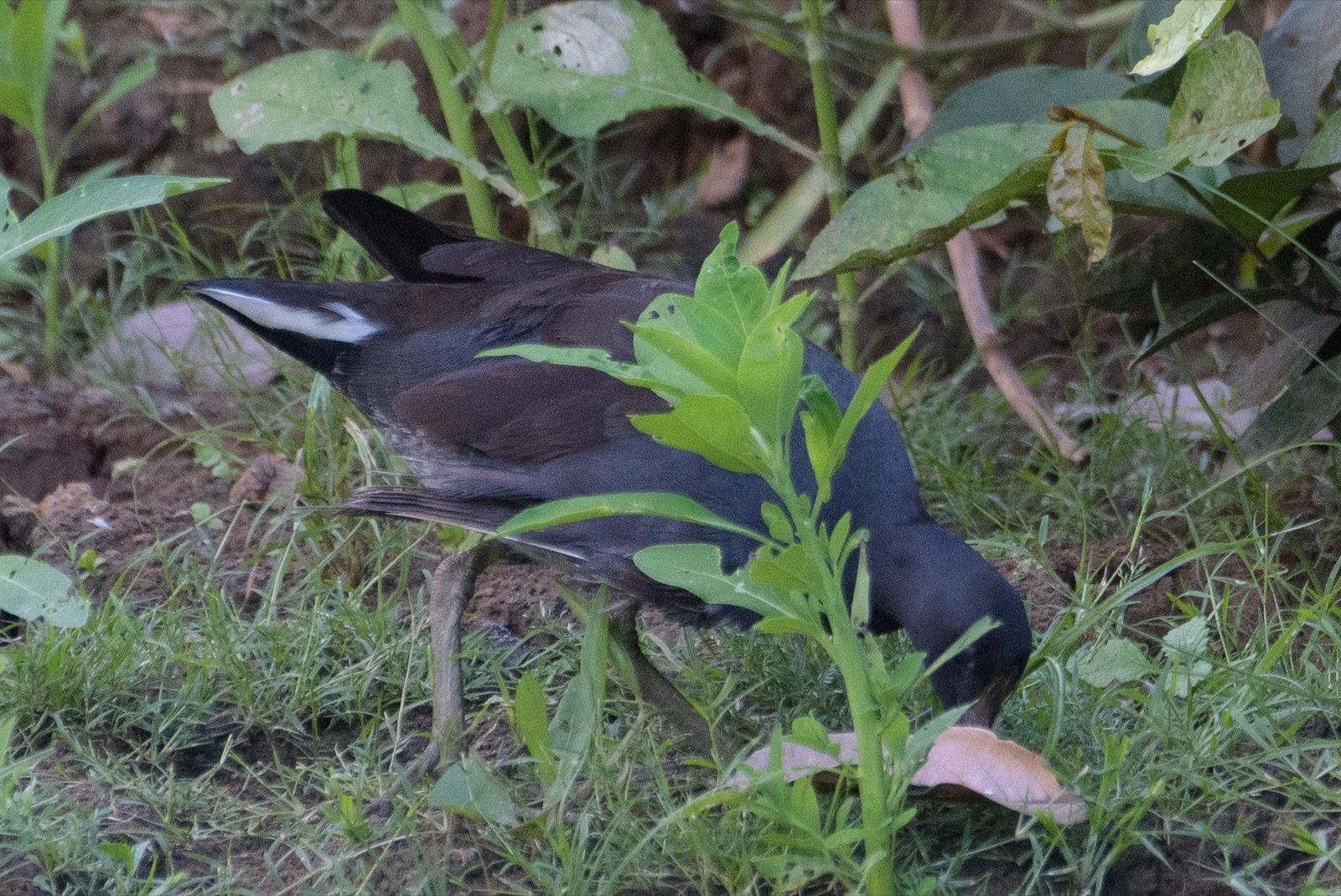
Adults are dark slate with a black head and neck. The bill and forehead shield are red with a yellow tip. A white stripe runs along the flank, and the sides of the undertail are white. The legs are greenish.
At first glance it can look like a duck, but the toes are slightly lobed.
Young birds are browner and have no red shield. Subadults look like adults but have a dull bill without a shield until the shield grows in and turns bright. A young Common Gallinule is greyer, with a broken white line along the flank and two white undertail patches split by a black stripe.
What it sounds like
Behaviour and diet
The gallinule eats many plant materials and small water animals. It feeds beside or in water, sometimes upending, and its wide feet let it walk on lily pads. It is often secretive but can get tame.
It is very vocal, especially early in the morning and late in the afternoon, and it usually stays among emergent wetland vegetation. In Guanacaste it breeds mainly in the rainy season. In the Central Valley it breeds between March and June.
Where it lives
In Costa Rica it is a resident across the country, from the lowlands up to about 1,500 m. It lives in swamps, rivers, ponds and still backwaters with tall, plentiful water plants. It also uses dense vegetation along river edges.
Records come from the northern wetlands, the Caribbean slope, the Carara area and the highland Cartago region.
When to see it
It is a resident bird in Costa Rica, so it can be looked for at any time of year. A few migrants from the north may join residents in the northern winter.
Similar birds
The Purple Gallinule is the main look-alike. The Common usually uses more open water and less dense vegetation, and climbs shrubs less often. The Purple's voice is higher and drier and lacks the Common's laughing, falling series of notes, which helps when birds are hidden. Young birds cause the most confusion: a young Purple is sandy brown with no flank line. The American Coot, a rare visitor here, has a white bill and shield and lobed toes.
Names and lore in Costa Rica
Costa Rica's official Spanish name is Gallareta Frentirroja, and the AOCR list gives Gallineta as the everyday alternative. Frentirroja means red-fronted, after the red shield on the forehead. A Costa Rican biodiversity institute (INBio) species page also lists polla de agua, and guides may use any of these names.
Status and conservation
The AOCR official list marks it as resident with a possible migrant status (R, M?), and globally it is rated Least Concern by the IUCN.
Photography tips
This gallinule is very vocal, especially early in the morning and late in the afternoon. Listening at those hours helps locate one hidden in marsh plants. Wetland watching from the water suits it, and it can get tame.
How we know this 16 sources, each read on the date shown
- Aves de Costa Rica read 2026-11-04
https://avesdecostarica.com/Gallinula-chloropus.html - Field Guides Birding Tours read 2026-11-04
https://fieldguides.com/triplists/cr223PRINT.html - Birdfinding.info read 2026-11-04
https://birdfinding.info/common-gallinule/ - Aves Ibéricas, Aves Costa Rica read 2026-11-04
https://www.avesibericas.es/costaricaaves2.htm - iNaturalist (Wikipedia text) read 2026-11-04
https://www.inaturalist.org/taxa/144479-Gallinula-galeata - Aves de Peru read 2026-11-04
https://avesdeperu.org/rallidae/polla-de-agua-comun-gallinula-galeata/ - Lista Oficial de las Aves de Costa Rica read 2026-11-04
https://listaoficialavesdecostarica.wordpress.com/lista-oficial/lista-oficial-online/ - Birdtours.co.uk Costa Rica trip report bird list read 2026-11-04
http://www.birdtours.co.uk/tripreports/costarica/costar10/list.htm - Costa Rica Guide read 2026-11-04
https://costa-rica-guide.com/activities/nature-cruise-water-safaris/ - Vamos Rent a Car, Caño Negro boat tour guide read 2026-11-04
https://vamosrentacar.com/blog/cano-negro-wildlife-refuge-a-hidden-gem-in-costa-rica/ - National Wildlife Foundation species page read 2026-11-04
https://nwlfd.org/species/common-gallinule - Vorstman's Guide to the Birds of North America read 2026-11-04
https://vorstman.com/vogelgids-nam/en/species/purple-gallinule.html - Aves de Costa Rica read 2026-11-04
https://www.avesdecostarica.org/rallidae.html - aztlek.com (citing INBio) read 2026-11-04
https://aztlek.com/tag/taca-taca/ - Diversidad Biológica UPN read 2026-11-04
https://diversidadbiologica1upn.wordpress.com/2020/07/24/gallinula-galeata/ - Bird Watching Costa Rica read 2026-11-04
https://www.birdwatchingcostarica.com/ave/common-gallinule/