Family Rallidae
Black Rail
Laterallus jamaicensis
In Spanish: Polluela Negra
- Resident
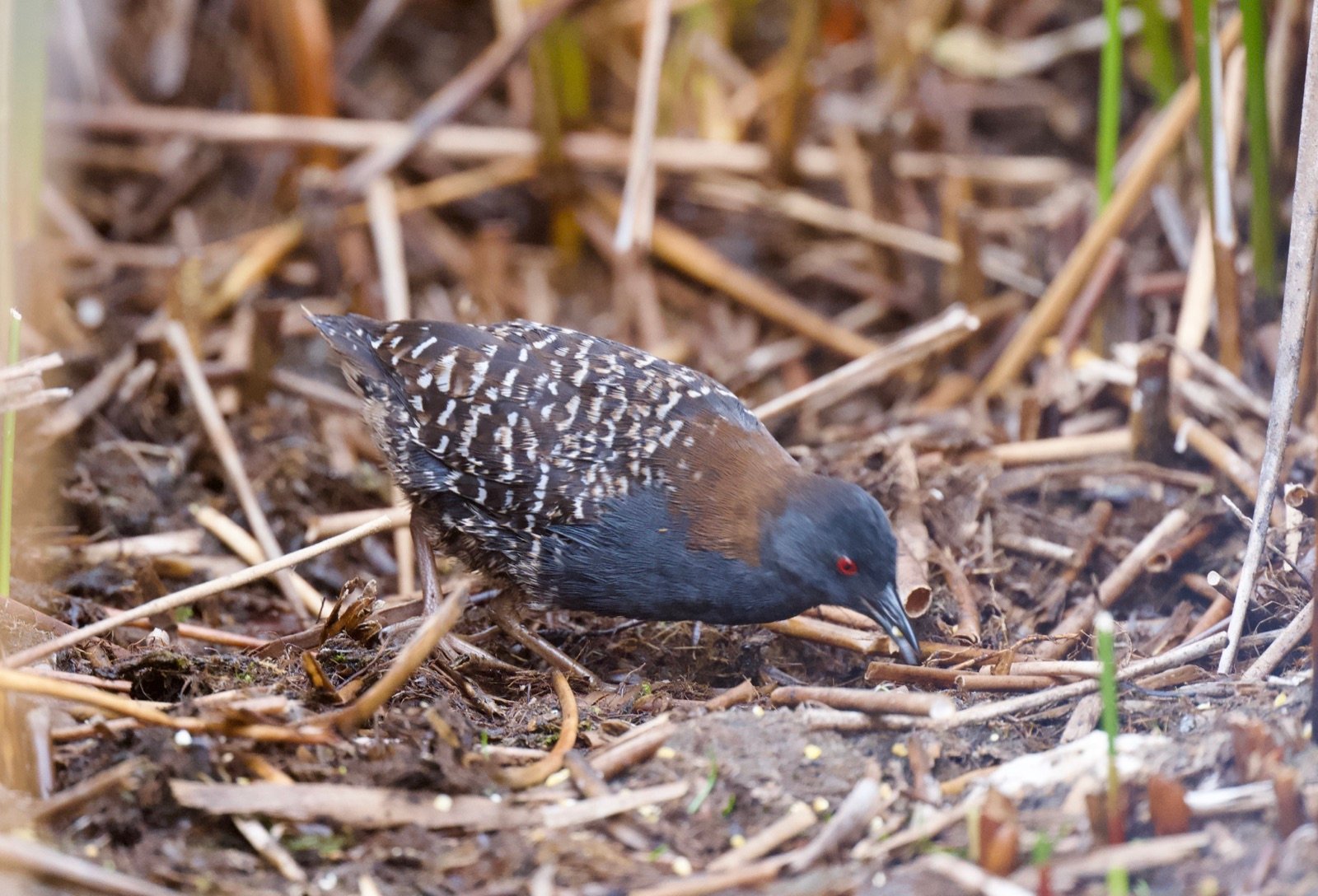
A tiny blackish rail with a chestnut nape, known mostly by its call.
The Black Rail (Polluela Negra, Laterallus jamaicensis) is a tiny blackish rail with a small black bill and a deep chestnut nape. It hides in dense marsh vegetation and is rarely seen, so most people who meet one know it by its calls.
In Costa Rica it is described as very local, as in other parts of its Central American range. The official bird list marks it as a possible resident and possible migrant, and the latest update (June 2026) still asks for confirmation. That points to a very poorly known presence in the country.
For a beginning birder this is a bird to learn about with curiosity rather than to plan a day around. Knowing why it is so seldom seen is part of the fun of the rail family.
How to find it
No Costa Rican method has been recorded, so these tips come from North America. Birders there go after midnight on a still night to a track beside a marsh or wet meadow. They stand quietly and listen, because the call carries far over flat ground. Calling is usually heard in the first hours after sunset or before sunrise, and daytime calls are rare. In Costa Rica, the habitats to think about are the marshes, wet meadows and pond borders described above.
How to recognise it
Look for a tiny blackish rail. These marks describe the species in general, not Costa Rica alone:
Adults are about 14 cm long.
The male has a blackish head and breast, and the female's are dark gray.
The hindneck is chestnut, and the back is blackish brown with white speckles.
The bill is small and black, and the feet are yellow to flesh-colored.
The chestnut on the nape and neck is the mark that separates it from other small rails. Juveniles lack that chestnut on the neck and back, so a young bird is plainer.
What it sounds like
Behaviour and diet
The Black Rail hides in dense marsh vegetation and is rarely seen, so people mostly know it by its calls. It usually walks or runs instead of flying, which makes a clear view even rarer.
It is thought to feed by day at the edges of wetland plants, though little is known about its feeding. In North America, calling is usually heard at night, mostly in the first hours after sunset or before sunrise. Daytime calls are rare, and calling times vary between populations.
Where it lives
Across its range the Black Rail favors very shallow water or damp soil with scattered puddles. It lives in tidal marshes on the coast and in grassy marshes and wet meadows inland.
For Costa Rica, one bird guide describes the habitat as fresh and salt marshes, wet meadows and savanna, and also the borders of ponds. It gives a range from the lowlands up to about 1350 m. Another Costa Rican account calls it a faithful resident of marsh ecosystems that looks like a very dark rail.
Similar birds
The Sora looks similar to the Black Rail, but it is larger, has a bigger yellow bill and is browner overall. This comparison comes from a North American source. The chestnut nape is the mark that separates the Black Rail from other small rails. The rattling growl of an upset Black Rail can also be mistaken for a frog or an insect.
Names and lore in Costa Rica
Polluela Negra is the Spanish name used in Costa Rica and the one on the official list. Elsewhere you may meet Polluela Negruzca, Burrito Cuyano and Gallineta Negra, the last a Honduran name.
Status and conservation
The official Costa Rica list marks the Black Rail as R?,M?-SC, a possible resident and possible migrant that needs confirmation, while another list marks it as accidental.
How we know this 15 sources, each read on the date shown
- Lista Oficial de las Aves de Costa Rica (AOCR) read 2026-11-04
https://listaoficialavesdecostarica.wordpress.com/lista-oficial/lista-oficial-online/ - Wikipedia read 2026-11-04
https://en.wikipedia.org/wiki/List_of_birds_of_Costa_Rica - Planet of Birds read 2026-11-04
https://planetofbirds.com/gruiformes-rallidae-black-rail-laterallus-jamaicensis/ - Bird Watching Costa Rica read 2026-11-04
https://www.birdwatchingcostarica.com/ave/black-rail/ - Vorstman's Guide to the Birds of North America read 2026-11-04
https://vorstman.com/vogelgids-nam/en/species/black-rail.html - Conserve Wildlife Foundation of NJ read 2026-11-04
https://conservewildlifenj.org/?species=laterallus-jamaicensis - US Fish and Wildlife Service read 2026-11-04
https://www.fws.gov/species/eastern-black-rail-laterallus-jamaicensis-jamaicensis - SC Black Rails read 2026-11-04
https://www.southcarolinablackrails.org/black-rail-ecology - Bird Watching Costa Rica read 2026-11-04
http://www.birdwatchingcostarica.com/familia/rallidae/ - All About Birds (Cornell Lab) read 2026-11-04
https://www.allaboutbirds.org/guide/Black_Rail/id - Oiseaux.net read 2026-11-04
https://www.oiseaux.net/en/oiseaux/black.rail.html - NatureServe Explorer read 2026-11-04
https://explorer.natureserve.org/Taxon/ELEMENT_GLOBAL.2.105641/Laterallus_jamaicensis - Mr Birding blog read 2026-11-05
https://mrbirdingguide.school.blog/2020/07/18/fantasmas-y-leyendas-las-aves-raras-mas-buscadas-de-costa-rica/comment-page-1/ - Avibase read 2026-11-05
https://avibase.bsc-eoc.org/species.jsp?avibaseid=5C7D70A4 - Birds Colombia read 2026-11-05
https://birdscolombia.com/2023/06/03/polluela-negra-black-rail-laterallus-jamaicensis/