Family Caprimulgidae
Lesser Nighthawk
Chordeiles acutipennis
In Spanish: Añapero Menor (Gavilán)
- Resident
A camouflaged dusk flier of Pacific beaches, savannas and the Río Tárcoles.
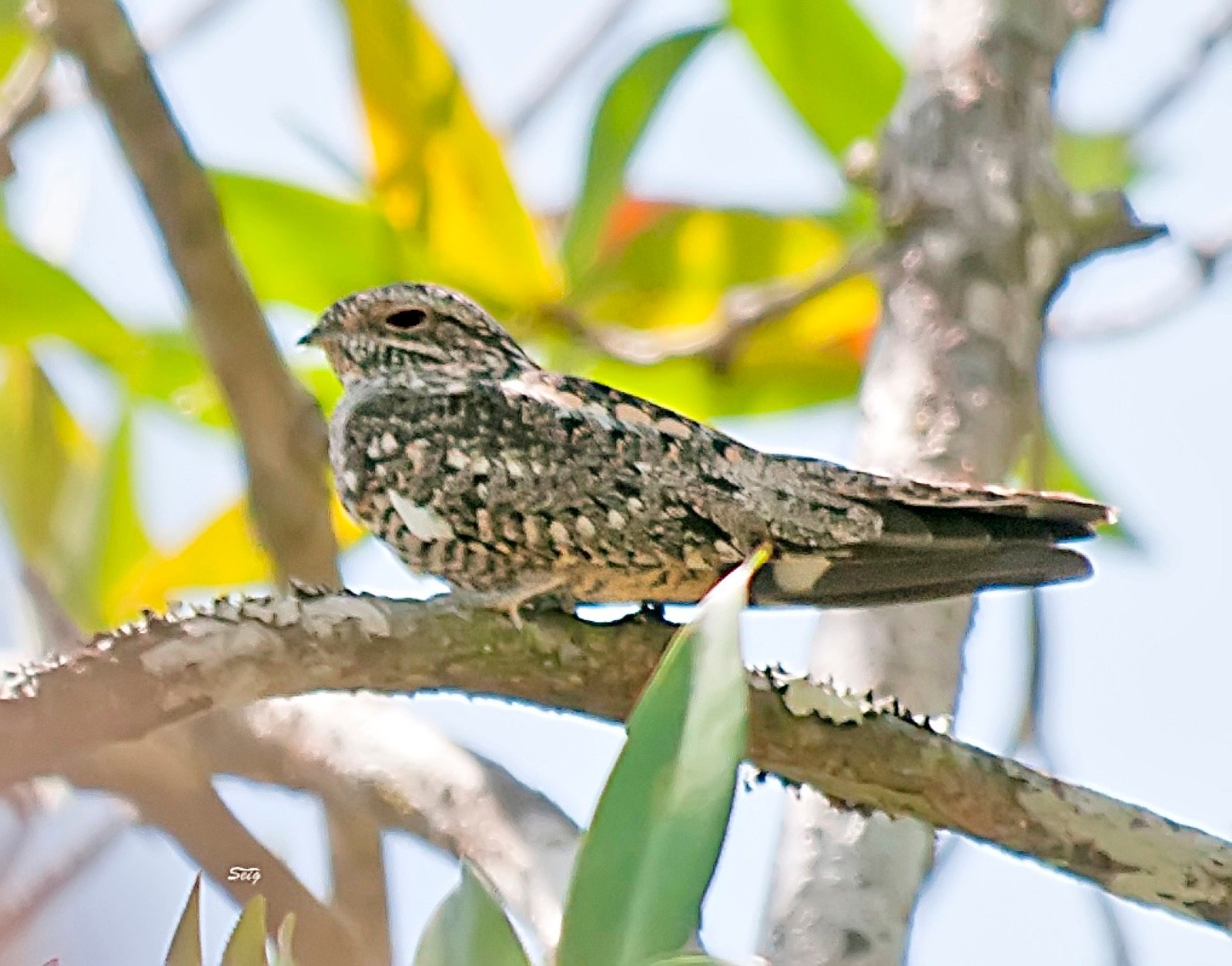
The Lesser Nighthawk (Añapero Menor, also listed as Gavilán) spends the day sitting motionless, so highly camouflaged that most visitors walk right past it. At dusk it takes to the air over open ground, beaches and rivers.
In Costa Rica it is a fairly common breeding resident in certain spots on the Pacific slope, mostly in the coastal lowlands. On the Caribbean side it is mainly a passing migrant.
On a trip we build, guests often meet it at the end of an afternoon boat trip on the Río Tárcoles near Carara, where the boat stays on the river until sunset and the nighthawks appear.
How to find it
Look for it at dusk over open ground or beaches, since it sits motionless by day. On the Río Tárcoles boat trip, guides stay out until dusk and wait for the birds to leave their day roosts, and dozens then fly low enough over the river to show the white wing patch. A late afternoon walk in the Tárcoles mangroves can also finish with several in the air. For day roosts, scan tree branches. One sat on a branch in a parking lot at Carara, and another roosted in a large Guanacaste tree above a parking lot there, found on a daytime walk on the Quebrada Bonita Trail.
How to recognise it
This is a small nighthawk, about 22 cm long and about 45 g. Look for these marks:
Brownish-gray upperparts.
A white chevron across the throat.
A buff, barred belly.
Long black wings with a white bar in flight.
Range-wide, the male has a white throat and the female a light brown throat. In Costa Rica, females and young birds lack the white tail band, their wing bar is buff or reduced, and the tail bars are narrower. By day it is a well-hidden shape that sits motionless, so most people first see it as a flying form at dusk, when the white wing patch shows as it passes low.
What it sounds like
Recording: Austin R. Kelly, CC BY 4.0, source, read 4 Nov 2026.
Behaviour and diet
By day it sits motionless. After dark it rests on the ground and catches passing insects such as dragonflies, beetles, wasps and flying ants. It is very social: it often nests and roosts in colonies, and gathers around good feeding areas, which is why a good dusk spot can show you many birds at once. Courting birds sweep over the beach in groups and chase each other while calling in flight. Elsewhere in its range its flight looks erratic and batlike, with frequent glides on slightly raised wings.
Where it lives
It prefers open areas with scattered forest patches or scrub, often near water. Habitats include savannas, open marshes, beaches, salt ponds, large rivers and rice fields. In Costa Rica it is found mostly in the Pacific coastal lowlands, where nesting colonies sit on open savanna or debris-strewn beaches, such as the Tárcoles river mouth. On the Caribbean side it is mainly a passing migrant, though the first Caribbean nesting record came from the Río Colorado mouth, in Barra del Colorado National Wildlife Refuge.
When to see it
Breeding in Costa Rica runs from March to June. Migrants are common to abundant in autumn, from late September to early November, along the Atlantic coast, and are sometimes seen on the Pacific side and in the Central Valley. In the northern winter it is found locally in the Pacific lowlands and only sporadically elsewhere.
Similar birds
Common Nighthawk is the bird to compare. The Lesser is smaller, lighter and paler, with a slightly less forked tail, and it is buffier. Its pale wing bar sits closer to the wingtip than to the shoulder, and Common has more pointed wingtips. Their calls are completely different.
Names and lore in Costa Rica
The Costa Rican Spanish name is Añapero Menor, and the AOCR list adds the extra name Gavilán in brackets.
Status and conservation
The AOCR lists it as a resident and migrant (R,M), and the IUCN lists the species as Least Concern.
Photography tips
Dusk is the time, over a river or beach where birds fly low. On the Río Tárcoles, dozens can pass low enough to show the white wing patch. By day, check tree branches for a roosting bird, which sits motionless and is highly camouflaged.
How we know this 17 sources, each read on the date shown
- Flickr (INBio natural history text) read 2026-11-04
https://www.flickr.com/photos/jobando/26529133411 - Zeledonia (AOCR journal) read 2026-11-04
https://www.zeledonia.com/uploads/7/0/1/0/70104897/registros_de_anidaci%C3%B3n_del_a%C3%B1apero_menor.pdf - YouTube video (Orotina, Costa Rica) read 2026-11-04
https://www.youtube.com/watch?v=XHhnh-a7OFs - Bird Watching Costa Rica read 2026-11-04
https://www.birdwatchingcostarica.com/ave/lesser-nighthawk/ - JungleDragon (from Wikipedia) read 2026-11-04
https://www.jungledragon.com/specie/9922/lesser_nighthawk.html - Field Guides Birding Tours, Costa Rica 2018 read 2026-11-04
https://fieldguides.com/triplists/cos18.html - Birds, Tours & Threads trip report 2024 read 2026-11-04
https://birdsbybijs.com/2024/02/trip-report-costa-rica-central-sur-2024-birding-tour/ - Eagle-Eye Tours trip report Feb 2026 read 2026-11-04
https://www.eagle-eye.com/blog/costa-rica-sampler-trip-report-feb-16-27-2026/ - Audubon Field Guide read 2026-11-04
https://www.audubon.org/field-guide/bird/lesser-nighthawk - Birds Wildlife tour page read 2026-11-04
https://birdswildlife.com/costa-rica-the-ultimate-tour-march-21st-07th-april-2026/ - Field Guides Birding Tours, Costa Rica 2024 read 2026-11-04
https://fieldguides.com/triplists/cos24.html - Birdquest Ultimate Costa Rica 2023 report read 2026-11-04
https://www.birdquest-tours.com/birding-tour-reports/costa-rica-classic-2023/ - Wikipedia read 2026-11-04
https://en.wikipedia.org/wiki/Chordeiles_acutipennis - Zeledonia via Dialnet read 2026-11-04
https://dialnet.unirioja.es/descarga/articulo/8905184.pdf - AOCR Lista Oficial read 2026-11-04
https://listaoficialavesdecostarica.wordpress.com/lista-oficial/lista-oficial-online/ - Reflections of the Natural World read 2026-11-04
https://reflectionsofthenaturalworld.com/2024/07/09/lesser-nighthawk/ - iNaturalist Mexico read 2026-11-04
https://mexico.inaturalist.org/taxa/19587-Chordeiles-acutipennis