Family Caprimulgidae
White-tailed Nightjar
Hydropsalis cayennensis
In Spanish: Chotacabras Coliblanco
- Resident
A slim, rufous-collared nightjar of open Pacific slope country, met after dark.
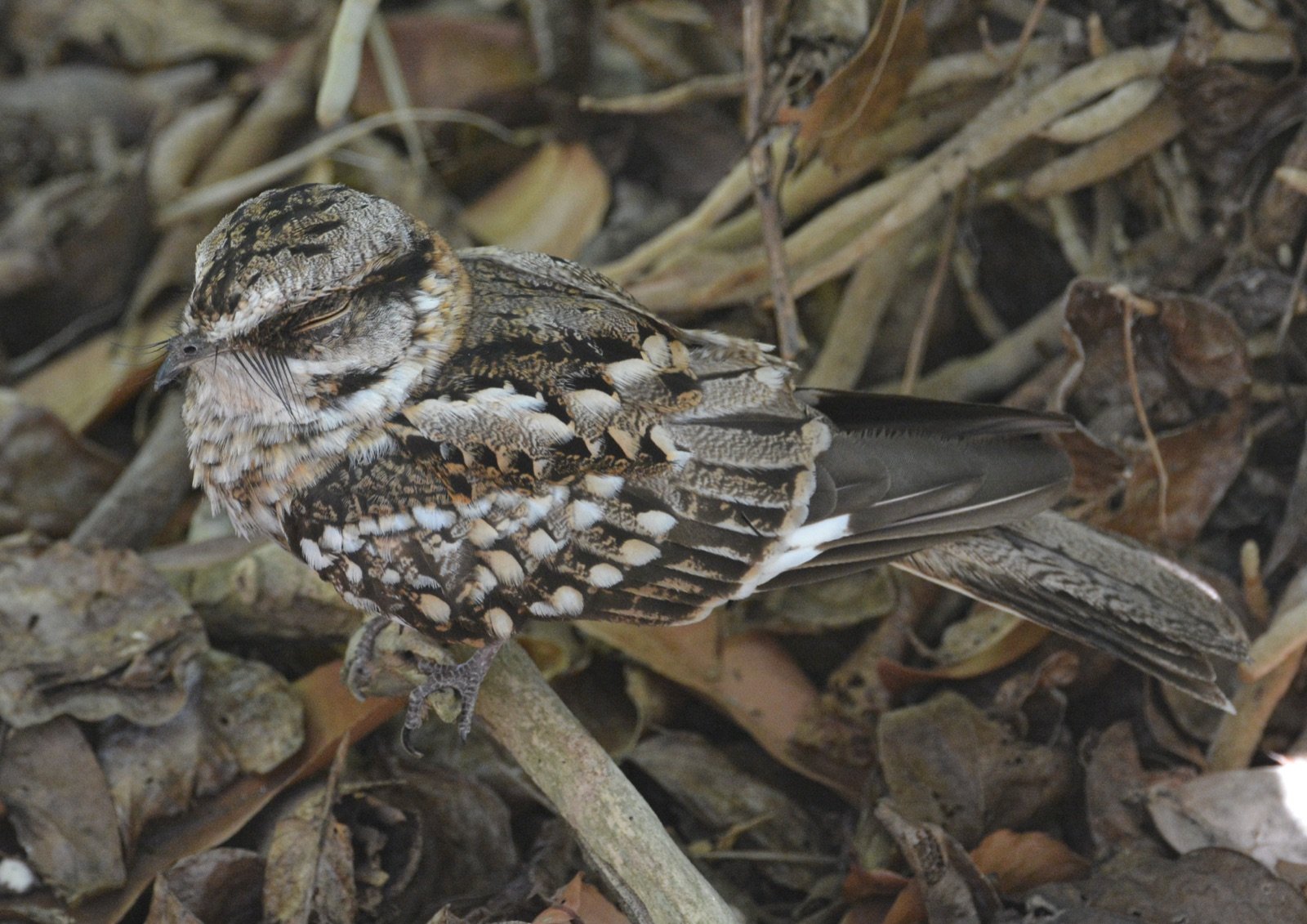
The White-tailed Nightjar (Chotacabras Coliblanco) is a small, slim nightjar with a prominent pale rufous collar on the nape. The male carries a long tail with a distinctive white marking.
In Costa Rica it is a resident, widespread but patchy on the Pacific slope from northern Guanacaste southward. It rests on the ground by day, so dusk and after dark are the times to look in open country on a trip we build.
It rewards patience. It calls much less than other nightjars, and one night attempt near the Tárcoles bridge turned up Double-striped Thick-knees instead.
How to find it
Look in open or semi-open country on the Pacific slope, such as savanna, scrub, open woodland and forest edge. Dusk and after dark are the best times, because the bird sits on the ground by day. Watch for one taking off from open bare ground after insects. Since it calls so little, do not count on hearing it. It is also at least local or occasional on parts of the Caribbean slope. A night search from a roadside in grassland near the Tárcoles bridge found Double-striped Thick-knees calling instead, a fair reminder of how hard it can be.
How to recognise it
This is a small, slim nightjar, and both sexes show the orange-brown collar on the nape. Males and females look quite different.
The male:
- Upperparts are contrasty and underparts pale.
- Bold buffy shoulder straps and rows of white spots on the wing coverts.
- A long tail with whiter feathers, except the central pair.
- An undertail that is white with a dark band near the base.
- A white band across the primaries.
The female is patterned in cryptic tones, with a barred breast and a barred undertail rather than a plain white one. In flight she shows buffy bands on the primaries, not white ones, and she keeps the tawny collar.
Behaviour and diet
The White-tailed Nightjar is strictly nocturnal. By day it rests on the ground under low vegetation, which is why it is usually seen only after dark.
At night it hunts by flying up from open bare ground to catch flying insects such as beetles, moths, dragonflies and wasps or bees. It sometimes hunts at dusk over scrub.
Nesting has been noted in Costa Rica, where fledglings just out of the nest were seen in May.
Where it lives
In Costa Rica it is a resident of the Pacific slope, widespread but patchy, from northern Guanacaste southward. That includes the Térraba and Golfo Dulce regions. On the southern two thirds of the Caribbean slope it is only sporadic.
It ranges from sea level up to about 800 m. Across its wider range, from Costa Rica to northwest Ecuador and northern Brazil, it is a common bird of savannas, pastures and forest clearings, up to roughly 1000 m.
When to see it
Recently fledged chicks have been seen in Costa Rica in May. The adults are active at dusk and after dark.
Similar birds
The male's broad white band across the primaries looks like the one on a Lesser Nighthawk. The nightjar is told apart by its cinnamon collar on the hindneck and its notched tail, mostly white underneath. Nighthawks have slimmer bodies and pointed wings and also show white wing bars, but the pale nape collar helps separate the White-tailed Nightjar from both.
Names and lore in Costa Rica
The AOCR Spanish name is Chotacabras Coliblanco. Other names used across its range, not specific to Costa Rica, include chotacabra blanca, guabairo coliblanco, tapacamino coliblanco and guardacaminos rastrojero.
Status and conservation
The official Costa Rican list (AOCR) marks it as a resident, and globally it is rated Least Concern.
Photography tips
Open bare ground at dusk is where it launches after insects, so that is the place to wait. By day it hides on the ground under low vegetation, so photography belongs to dusk and after dark.
How we know this 13 sources, each read on the date shown
- Flickr (INBio-style natural history text, Chotacabras coliblanco) read 2026-11-04
https://www.flickr.com/photos/jobando/51761074930 - Ropero Aventuras read 2026-11-04
https://roperoaventuras.com/2016/03/31/chotacabras-coliblanco-hydropsalis-cayennensis/ - Bird Finding (Ferraro) read 2026-11-04
https://birdfinding.info/white-tailed-nightjar/ - Lista Oficial de las Aves de Costa Rica (AOCR) read 2026-11-04
https://listaoficialavesdecostarica.wordpress.com/lista-oficial/lista-oficial-online/ - Birds Colombia read 2026-11-04
https://birdscolombia.com/2019/11/03/guardacaminos-rastrojero-white-tailed-nightjar-hydropsalis-cayennensis/ - BirdForum Opus read 2026-11-04
https://www.birdforum.net/opus/White-tailed_Nightjar - Earth Life (Pauraque page) read 2026-11-04
https://earthlife.net/pauraque/ - Birds of the World (Cornell) read 2026-11-04
https://birdsoftheworld.org/bow/species/whtnig1/cur/introduction?lang=es - Birdingcraft read 2026-11-04
https://birdingcraft.com/wordpress/tag/lesser-nighthawk/ - Wikipedia (es) read 2026-11-04
https://es.wikipedia.org/wiki/Hydropsalis_cayennensis - Wikipedia read 2026-11-04
https://en.wikipedia.org/wiki/White-tailed_Nightjar - Birding Craft read 2026-11-04
https://birdingcraft.com/wordpress/category/birds-to-watch-for-in-costa-rica/ - Birding Craft read 2026-11-04
https://birdingcraft.com/wordpress/2021/10/18/some-of-the-best-road-birding-in-costa-rica-the-ceiba-cascajal-road/