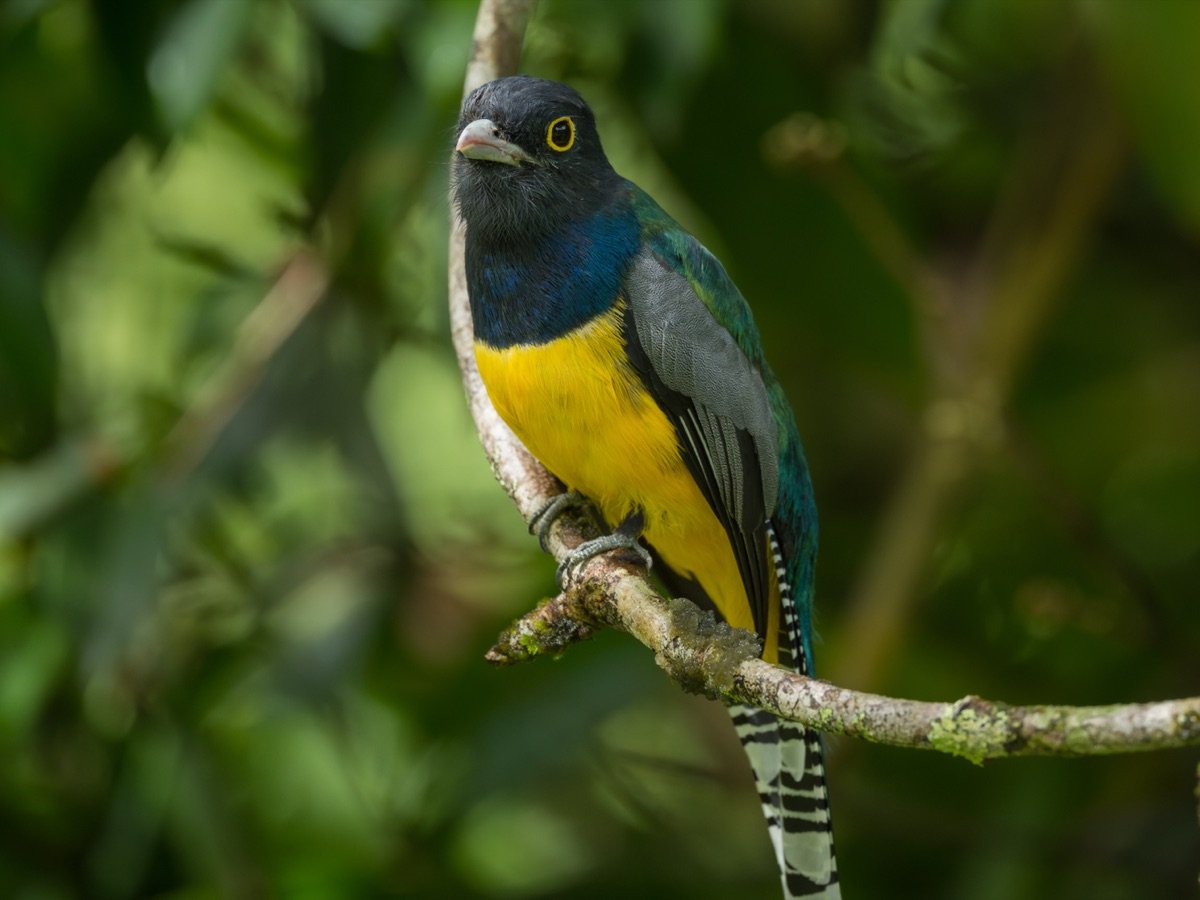
Family Trogonidae
Gartered Violaceous Trogon
Trogon caligatus
In Spanish: Trogón Violáceo
- Resident
Forest edges, river forest and shaded coffee farms, mostly in the lowlands. All year.
It nests inside a wasp nest. Or inside an ant or termite nest hanging in the branches, or, failing those, a hole in a rotten tree.
This is the small trogon of the forest edge. Look for it in clearings, in gallery forest, the strips of trees that follow a river, and in the shade trees over coffee and cacao farms. It is commoner in the lowlands.
Where to see it
- Hotspot page
- Named place
- Nearby lodge (numbers match the cards)
- Rancho Naturalista's reserve, above Turrialba
- La Selva Biological Station, SarapiquíNot on the map above: it sits too far away to show at this zoom.
- Los Cusingos and the San Isidro valleyNot on the map above: it sits too far away to show at this zoom.
Nearby lodges
Within 20 km of a place on the map, in the same zone.
- 1
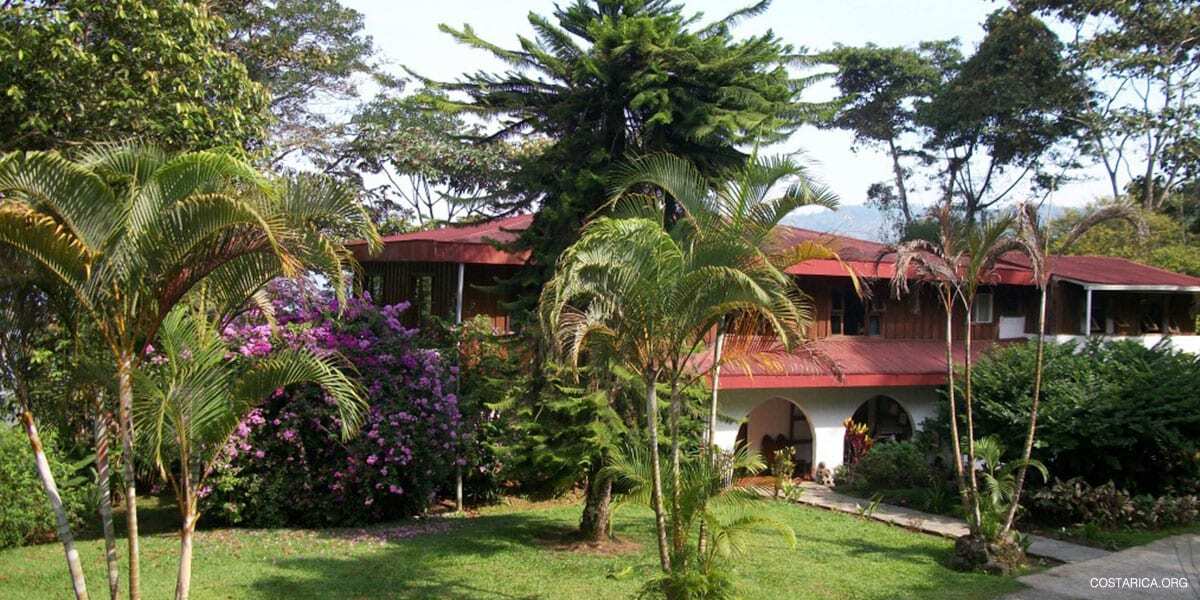 Rancho Naturalista0.2 km from Rancho Naturalista's reserve, above TurrialbaSee the lodge
- 2
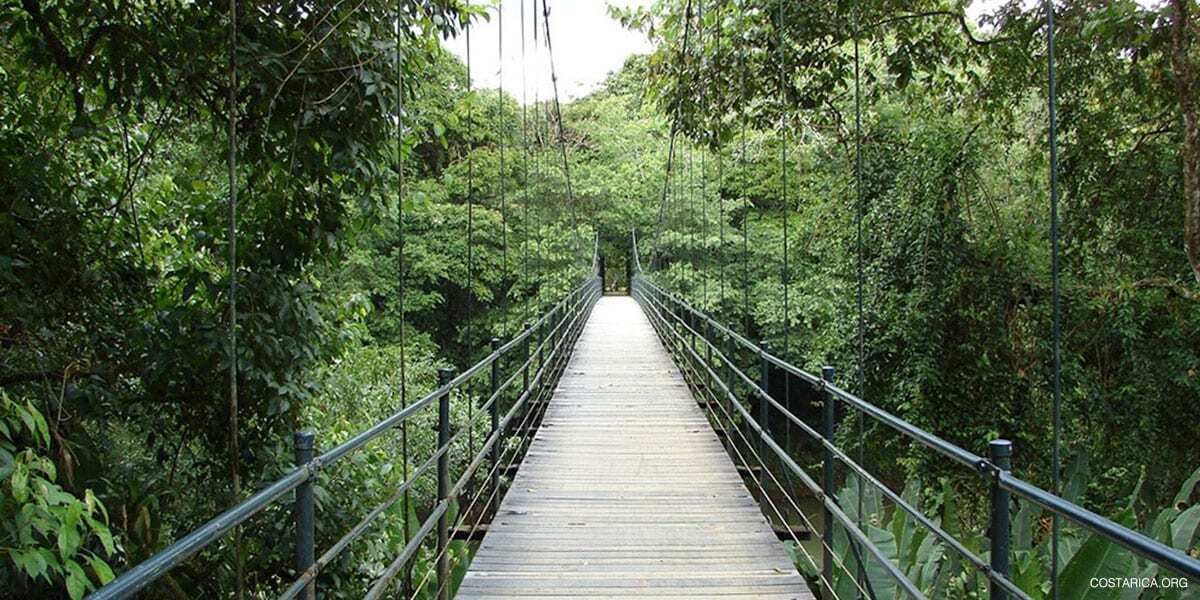 La Selva Biological Station2.2 km from La Selva Biological Station, Sarapiquí (off the map)See the lodge
- 3
 Talari Mountain Lodge9.2 km from Los Cusingos (off the map)See the lodge
- 4
 Hotel Casa Turire9.6 km from Rancho Naturalista's reserve, above TurrialbaSee the lodge
- 5
 Selva Verde Lodge7.5 km from La Selva Biological Station, Sarapiquí (off the map)See the lodge
How to recognise it
About 23 to 25 cm, a little shorter than a sheet of letter paper. Start with the belly: bright yellow on both sexes, with a narrow white band across the breast just above the yellow. The female is grey on the head, breast and back, and her eye ring, the circle of colour around the eye, is broken rather than complete. The male's head colour on the Costa Rican birds is a guide's call, see To verify. It feeds by hovering in front of the leaves to pick off fruit and insects. The call is a long, fast run of hollow, falling notes: kyu-kyu-kyu-kyu-kyu.
Where it lives
Forest edges, clearings, gallery forest, secondary forest, and shaded coffee and cacao plantations. In Central America it goes as high as about 1,400 m, but it is commoner in the lowlands. The Costa Rican birds belong to a subspecies that runs from here through most of Panama into western Colombia.
When to see it
All year. It nests from February to June in Costa Rica.
Trips that find it
- Best of Birding in Costa Rica's Caribbean9 nightsSee the trip
- Caribbean Lowlands Birding Tour11 nightsSee the trip
- Birding in Costa Rica's Eco-Zones11 nightsSee the trip
Tell us when you are travelling and our team in Costa Rica builds the trip around the birds you want to see.
Plan my birding tripHow we know this 1 sources, each read on the date shown
- Wikipedia: Gartered trogon read 4 November 2026
https://en.wikipedia.org/wiki/Gartered_trogon