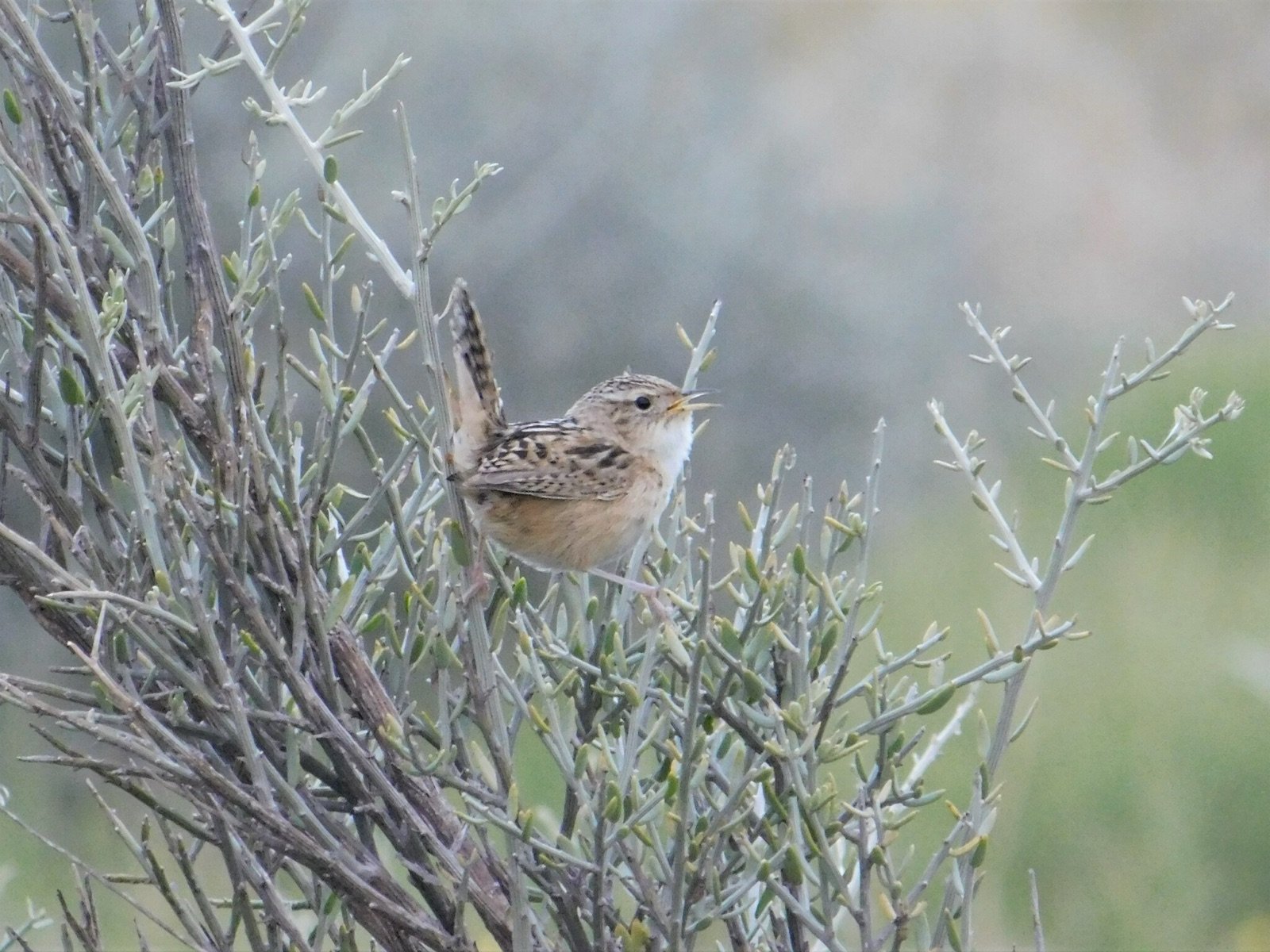
Family Troglodytidae
Grass Wren
Cistothorus platensis
In Spanish: Soterré Sabanero (Guachipelín)
- Resident
A tiny, furtive, endangered wren of the wet grass fields near Cartago.
The Grass Wren is a tiny, slim wren, about 11 cm long, and in Costa Rica it lives in wet fields and tall grass near Cartago. Resident populations are in the Guarco area, around Coris and Ochomogo, on the Central Valley side of the continental divide, and it is locally common there.
It is also listed as endangered in the country, because people have drained the wetlands it depends on. Its range here is very limited, and it is found in few other places.
On a trip we build, Cartago can be an early birding stop after the drive up from San José. The wren usually stays hidden, but it will pop up on a clump of grass to scold, then dive back out of sight.
How to find it
Head for the wet, tall-grass fields around Coris and scan the tops of grass clumps and bushes for a small bird on an open perch. In the breeding season the male perches in the open and sings, which gives away where it is. The rest of the time it creeps low through tall grass and is hard to watch. Imitated squeaking sounds can bring it up to scold. A birder at Coris found several in the first wet field his group scanned. Be patient and ready to look fast, because it dives back into cover quickly.
How to recognise it
Look for a tiny, slim wren, about 11 cm long, with a fairly long tail.
Adults show a black crown and back with thin pale buff streaks. The throat and belly are white. The breast is buffy. The back is streaked, and the rump is cinnamon.
The cinnamon rump shows in flight, a useful clue when the bird drops back into the grass. Juveniles are duller brown, with fainter streaking.
What it sounds like
Recording: Valentín Alfano, CC BY 4.0, source, read 4 Nov 2026.
Behaviour and diet
The Grass Wren is always alert, active and irritable. It probes through grass, leaves and twigs for small beetles and other insects.
It usually stays hidden, but it will sing or scold from an open perch on a grass clump or bush, then dives back into cover quickly.
The nest is a hollow ball of grass leaves with a low side entrance, set a few centimetres above ground in dense grass or rushes. It lays 4 white eggs.
Where it lives
In Costa Rica it lives in low, waterlogged meadows with tall grass, damp scrubby fields and open marshes. Near Cartago it uses wet, flooded fields, tall-grass pastures and scrub, and it is hard to see in these places.
Resident birds are in the Guarco area of Cartago, around Coris and Ochomogo. It sometimes wanders to San José and has also been recorded at San Vito and Cañas Gordas. No reports exist from other places in the country.
Across its whole range the species uses savannas, grasslands and wetlands, and in the Andes it reaches about 4000 m.
When to see it
Breeding runs from April to December.
Similar birds
Costa Rica has about two dozen wren species, but only this one is a small, streaked wren of open wet grass near Cartago. Its cinnamon rump shows in flight. The Costa Rican birds also look and sound a little different from northern Sedge Wrens.
Names and lore in Costa Rica
Costa Ricans call this bird Soterrey Sabanero, and also Guachipelín. Wrens in general are often called cucaracheros, meaning cockroach hunters.
Status and conservation
The AOCR list marks it as a resident (R), and it is listed as endangered in Costa Rica because the draining of wetlands has destroyed its habitat.
Photography tips
Watch the tops of grass clumps and bushes, where it will perch in the open to sing or scold, especially when it hears imitated squeaking sounds. It dives back into cover quickly, so keep the camera ready. A scope helps, since it tends to stay in the long grass.
How we know this 14 sources, each read on the date shown
- Flickr (Historia Natural text, Coris, Cartago) read 2026-11-04
https://www.flickr.com/photos/jobando/35674613374 - Áreas Protegidas y Parques Nacionales de Costa Rica read 2026-11-04
https://areasyparques.com/peligroextincion/aves13/ - Museo Nacional de Costa Rica read 2026-11-04
https://www.museocostarica.go.cr/nuestro-trabajo/investigaciones/historia-natural/gam/aves/ - Wikipedia (Spanish) read 2026-11-04
https://es.wikipedia.org/wiki/Cistothorus_platensis - Wikipedia (Asturian) read 2026-11-04
https://ast.wikipedia.org/wiki/Cistothorus_platensis - Cornell Birds of the World read 2026-11-04
https://birdsoftheworld.org/bow/species/sedwre/cur/introduction - Birdquest tour report 2023 read 2026-11-04
https://www.birdquest-tours.com/birding-tour-reports/costa-rica-classic-2023/ - Birds for Beer blog read 2026-11-04
https://birdsforbeer.com/2016/11/18/northern-ducks-and-other-stuff-at-coris-de-cartago/ - Ecosistemas de Costa Rica read 2026-11-04
https://ecosistemasdecostarica.blogspot.com/2012/08/aves.html - Birding Craft read 2026-11-04
https://birdingcraft.com/wordpress/2024/06/07/costa-rica-birding-a-whole-lot-of-wrens-going-on/ - Birding Craft read 2026-11-04
https://birdingcraft.com/wordpress/2021/05/ - Birding Craft read 2026-11-04
https://birdingcraft.com/wordpress/2021/08/18/what-are-these-new-birds-for-costa-rica/ - iNaturalist Ecuador (Wikipedia text) read 2026-11-04
https://ecuador.inaturalist.org/taxa/7596-Cistothorus-platensis - Field Guides tour list read 2026-11-04
https://fieldguides.com/triplists/cr117.html