Family Hirundinidae
Mangrove Swallow
Tachycineta albilinea
In Spanish: Golondrina Lomiblanca
- Resident
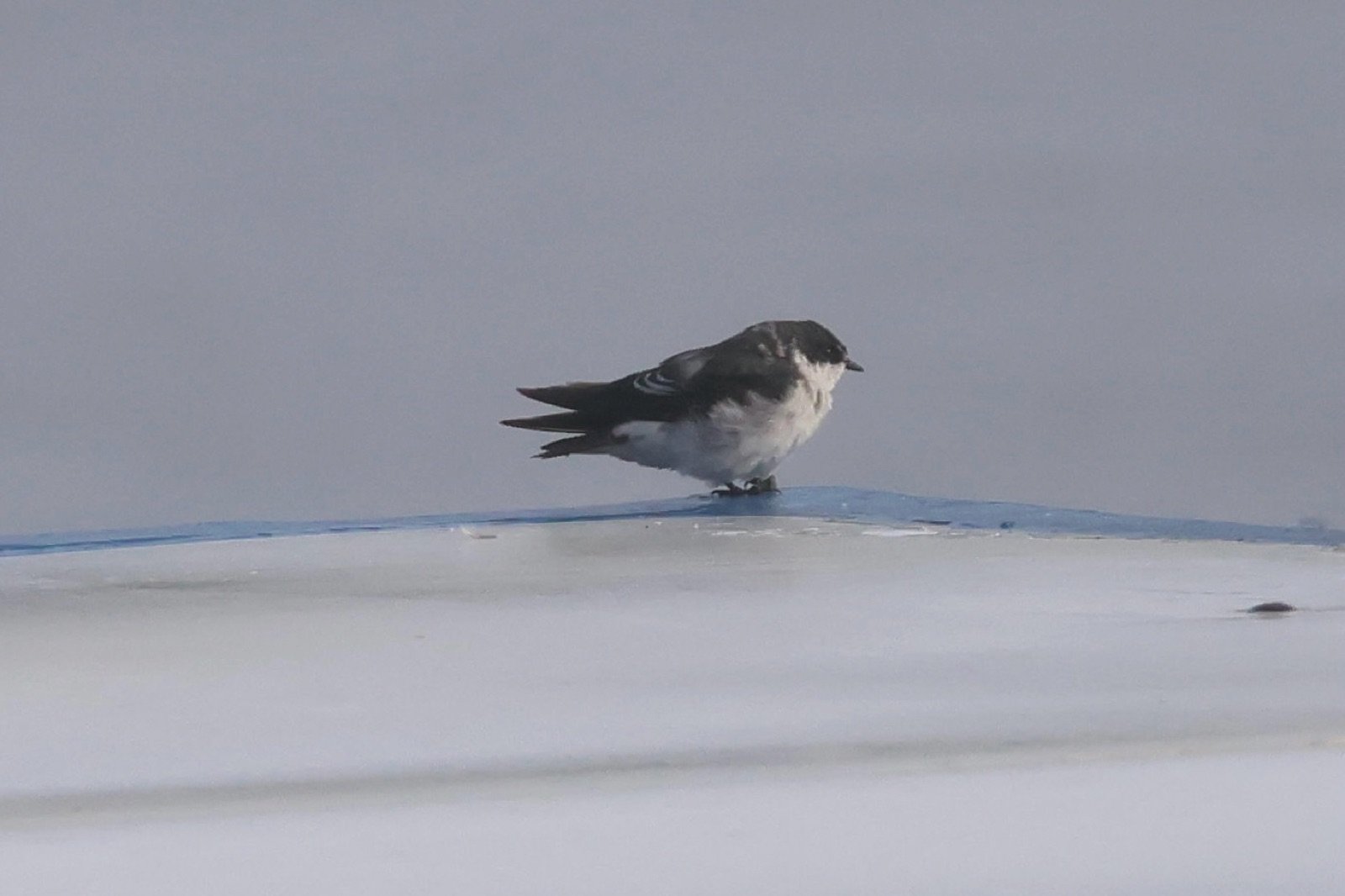
Small green-and-white swallow skimming low over calm water.
The Mangrove Swallow (Golondrina Lomiblanca) is a small swallow with shiny blue-green upperparts and white underparts, about 13 cm long. The official Costa Rican list marks it as a resident species.
It flies low and fairly straight over the water and often perches between flights, so a calm river, lagoon or estuary gives a beginning birder a real chance to study it.
On a trip we build, guests can meet it around water, for example in Tortuguero National Park, a canal and lagoon area on the Caribbean side.
How to find it
Look near low-lying water and mangroves. The species often perches between flights, so scan waterside perches such as stumps and wires. Watch too for birds skimming low over the surface. Stay near sea level, since it is rarely seen in the highlands. Calm, wide water is the best bet: lakes, rivers, estuaries, salt pans and sometimes flooded pastures. Outside the breeding season, look for small flocks gliding over water.
How to recognise it
Adults have shiny blue-green upperparts and white underparts. The tail and flight feathers are blackish. It is a small swallow, about 13 cm long.
The mark to look for is a thin white line above the eye, in front of it. Only two other Tachycineta swallows share this mark, Violet-green and White-rumped.
A local Guanacaste bird guide calls it the green-and-white Mangrove Swallow and uses it as a size comparison: the Gray-breasted Martin, a large gray swallow with a whitish belly, is much bigger. In Costa Rica the Mangrove Swallow is also smaller and darker on the back than the Tree Swallow.
Behaviour and diet
It flies low and fairly straight over the water, feeding mainly on insects, including large ones such as dragonflies and bees. In the breeding season it is very aggressive toward other swallows and martins, so nests are spaced several hundred metres apart. When breeding it is usually alone or in pairs.
Outside the breeding season it is social. Flocks of up to 50 gather where low perches such as stumps and wires stand near water, and small flocks glide over the surface on rapid wingbeats.
Where it lives
It lives mainly in coastal areas, near low-lying water and mangroves. In Costa Rica it usually lives from sea level to about 500 m. It has been found as high as 1,000 m, but it is rarely seen in the highlands.
A Costa Rican field-guide entry says birds favor wide, calm open water such as lakes, rivers, estuaries, salt pans and sometimes flooded pastures. It is a non-migratory species.
When to see it
A Costa Rican natural history text says the birds breed from March to April, with a loose cup nest in a crevice or stump hole over or beside water, often under 2 m high, holding 3 to 5 white eggs.
Similar birds
The Tree Swallow is the main look-alike. It is larger than the Mangrove Swallow and lacks the white rump. Both have a glossy green or blue back and white underparts, but the thin white line in front of the eye separates the Mangrove Swallow. The Tree Swallow is a migrant in Costa Rica.
Names and lore in Costa Rica
Costa Rica's official Spanish name is Golondrina Lomiblanca, which means white-backed swallow. It is also called golondrina de manglar and golondrina manglera.
Status and conservation
The official Costa Rican list (AOCR) marks the Mangrove Swallow as a resident (R), and the IUCN lists it as Least Concern.
Photography tips
Waterside stumps and wires are where flocks gather outside the breeding season, so a low perch near calm water is a good place to wait for a closer look.
How we know this 12 sources, each read on the date shown
- Lista Oficial de las Aves de Costa Rica (AOCR) read 2026-11-04
https://listaoficialavesdecostarica.wordpress.com/lista-oficial/lista-oficial-online/ - EcoRegistros read 2026-11-04
https://www.ecoregistros.org/site/imagen.php?id=573525 - Wikipedia (Spanish) read 2026-11-04
https://es.wikipedia.org/wiki/Tachycineta_albilinea - Wikipedia read 2026-11-04
https://en.wikipedia.org/wiki/Mangrove_swallow - La Iguana local bird guide (PDF) read 2026-11-04
https://www.golflaiguana.com/wp-content/uploads/sites/9272/2023/10/Wildlife_page.pdf - Birda species guide read 2026-11-04
https://app.birda.org/species-guide/24721/Mangrove_Swallow - Planetscott read 2026-11-04
https://www.planetscott.com/speciesdetail/7041/mangrove-swallow-tachycineta-albilinea - Avibase read 2026-11-04
https://avibase.bsc-eoc.org/species.jsp?avibaseid=04419E86 - Flickr (Costa Rica natural history text) read 2026-11-04
https://www.flickr.com/photos/jobando/29840156295 - Alamy read 2026-11-04
https://www.alamy.com/mangrove-swallow-tachycineta-albilinea-perched-on-branch-puerto-viejo-river-heredia-province-costa-rica-image229647184.html - All-Creatures.org (Barry Kent MacKay) read 2026-11-04
https://www.all-creatures.org/art/mackay-139.html - Ecosistemas de Costa Rica read 2026-11-04
https://ecosistemasdecostarica.blogspot.com/2012/08/aves.html