
Family Thraupidae
Scarlet-rumped Tanager
Ramphocelus passerinii
In Spanish: Tangara de Passerini (Sargento, Rabadilla Tinta, Terciopelo, Sangre de Toro)
- Resident
Forest edges and second growth on the Caribbean and southern Pacific slopes, often a flock. All year.
Often it is a dozen at once: black birds working along a forest edge, each with a scarlet patch low on the back. They forage in flocks of their own kind, about a dozen strong.
Costa Ricans have names for it that the official list keeps, among them Terciopelo, velvet, and Sangre de Toro, bull's blood. It lives on both slopes, as one form on the Caribbean side and one on the southern Pacific, and the two differ only in the females. Scientists split it into two species in 1997 and the split has since been undone, so if your book shows two, it is one bird.
Where to see it
- Hotspot page
- Named place
- Nearby lodge (numbers match the cards)
- Tirimbina Biological Reserve, Sarapiquí
- Wilson Botanical Garden and Las CrucesNot on the map above: it sits too far away to show at this zoom.
- Selva Verde, on the Sarapiquí River
Nearby lodges
Within 20 km of a place on the map, in the same zone.
- 1
 Selva Verde Lodge6.8 km from Tirimbina Biological Reserve, SarapiquíSee the lodge
- 2
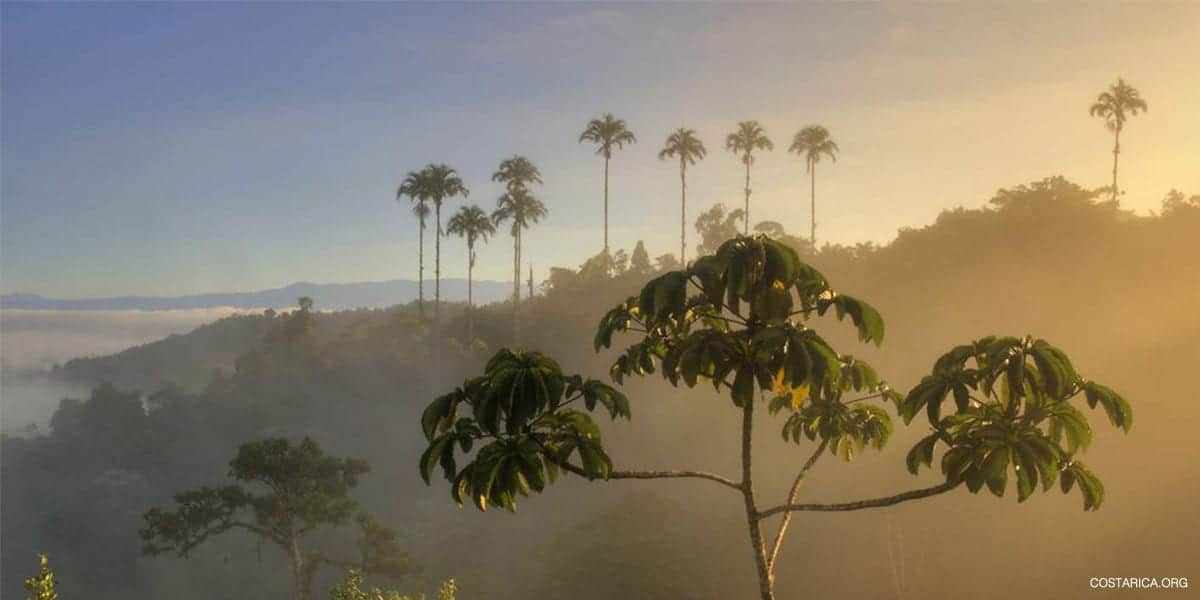 Las Cruces Biological Station0.8 km from Wilson Botanical Garden (off the map)See the lodge
- 3
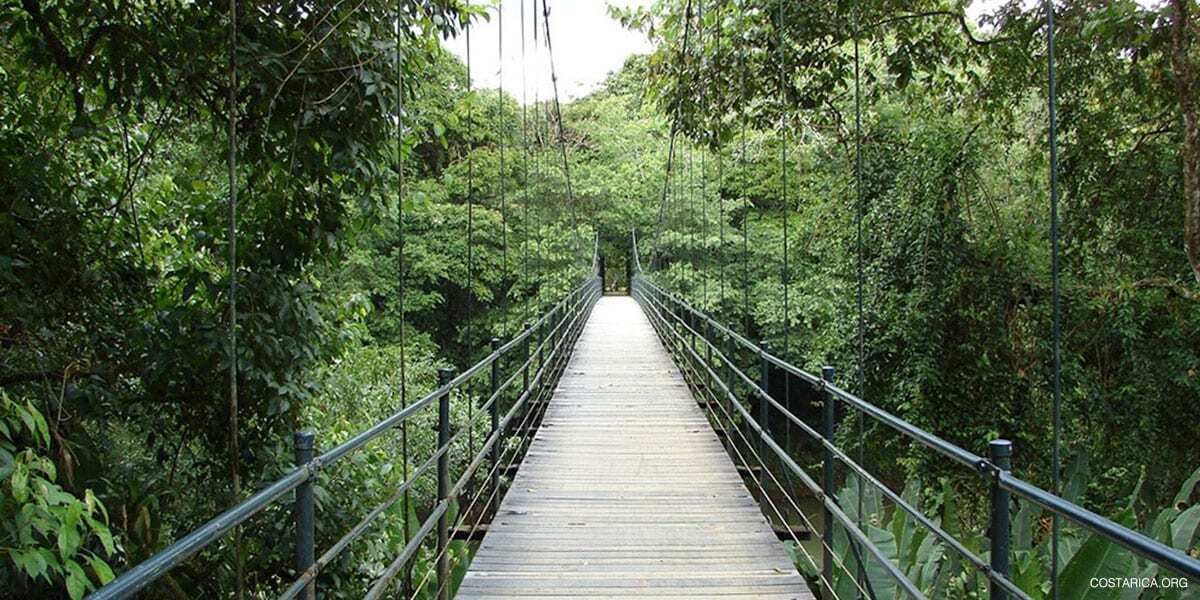 La Selva Biological Station5.8 km from Selva Verde, on the Sarapiquí RiverSee the lodge
How to recognise it
15 to 17 cm, a little shorter than a new pencil.
The male is velvety black almost all over, with the lower back and rump, the patch just above the tail, scarlet or scarlet-orange.
The mark that settles it, in males and females on both slopes, is the bill: silvery blue with a black tip.
On the Pacific side the female has a greyish chin and throat, an ochre-rufous breast and a yellowish olive belly. On the Caribbean side she has a brownish grey head.
The song is a run of high whistles; the call is a harsh chatter, chiv, chiv, chiv. It comes to bananas and plantain at feeding stations.
Where it lives
Forest edge, secondary forest and second-growth scrub in the lowlands and foothills. The Caribbean form runs the length of that slope; the Pacific form starts around central Puntarenas and western San José and runs south. It reaches about 1,200 metres in eastern Costa Rica and higher in the west.
When to see it
All year. In Costa Rica it breeds from March to September.
Trips that find it
- Dancing with Quetzals11 nightsSee the trip
- Costa Rica's Top Birding Spots11 nightsSee the trip
Tell us when you are travelling and our team in Costa Rica builds the trip around the birds you want to see.
Plan my birding tripHow we know this 1 sources, each read on the date shown
- Wikipedia: Scarlet-rumped tanager read 4 November 2026
https://en.wikipedia.org/wiki/Scarlet-rumped_tanager