Family Hirundinidae
Cave Swallow
Petrochelidon fulva
In Spanish: Golondrina Cavernícola
- A
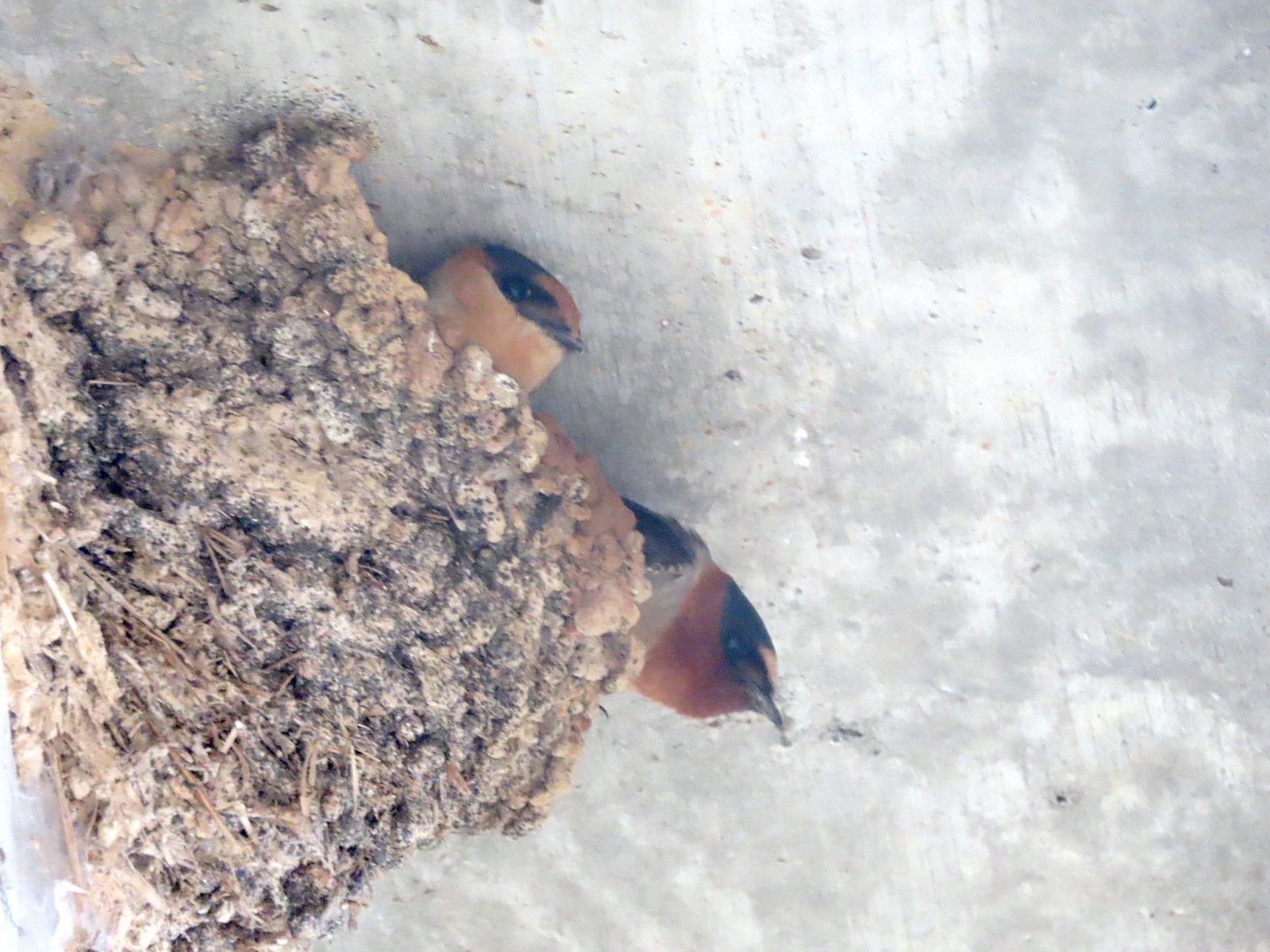
An accidental swallow with a cinnamon forehead and throat, seldom recorded here.
The Cave Swallow (Golondrina Cavernícola, Petrochelidon fulva) is a small, square-tailed swallow, 12 to 14 cm long, with blue-gray upperparts and a cinnamon-orange forehead and throat.
In Costa Rica it is rare or accidental, not a regular resident or visitor. There is only an old, unconfirmed report and no recent ones, so this is a bird to know about rather than to plan a trip around.
For a beginning birder it makes a good lesson in separating it from the very similar Cliff Swallow.
How to find it
A Costa Rican bird site suggests searching along the Caribbean coast in autumn. Also scan swallow flocks in the Pacific lowlands of the northwest, where wintering is strongest. Birds along the Pacific coast use mangrove swamps and sugarcane fields, so check those too. Watch feeding flocks overhead, since these swallows spend much of the day in the air. Look closely at every Cliff Swallow type for a chestnut forehead and a buff throat.
How to recognise it
Look for these marks:
A small, square-tailed swallow, 12 to 14 cm long.
Blue-gray upperparts.
A cinnamon-orange forehead and throat, described in Costa Rica as a chestnut forehead and a buff-colored throat.
No dark patch on the chest.
A paler cinnamon wash on the breast.
Males and females look alike, so there is no need to sort the sexes. The clean chest is the clue that matters most when you compare it with the Cliff Swallow, which has a larger blackish area there.
What it sounds like
Recording: Alysa Joaquin, CC BY 4.0, source, read 4 Nov 2026.
Behaviour and diet
Cave Swallows are social and forage in flocks. They spend much of the day in the air catching insects, so the best view is usually of birds overhead. During migration and after breeding, large groups may gather at favoured roosts. Across the species' range, they nest in colonies, and the nest is made of bat guano and mud. A rarer, lower 'choo' that falls in pitch is given mainly when the bird is disturbed.
Where it lives
Costa Rican habitat and nesting data for this swallow are not listed. Across its range it nests in caves and sinkholes and sometimes uses man-made sites such as highway culverts. Banding studies suggest it winters along the Pacific coast between Mexico and Costa Rica, where birds use unexpected places such as mangrove swamps and sugarcane fields. Within Costa Rica, wintering is strongest in the Pacific lowlands of the northwest.
When to see it
A magazine feature lists Costa Rica among the winter areas of the Cave Swallow, though it gives no exact months. One Costa Rican bird site suggests searching in autumn.
Similar birds
The Cave Swallow looks much like the Cliff Swallow. It has a chestnut forehead, a buff-colored throat and no dark patch on the chest. Cliff Swallows usually have a white forehead, though a few show a cinnamon one like the Cave Swallow. Check the breast too: the Cave Swallow has a paler cinnamon wash, while the Cliff Swallow has a larger blackish area.
Names and lore in Costa Rica
The Spanish name on the Costa Rican bird list is Golondrina Cavernícola, and the form Golondrina de caverna is also used. Other Spanish names used elsewhere include Golondrina de Cuevas and Golondrina Pueblera.
Status and conservation
The Cave Swallow is status A (accidental) on the 2025-2026 AOCR list, with only an old, unconfirmed report and no recent ones, while the Cliff Swallow is listed as M (migrant).
How we know this 12 sources, each read on the date shown
- Aves de Costa Rica read 2026-11-04
https://avesdecostarica.com/Petrochelidon-fulva.html - Earthlife.net read 2026-11-04
https://earthlife.net/caveswallows/ - Birds Colombia (from Wikipedia) read 2026-11-04
https://birdscolombia.com/2023/04/26/golondrina-pueblera-cave-swallow-petrochelidon-fulva/ - Wikipedia (via The Biofiles) read 2026-11-04
https://www.thebiofiles.com/info/5381 - Cave Slime (caveslime.org) read 2026-11-04
https://www.caveslime.org/kids/cavejourney/SpeciesAccounts/CaveSwallows.html - South Dakota Birds and Birding read 2026-11-04
https://www.sdakotabirds.com/species/cave_swallow_info.htm - Avibase Costa Rica checklist read 2026-11-04
https://avibase.bsc-eoc.org/checklist.jsp?region=CR - BirdWatching read 2026-11-04
https://www.birdwatchingdaily.com/locations-travel/featured-destinations/cave-swallows-carlsbad-cavern/ - National Parks Conservation Association read 2026-11-04
https://www.npca.org/articles/943-a-swallow-s-tale - Lista Oficial de las Aves de Costa Rica (AOCR) read 2026-11-05
https://listaoficialavesdecostarica.wordpress.com/lista-oficial/lista-oficial-online/ - Avibase read 2026-11-05
https://avibase.bsc-eoc.org/species.jsp?avibaseid=79A1EDEC9657AA3C - Birds of Prince Edward Island read 2026-11-05
https://www.birdsofpei.info/p/cave-swallow.html