Family Procellariidae
Galapagos Shearwater
Puffinus subalaris
In Spanish: Pardela de las Galápagos
- Migrant
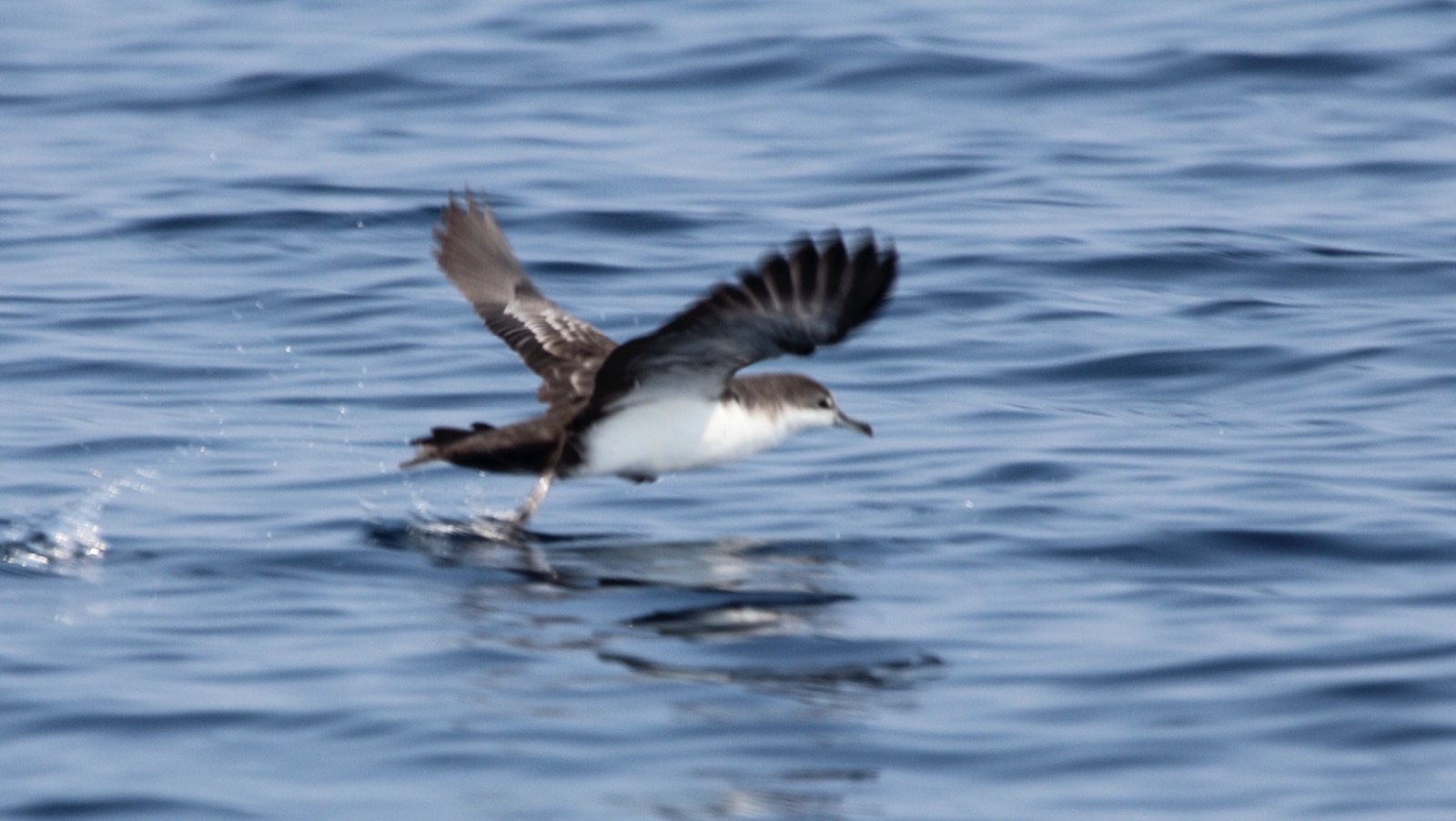
A small dark-and-white shearwater of the open Pacific, photographed off Quepos
The Galapagos Shearwater (Pardela de las Galápagos, Puffinus subalaris) is a small, slender seabird of open tropical ocean. It breeds only in the Galápagos Islands, so a bird in Costa Rican waters is a wanderer from far offshore, and the official bird list marks it M.
A photo of the species was posted from Quepos, on the central Pacific coast of Costa Rica. Costa Rica's seabirds are poorly studied, with records coming mostly from the coasts and Isla del Coco National Park.
On a trip we build, time at sea is the way to look for it, and careful records from a boat day could help add to what is known.
How to find it
Plan for the water rather than the land, since this is a bird of open ocean. Because it is often recorded fairly close to shore, the Pacific coast is the sensible place to scan. The central Pacific near Quepos has produced a photographed record. Look for mixed flocks of shearwaters and boobies feeding together, since this bird joins them. Watch for the low flight of stiff wingbeats and short glides. Costa Rica's seabirds are poorly studied, so a boat day could also help gather data.
How to recognise it
This is a small, slender shearwater, about 29 to 31 cm long. Its marks are few and plain:
Dark brown upperparts.
White underparts.
A dark undertail.
Dark flight feathers on the underwing.
The contrast between brown back and white belly shows best as the bird tilts over the waves. There are no bright colours to help, so expect a quick view of a compact two-tone seabird rather than a long, close look. Tail length and how blackish the bird looks matter for telling it from a close relative, covered below.
Behaviour and diet
It is sociable and feeds at sea alongside other shearwaters and boobies, so a mixed feeding flock is a good place to scan. It flies low over the water and eats squid, fish and offal.
Its flight alternates 4 to 10 stiff wingbeats with short glides. That rhythm is described for the species in general, and it helps pick a shearwater out from other seabirds at a distance.
Where it lives
This is a pelagic bird of open tropical ocean, though it is often recorded fairly close to shore. In Costa Rica a photo was posted from Quepos, on the central Pacific coast.
The species breeds only in the Galápagos Islands and is mostly sedentary there, though some birds are regularly seen as far as the Oaxaca coast of Mexico. For a visitor, that means looking at sea off the Pacific side rather than in forest or farmland.
Similar birds
It looks very much like the tropical shearwater. That species is usually blacker and has a longer tail. The Galápagos bird is less blackish and shorter tailed, so judge tail length and how dark the bird looks.
Status and conservation
The official Costa Rican bird list (2025-2026 update) marks it M, and the IUCN rates the species Least Concern.
How we know this 6 sources, each read on the date shown
- Birda read 2026-11-04
https://app.birda.org/species-guide/7554/Galapagos_Shearwater - Wikipedia read 2026-11-04
https://en.wikipedia.org/wiki/Gal%C3%A1pagos_shearwater - Birds of Costa Rica (birdsofcolombia.org) read 2026-11-04
https://www.birdsofcolombia.org/costarica/Puffinus.html - Lista Oficial de las Aves de Costa Rica read 2026-11-04
https://listaoficialavesdecostarica.wordpress.com/lista-oficial/lista-oficial-online/ - Wikipedia (Spanish) read 2026-11-04
https://es.wikipedia.org/wiki/Puffinus_subalaris - Birdwatching in Costa Rica read 2026-11-04
https://birdwatchingincostarica.com/aves-oceanicas-en-costa-rica-un-pais-de-mar-un-tesoro-por-descubrir/