Family Procellariidae
Manx Shearwater
Puffinus puffinus
In Spanish: Pardela Manx
- Migrant
A rare seabird, glimpsed on pelagic boat trips off both coasts.
The Manx Shearwater (Pardela Manx) is not a bird you plan a day around. It is a rare visitor to Costa Rican waters, and the records we can point to come from pelagic boat trips well offshore, not from the coast.
It breeds in the North Atlantic and winters in the South Atlantic, so a sighting here is a long way from home. Costa Rica's official bird list marks it as a migrant (M), though older editions called it accidental.
For a beginning birder it is best treated as a lovely possibility on an ocean trip, never a certainty.
How to find it
You will need a boat, since the records come from pelagic trips rather than from shore. Go expecting other seabirds first and treat a Manx as a surprise. On the Caribbean side, a later pelagic trip turned up Cory's, Great, Audubon's and Manx Shearwaters together, which shows what deep water can hold. On the Pacific side, a trip from Cabuya produced a bird that several visiting and local birders documented. Scan low over the waves for a stiff-winged glider flashing dark then white, and check size and leg colour if it comes close.
How to recognise it
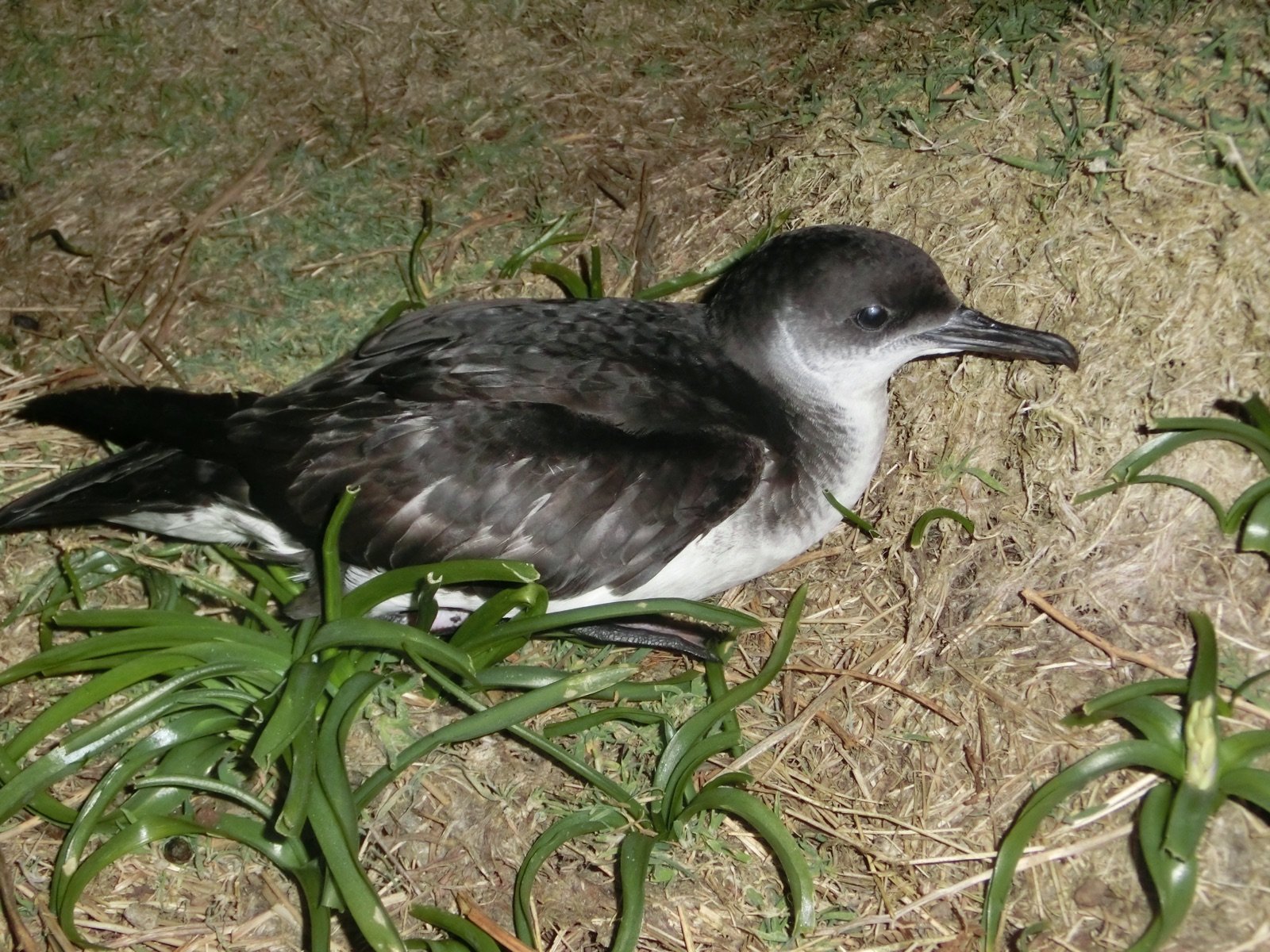
This is a small shearwater, about 34 cm long. Look for these marks:
Dark brown upperparts.
White underparts.
A white underwing with a dark border.
A white undertail.
Flesh-colored legs, if you get a close look.
In flight it holds its long wings straight out from the body, which gives a cross-shaped outline. As it banks over the water it flashes black above and white below, and that contrast is the first thing to catch the eye.
Behaviour and diet
It eats small fish, crustaceans and molluscs, which it catches by diving. In flight it alternates flapping with gliding. Elsewhere birds are often in large flocks, gliding on air currents close to the water surface.
The flight is a stiff-winged shearing glide, tilting from side to side just above the waves.
Where it lives
The Manx Shearwater is a pelagic bird that feeds over open ocean waters. It nests in burrows on small islands or cliffs in the North Atlantic, so none of that happens in Costa Rica.
Here it has been recorded in waters off the Caribbean coast and on the Pacific side, from a boat trip out of Cabuya at the southern tip of the Nicoya Peninsula. Deep Caribbean waters may be visited more often than the records show.
When to see it
The Caribbean-side record came from a pelagic trip in late December 2021. That is one sighting, not a pattern for the species.
Similar birds
Little Shearwater looks similar, but the Manx is larger and has flesh-colored legs. In Costa Rican Pacific waters, Galapagos Shearwater is the common small shearwater, and it is worth comparing with the Manx. One has been watched in flocks with Black Terns, flying in a flutter and glide style.
Names and lore in Costa Rica
In Costa Rica the Spanish name is Pardela Manx. Elsewhere it is called Pardela Pichoneta, a name that refers to the chicks, which people traditionally collected for food, and also Fardela Atlántica. The English name Manx comes from an old shift in wording: in the 17th century the bird was called the Manks puffin, and puffin was an old word for cured shearwater chicks.
Status and conservation
Costa Rica's official list (AOCR) marks the Manx Shearwater as a migrant (M), while globally it is Least Concern with a large population, about 95% of it in Europe.
How we know this 18 sources, each read on the date shown
- Peru Aves read 2026-11-04
https://www.peruaves.org/procellariidae/manx-shearwater-puffinus-puffinus/ - Diputación de Málaga read 2026-11-04
https://www.malaga.es/en/laprovincia/naturaleza/lis_cd-9739/pardela-pichoneta - Elding read 2026-11-04
https://elding.is/manx-shearwater-puffinus-puffinus - Wikipedia read 2026-11-04
https://en.wikipedia.org/wiki/Manx_shearwater - Birding Craft (Costa Rica Birding News) read 2026-11-04
https://birdingcraft.com/wordpress/tag/costa-rica-birding-2022/ - Birding Craft (Costa Rica Birding News) read 2026-11-04
http://birdingcraft.com/wordpress/2021/12/ - Birding Craft (Costa Rica Birding News) read 2026-11-04
http://birdingcraft.com/wordpress/2023/07/ - Audubon read 2026-11-04
https://www.audubon.org/news/lost-sea-hard-flying-birds-can-be-mega-rarities-and-mysteries - Birding Málaga (Diputación de Málaga) read 2026-11-04
https://www.birdingmalaga.es/en/aves/lis_cd-9739/manx-shearwater - Birds Colombia (quoting Wikipedia) read 2026-11-04
https://birdscolombia.com/2022/12/13/pardela-pintada-manx-shearwater-puffinus-puffinus/ - Lista Oficial de las Aves de Costa Rica (AOCR) read 2026-11-04
https://listaoficialavesdecostarica.wordpress.com/lista-oficial/lista-oficial-online/ - Birdwatching in Costa Rica (AOCR list copy) read 2026-11-04
https://birdwatchingincostarica.com/bird-lists/ - Avibase read 2026-11-04
https://avibase.bsc-eoc.org/species.jsp?avibaseid=5AEDC002 - Wikipedia read 2026-11-04
https://en.wikipedia.org/wiki/Shearwater - SEO/BirdLife read 2026-11-04
https://seo.org/ave/pardela-pichoneta/ - Birdwatching in Costa Rica read 2026-11-05
https://birdwatchingincostarica.com/aves-oceanicas-en-costa-rica-un-pais-de-mar-un-tesoro-por-descubrir/ - Aves de Costa Rica read 2026-11-05
https://avesdecostarica.com/Ardennas-gravis.html - Environmental Health Sciences (PMC) read 2026-11-05
https://www.ncbi.nlm.nih.gov/pmc/articles/PMC4154383/