
Family Thraupidae
Golden-hooded Tanager
Stilpnia larvata
In Spanish: Tangara Capuchidorada (Juana, Mariposa, Siete Colores)
- Resident
Gardens, clearings and forest canopy, from sea level up to 1,500 metres. All year.
Gold on the head, a black mask edged in violet blue, a black back, turquoise at the shoulders and rump. One of its Costa Rican names, kept on the official list, is Siete Colores: seven colours.
It does not make you walk deep into the forest to find it. It lives from sea level to 1,500 metres, in the canopy of dense forest, the leafy top layer, but just as much in clearings, second growth (forest growing back after clearing) and gardens with good cover.
Where to see it
- Hotspot page
- Named place
- Nearby lodge (numbers match the cards)
- Wilson Botanical Garden and Las Cruces
- Tirimbina Biological Reserve, SarapiquíNot on the map above: it sits too far away to show at this zoom.
- Selva Verde, on the Sarapiquí RiverNot on the map above: it sits too far away to show at this zoom.
Nearby lodges
Within 20 km of a place on the map, in the same zone.
- 1
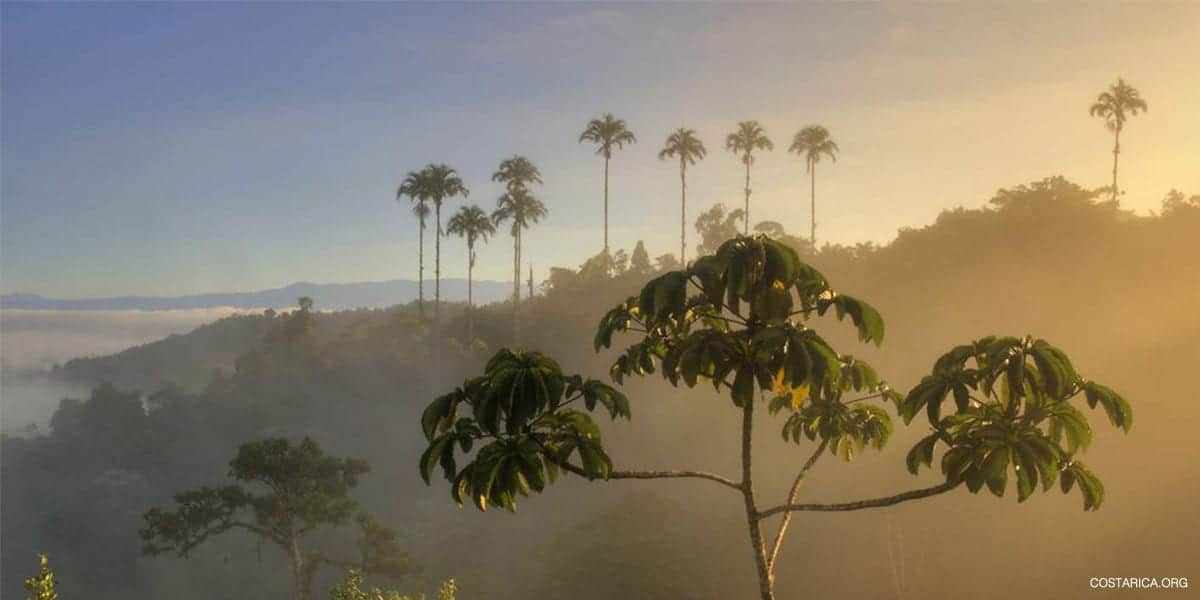 Las Cruces Biological Station0.8 km from Wilson Botanical GardenSee the lodge
- 2
 Selva Verde Lodge6.8 km from Tirimbina Biological Reserve, Sarapiquí (off the map)See the lodge
- 3
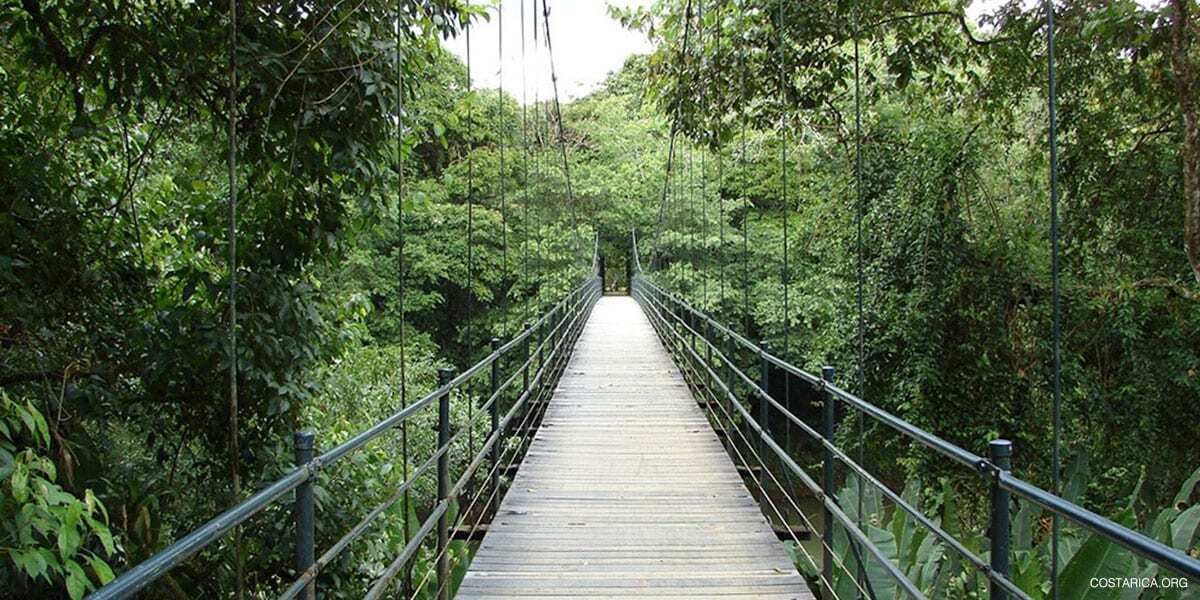 La Selva Biological Station5.8 km from Selva Verde, on the Sarapiquí River (off the map)See the lodge
How to recognise it
About 13 cm and 19 grams, shorter than a new pencil.
The male has the golden head and the black mask with violet-blue edges above and below. His back is black apart from turquoise on the shoulders and rump and turquoise edging on the wings and tail. Gold hood over black and turquoise: that pattern settles it.
The female is much the same, with a greenish tinge to the head, sometimes black flecks on the crown, and more white underneath.
The call is a sharp tsit. The song is a tuneless, rattled run of ticks.
Where it lives
From sea level to 1,500 metres: the canopy of dense forest, and semi-open places such as clearings, second growth and gardens with good cover.
When to see it
All year. It often raises two broods in a season, and the young of the first help feed the second. The nest goes in a tree fork, or in a bunch of green bananas.
Trips that find it
- Dancing with Quetzals11 nightsSee the trip
- Costa Rica's Top Birding Spots11 nightsSee the trip
Tell us when you are travelling and our team in Costa Rica builds the trip around the birds you want to see.
Plan my birding tripHow we know this 1 sources, each read on the date shown
- Wikipedia: Golden-hooded tanager read 4 November 2026
https://en.wikipedia.org/wiki/Golden-hooded_tanager