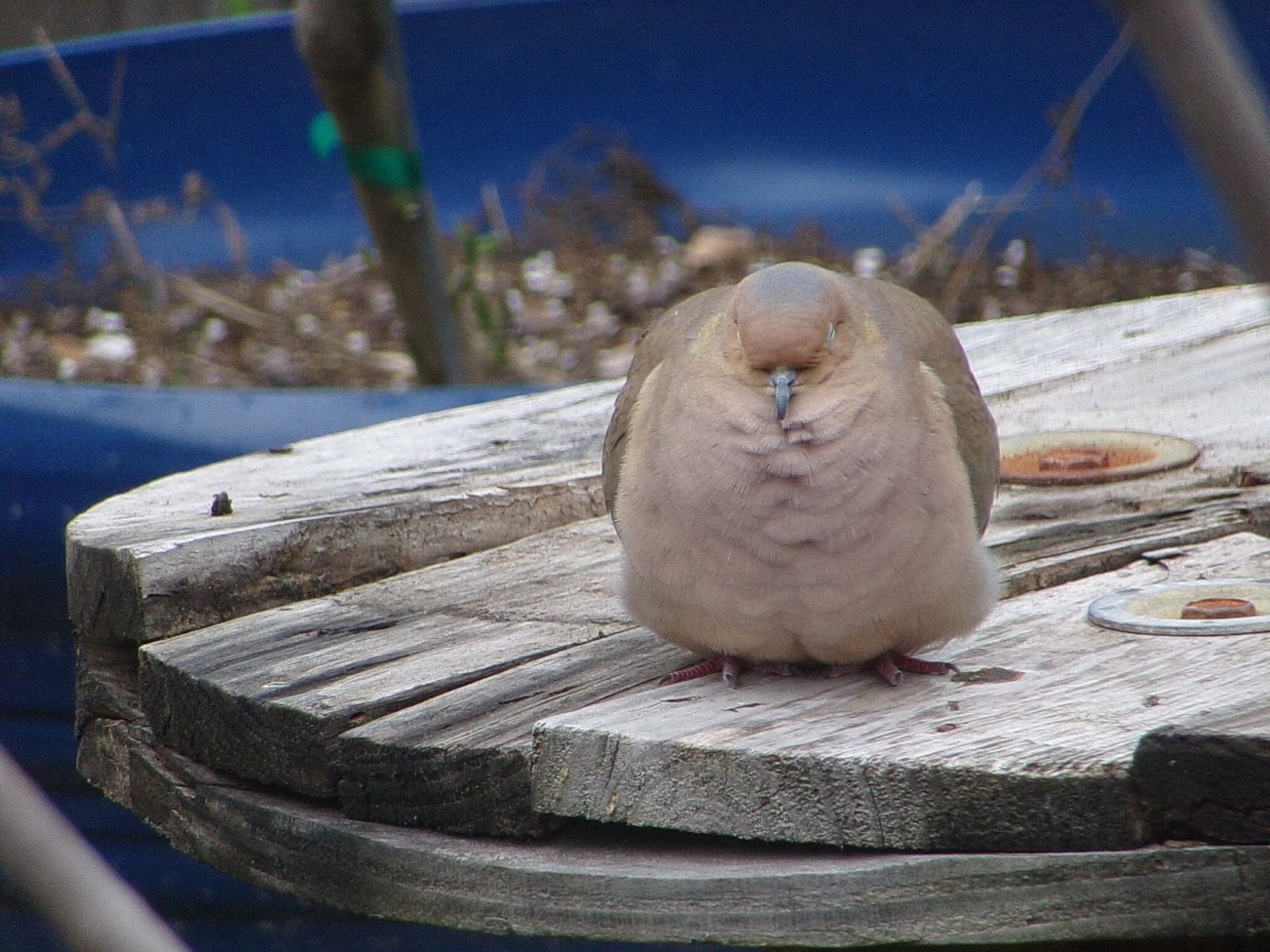
Family Columbidae
Mourning Dove
Zenaida macroura
In Spanish: Paloma Rabuda
- Resident
A slender dove with a long pointed tail, resident around Cartago and Irazú.
The Mourning Dove, known in Costa Rica as Paloma Rabuda, is a slender, medium-sized dove about 31 cm long, with a small rounded head and a long tapered tail edged in white.
Costa Rica has two kinds of Mourning Dove. Resident birds live east of the Central Valley and belong to their own subspecies, Zenaida macroura turturilla, shared only with western Panama. Northern migrants arrive in large numbers in winter.
On a trip we build, you can expect it in open farmland and towns around Cartago and the lower slopes of Irazú Volcano. In winter, the dry Pacific lowlands of Guanacaste hold many migrants.
How to find it
Start in open farmland and towns around Cartago and the lower Irazú slopes, where visitors can expect it. Scan power and telephone wires, where the long pointed tail stands out. Dawn and dusk are good times to hear the soft coo from wire-perched birds. Look also along roadsides, garden edges and farm fields, and skip dense forest and wetlands, which it avoids. Between October and March, the dry Pacific lowlands of Guanacaste hold many migrants. Outside breeding time, look for flocks.
How to recognise it
Look for a slender dove about 31 cm long. A Costa Rican account gives about 30 cm and 100 g.
The head is small and rounded, and the bill is thin, short and dark. The tail is long and tapered, with white outer feathers and bold white tips. The light gray-brown wings carry black spots.
Adult males have bright purple-pink patches on the sides of the neck and a bluish-gray crown. Females are browner overall and slightly smaller, and they lack the blue-gray crown.
A dark crescent-shaped mark sits below the eye. The eye is dark and ringed with light blue skin. The legs are short and reddish.
What it sounds like
Recording: spacewhales, CC BY-SA 4.0, source, read 4 Nov 2026.
Behaviour and diet
The Mourning Dove eats almost entirely seeds, and only rarely snails or insects. It usually feeds on the ground, walking rather than hopping.
It likes to perch on power or telephone wires, where the long pointed tail is easy to see. It also spreads its wings motionless to sunbathe, sometimes for many minutes. Outside breeding time it often gathers in flocks.
The nest is a shallow cup or pad of grass or twigs, set on the ground under a bush or about 1.5 m up in a clump of grass. The clutch is 2 white eggs.
Where it lives
In Costa Rica the resident birds live east of the Central Valley. They are especially abundant around Cartago and on the lower slopes of Irazú Volcano, reaching at least 2300 m.
Costa Rican habitat is open areas with scattered trees, savannas, farmland, pastures and secondary forest. Across its range the species also uses forest edges, gardens and roadsides, and it avoids extensive forest and wetlands.
In winter, northern migrants spread from Guanacaste south toward the Parrita area.
When to see it
Large numbers of northern migrants winter from Guanacaste south to the Parrita area, from October to March. A Costa Rican account gives breeding from March to July, and elsewhere on both slopes the dove is only occasional.
Similar birds
Costa Rica's Inca Dove is much smaller, about a third of the weight. It has scaly plumage and a long, narrow tail. The Mourning Dove has a pointed tail and black spots on the wing instead of scales.
Names and lore in Costa Rica
Costa Ricans call this dove Paloma Rabuda, and some Costa Rican lists also give plain paloma. Elsewhere it is paloma huilota in Mexico, tórtola rabuda in Nicaragua and tórtola rabiaguda in Panama.
Status and conservation
The Asociación Ornitológica de Costa Rica lists it as R,M, a resident with winter migrants, while across North America it is very abundant and widespread.
Photography tips
Wires make the easiest stage: a perched dove shows its long pointed tail clearly. Dawn and dusk are good for calling birds, and a flushed bird flying off shows the white outer tail feathers.
How we know this 11 sources, each read on the date shown
- Wikipedia read 2026-11-04
https://en.wikipedia.org/wiki/Mourning_dove - Asociación Ornitológica de Costa Rica read 2026-11-04
https://avesdecostarica.weebly.com/columbidae.html - Oiseaux.net read 2026-11-04
https://www.oiseaux.net/en/oiseaux/mourning.dove.html - Creasey Mahan Nature Preserve read 2026-11-04
https://creaseymahannaturepreserve.org/mourning-doves-zenaida-macroura/ - Wikipedia (Spanish) read 2026-11-04
https://es.wikipedia.org/wiki/Zenaida_macroura - Earthlife read 2026-11-04
https://earthlife.net/mourning-doves/ - BirdForum Opus read 2026-11-04
https://www.birdforum.net/opus/Mourning_Dove - Field Guides Birding Tours (trip report 2021) read 2026-11-05
https://fieldguides.com/triplists/crh21b.html - Flickr (species account, Paloma rabuda) read 2026-11-05
https://www.flickr.com/photos/jobando/38881391435 - Avibase read 2026-11-05
https://avibase.bsc-eoc.org/species.jsp?avibaseid=00124D987C95811B - Pigeonpedia read 2026-11-05
https://pigeonpedia.com/inca-dove