Family Scolopacidae
Semipalmated Sandpiper
Calidris pusilla
In Spanish: Correlimos Semipalmado
- Migrant
A tiny migrant sandpiper of Pacific mudflats, most numerous around the Gulf of Nicoya.
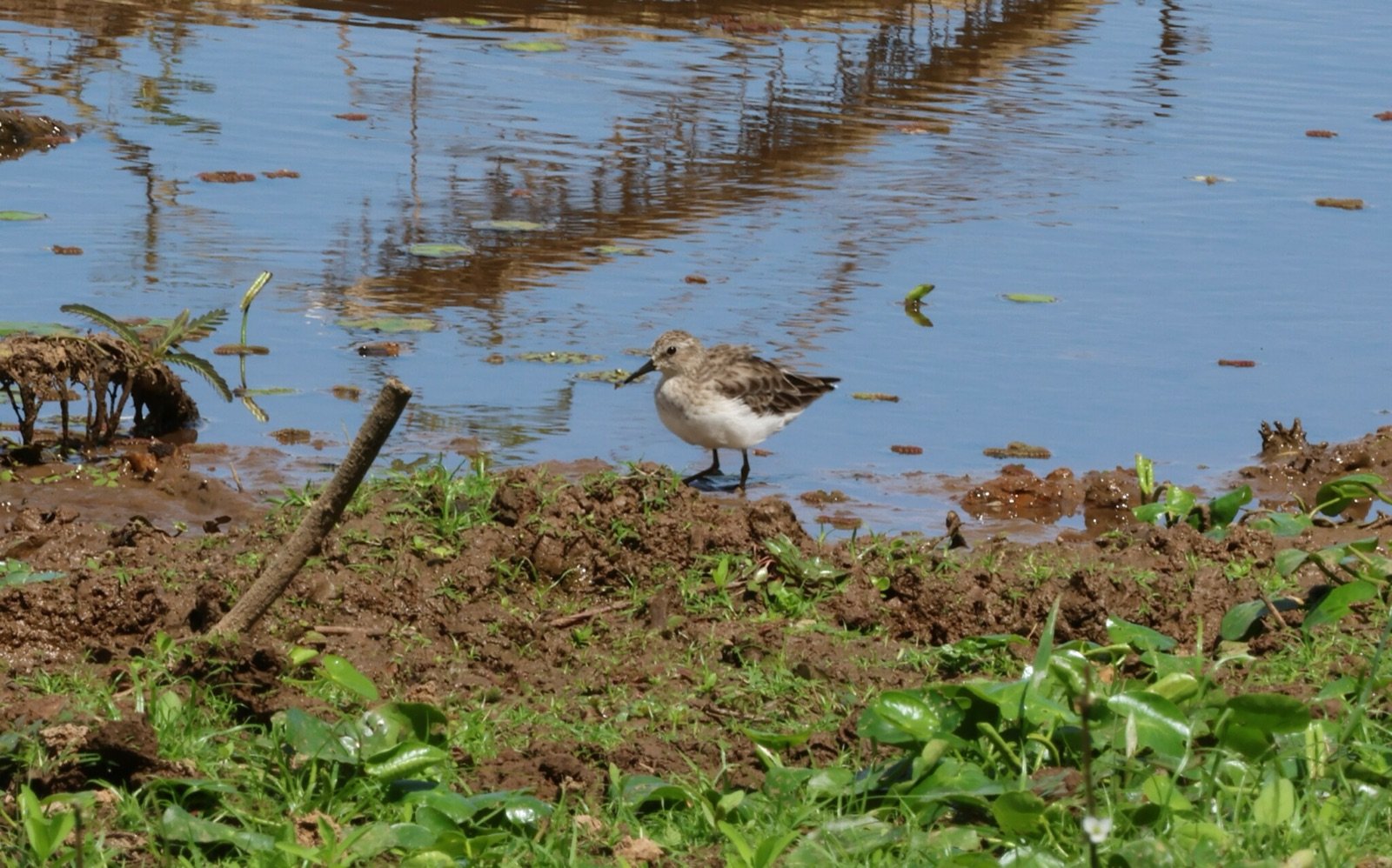
The Semipalmated Sandpiper is a very small sandpiper, about 15 to 18 cm long, with black legs and a short, stout, straight dark bill. It breeds in the Arctic tundra of Canada and Alaska and spends the non-breeding season on the coasts of South America, the Caribbean and Central America.
In Costa Rica a national summary calls it a common, locally abundant migrant from mid August to mid November and again from March to early May. On the Pacific coast it is a fairly common winter resident, most numerous around the Gulf of Nicoya, and much scarcer on the Caribbean side.
For a beginning birder it is a good first step into the tricky small shorebirds known as peeps. On a trip we build, the trick is patience: scan a mixed flock for the grayer bird with the stouter bill.
How to find it
Look for it on mudflats, feeding in mixed groups with Least and Western Sandpipers. Scan these flocks for the grayer, stouter-billed bird. Head for the Pacific coast, and the Gulf of Nicoya in particular, where it is most numerous. Morning and late afternoon are best at Gulf of Nicoya sites such as Punta Morales. Listen as well as look, since its short, harsh call differs from the higher, trilled jeek of Western Sandpiper.
How to recognise it
This is a very small sandpiper, about 15 to 18 cm long.
Look for these marks:
Black legs.
A short, stout, straight dark bill.
A dark grey-brown back.
White underparts.
Next to other peeps it looks grayer above and has a less streaked breast. It often looks bull-necked, which gives it a compact, chunky shape.
The name "semipalmated" refers to slight webbing between the three front toes, a feature that helps the bird walk on mud.
In Costa Rica it is slightly smaller than the Western Sandpiper, with a bill that is shorter, straighter and blunter at the tip.
What it sounds like
Behaviour and diet
It feeds on mudflats, picking up food by sight and by feel with the bill. It runs along sand or mud snatching food, and sometimes probes.
Semipalmated Sandpipers seem to be always on the move. They peck rapidly for tiny prey and keep chasing off other semis that feed close by.
It often feeds alongside Least and Western Sandpipers, so you will usually meet it in mixed groups rather than alone. During migration it is often found in flocks of thousands at stopover points.
Where it lives
On migration and in winter it uses coastal beaches, lake and river shores, mudflats and salt marsh pools.
In Costa Rica it is a bird of the coast. On the Pacific side it is a fairly common winter resident and is most numerous around the Gulf of Nicoya. It is much scarcer on the Caribbean coast.
When to see it
A Costa Rican summary calls it a common, locally abundant migrant from mid August to mid November and again from March to early May. Some non-breeding birds stay through the summer on the Pacific coast, though only occasionally.
Similar birds
It is a little bigger than a Least Sandpiper and has a clearly stouter bill. Western Sandpiper usually has a longer bill that droops at the tip, though the two overlap, and Western looks rangier with a bit more primary projection. Semipalmated and Western are the only peeps with webbed toes, so call, bill and build together give the best answer.
Names and lore in Costa Rica
Costa Rica's bird list uses the Spanish name Correlimos Semipalmado. Elsewhere in Latin America it is also called Playero Semipalmado and Playerito Semipalmado. The closely related Western Sandpiper has the local nickname 'Becacina', but the Semipalmated gets no separate nickname on that list.
Status and conservation
The AOCR list marks it as M, a migrant, and the IUCN lists the species as Near Threatened.
Photography tips
Mixed flocks on mudflats give the best chances, so scan them for the grayer, stouter-billed bird. Morning and late afternoon are the best times at Gulf of Nicoya sites such as Punta Morales.
How we know this 15 sources, each read on the date shown
- Wikipedia read 2026-11-04
https://en.wikipedia.org/wiki/Semipalmated_sandpiper - Boreal Songbird Initiative read 2026-11-04
https://www.borealbirds.org/bird/semipalmated-sandpiper - Wikipedia read 2026-11-04
https://en.wikipedia.org/wiki/List_of_birds_of_Costa_Rica - Animal Diversity Web read 2026-11-04
https://animaldiversity.org/accounts/Calidris_pusilla/ - INBio via Encyclopedia of Life read 2026-11-04
https://eol.org/es/pages/45509225/articles - Audubon Field Guide read 2026-11-04
https://www.audubon.org/field-guide/bird/semipalmated-sandpiper - Larkwire read 2026-11-04
https://www.larkwire.com/library/bird-sounds/442/Western-Sandpiper-songs-and-calls - Birds of the World (Cornell) read 2026-11-04
https://birdsoftheworld.org/bow/species/semsan/cur/sounds - Tennessee Wildlife Resources Agency read 2026-11-04
https://www.tn.gov/twra/wildlife/birds/waterbirds/semipalmated-sandpiper.html - Identification of North American Peeps read 2026-11-04
https://www.naturebob.com/sites/default/files/Identification%20of%20North%20American%20Peeps.pdf - Aves Ibéricas, Aves Costa Rica read 2026-11-04
https://www.avesibericas.es/costaricaaves2.htm - 10,000 Birds read 2026-11-04
https://www.10000birds.com/buff-breasted-sandpiper-overload-and-other-fall-birding-highlights-in-costa-rica.htm - BC Conservation Data Centre read 2026-11-04
https://a100.gov.bc.ca/pub/eswp/speciesSummary.do;jsessionid=c677cf4a9d496c876a6f1ee099236930817485bebbebd65fe02a741e7ce689bc.e3uMah8KbhmLe34NaN4KaNyTaNj0n6jAmljGr5XDqQLvpAe?id=18252 - All About Birds read 2026-11-05
https://www.allaboutbirds.org/guide/Semipalmated_Sandpiper/id - iNaturalist read 2026-11-05
https://www.inaturalist.org/taxa/3862-Calidris-pusilla