Family Scolopacidae
Western Sandpiper
Calidris mauri
In Spanish: Correlimos Occidental (Patudo, Becacina)
- Migrant
Small black-legged migrant sandpiper of Pacific shores and mudflats
The Western Sandpiper (Correlimos Occidental, Calidris mauri) is a small sandpiper with black legs. In Costa Rica it is a bird of the shore and the mudflats, not of the highlands, and the official bird list classes it as M, a migrant.
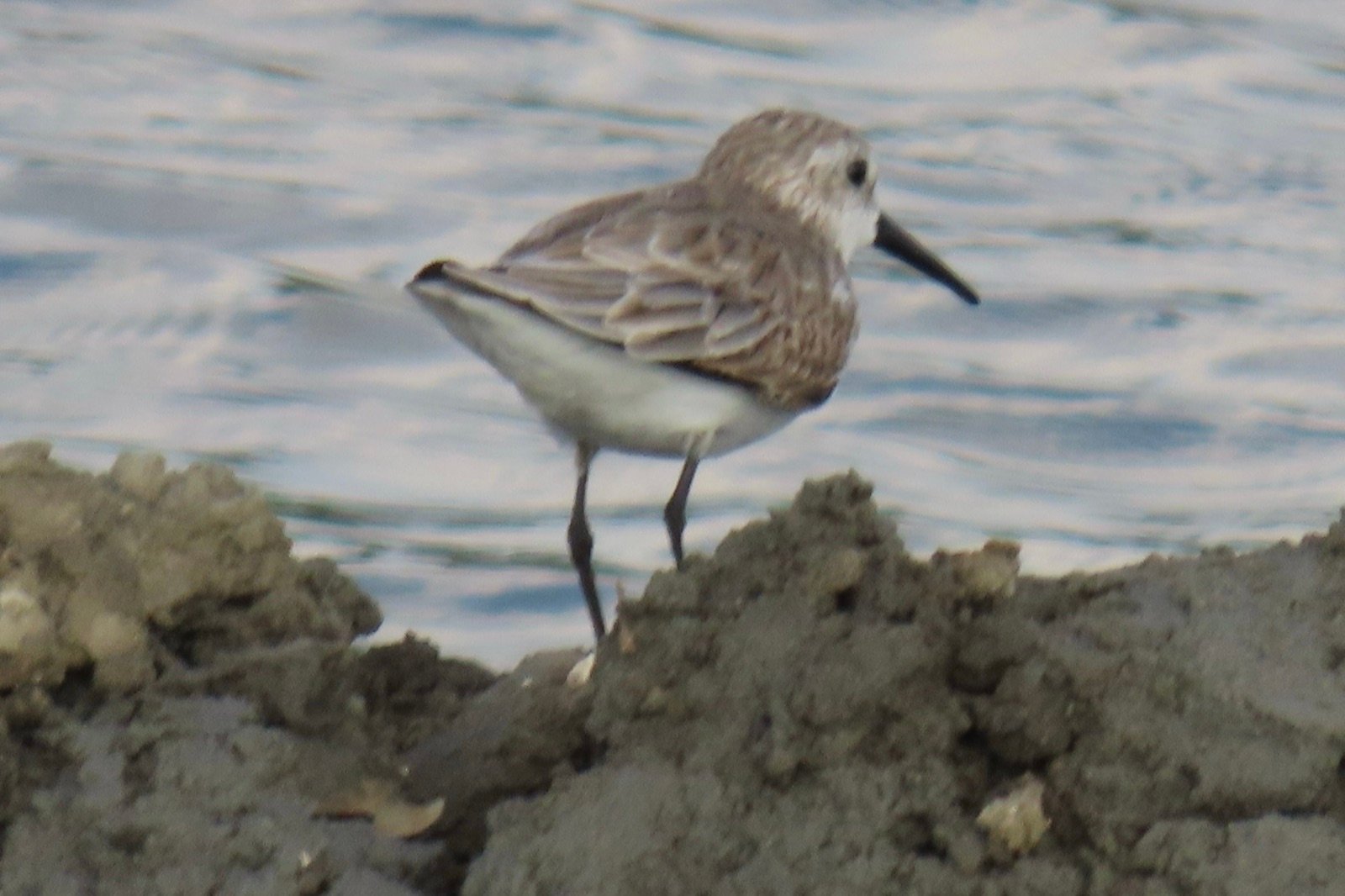
One was photographed in November 2023 at the Río Tárcoles mouth, in Puntarenas Province. On a Pacific coast trip we build around Carara National Park, the Tárcoles River boat trip, Chomes and Puntarenas, it is one of the northern migrants worth watching for.
Below you will find how to tell it from its closest lookalike, and how the tides shape your chances.
How to find it
Start on the Pacific coast, where shore and mudflats hold the species. Check the tides first, because they decide whether birds are close or far. At high tide the gulf mudflats are covered and birds crowd into the ponds, while at low tide they spread over huge mudflats, mostly as distant silhouettes. Chomes and Punta Morales are the places to time this. Scan flocks of small sandpipers rather than single birds, since Westerns often mix with Semipalmated Sandpipers. Pick out birds feeding in deeper water than their neighbours, sometimes with the whole bill dunked, and listen for the high, thin call.
How to recognise it
Start with the basics: a small sandpiper with black legs, and dark legs on adults generally.
In winter plumage it is plain gray above with a white belly. In breeding plumage it is mottled with rusty, gray and black above, with streaks on the breast, and the crown looks reddish brown.
The bill is short, fine and dark, with a slight droop at the tip. It is usually longer than that of the Semipalmated Sandpiper, though bill lengths overlap.
The build helps too. The Western tends to look front heavy, with a bigger chest, larger head and thicker neck, even though it is only slightly larger overall.
It also molts to winter plumage earlier in autumn than the Semipalmated.
What it sounds like
Behaviour and diet
It feeds by walking in shallow water or over mud, probing the mud with its bill. It also picks items off the surface of the shore by sight.
Western Sandpipers usually feed in deeper water than other small sandpipers and sometimes dunk the whole bill. They often mix with the slightly smaller Semipalmated Sandpipers, so a flock is worth scanning bird by bird.
Where it lives
The Western Sandpiper winters mainly on Pacific coastal sites. In Costa Rica it is a bird of the shore and mudflats, not of the highlands.
The places we can name are on the Pacific side, in Puntarenas Province: the Río Tárcoles mouth, and the mudflats around the Gulf of Nicoya at Chomes and Punta Morales. Wintering birds feed on muddy flats in lagoons, estuaries and sea coasts.
When to see it
One account citing Stiles and Skutch (1989) says the species passes through Costa Rica from August to November and again from mid-March to early May.
Similar birds
The Semipalmated Sandpiper is the closest lookalike. In Costa Rica it is slightly smaller, with a shorter, straighter bill and a blunter tip, while the Western's bill is almost always about 22 mm or longer. Winter adults of the two are almost identical, and young Semipalmated look very like young Westerns when they arrive. One clue is that Semipalmated never shows rufous in the scapulars in autumn.
Names and lore in Costa Rica
The official list gives the Spanish name Correlimos Occidental, with the alternate local names Patudo and Becacina. Both nicknames are shared with several other small sandpipers. Becacina also appears in the classic Stiles and Skutch text as the local name for this species.
Status and conservation
The official Costa Rican bird list (AOCR) classes the Western Sandpiper as M, a migrant.
Photography tips
Check tides at Chomes and Punta Morales. At high tide birds crowd into the ponds, which brings them closer. At low tide they spread over huge mudflats and mostly show as distant silhouettes.
How we know this 17 sources, each read on the date shown
- Oiseaux.net read 2026-11-04
https://www.oiseaux.net/en/photos/herve.michel/western.sandpiper.4.html - Encyclopedia of Puget Sound read 2026-11-04
https://www.eopugetsound.org/species/calidris-mauri - Lista Oficial de las Aves de Costa Rica (AOCR) read 2026-11-04
https://listaoficialavesdecostarica.wordpress.com/lista-oficial/lista-oficial-online/ - EcuRed read 2026-11-04
https://www.ecured.cu/Correlimos_occidental - Peru Aves read 2026-11-04
http://www.peruaves.org/scolopacidae/western-sandpiper-calidris-mauri/ - Audubon Field Guide read 2026-11-04
https://www.audubon.org/field-guide/bird/western-sandpiper - SEO/BirdLife read 2026-11-04
https://seo.org/ave/correlimos-de-alaska/ - Aves en azul y verde read 2026-11-04
http://avesazulyverde.blogspot.com/2020/04/costa-rica-viii-carara-chomes-y.html - Larkwire read 2026-11-04
https://www.larkwire.com/library/bird-sounds/442/Western-Sandpiper-songs-and-calls - Nemesis Bird read 2026-11-04
https://nemesisbird.com/birding/bird-finding/western-vs-semipalmated-sandpiper/ - Boreal Birds read 2026-11-04
https://www.borealbirds.org/bird/western-sandpiper - WHSRN read 2026-11-04
https://whsrn.org/whsrn_sites/golfo-de-nicoya/ - Birding Craft read 2026-11-04
https://birdingcraft.com/wordpress/category/mangroves/feed/ - 10,000 Birds read 2026-11-05
https://www.10000birds.com/buff-breasted-sandpiper-overload-and-other-fall-birding-highlights-in-costa-rica.htm - Encyclopedia of Life (Stiles and Skutch text) read 2026-11-05
https://eol.org/es/pages/45509225/articles - WHSRN (RHRAP) read 2026-11-05
https://whsrn.org/es/bienvenida-un-nuevo-pais-costa-rica/ - Spanish Wikipedia read 2026-11-05
https://es.wikipedia.org/wiki/Calidris_mauri