Family Mimidae
Tropical Mockingbird
Mimus gilvus
In Spanish: Pájaro-imitador Tropical
- Resident
A gray, long-tailed songster that perches in plain view in parks and gardens.
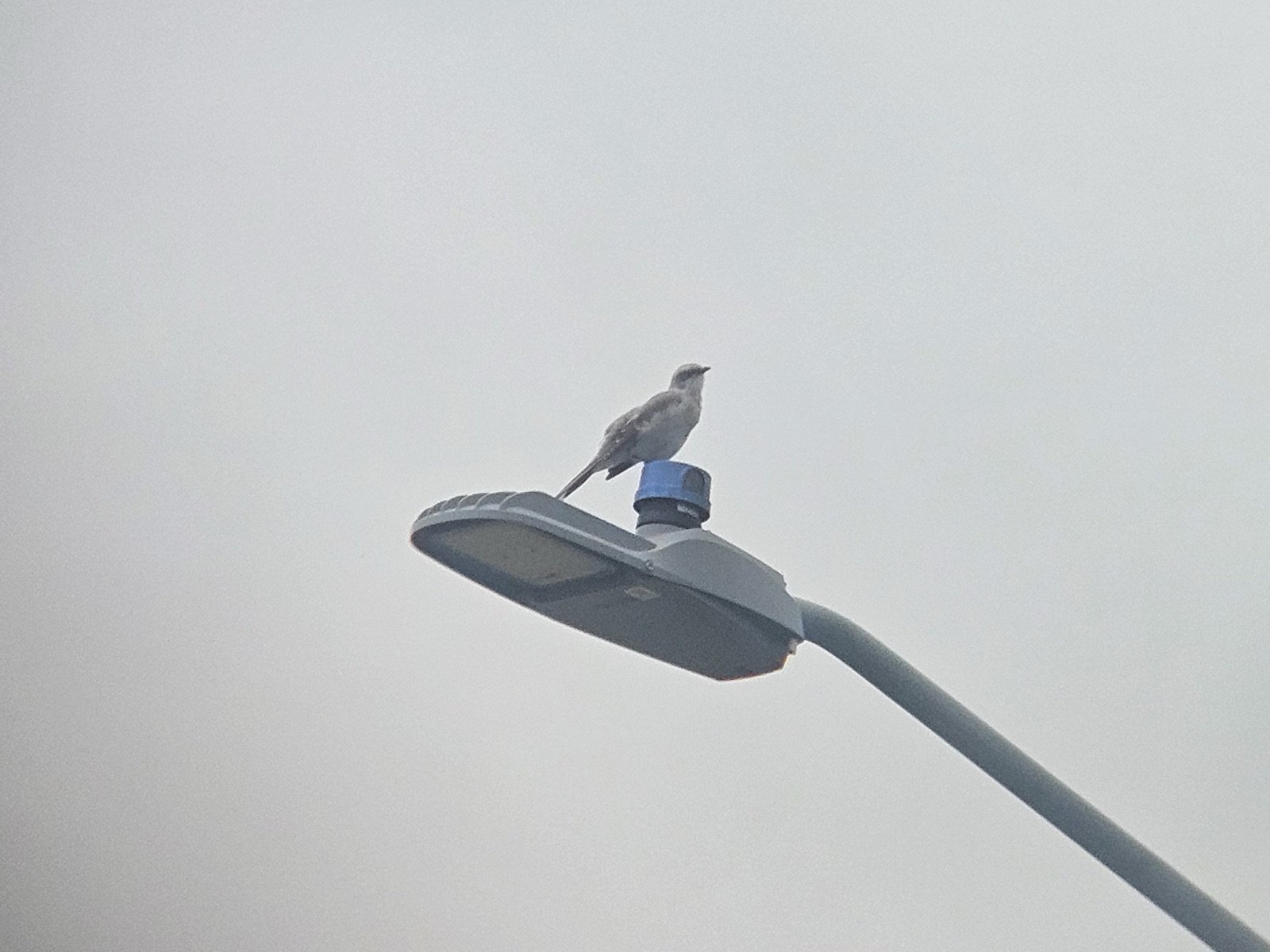
The Tropical Mockingbird is a bird of open ground, so you can meet it in a town park or a garden without heading into forest. It often sits in plain view on utility wires or on top of bushes and trees.
It was first known from gardens and towns in the Caribbean lowlands, and since the early 2000s it has spread to nearly the whole country. Costa Rican sources still describe it as uncommon, so it helps to know where to look.
On a trip we build, it can turn up in lodge grounds as well as in towns, which makes it a friendly first lesson in a family known for song.
Where to see it
How to find it
Scan utility wires, bare dead branches and the tops of bushes and trees, where it often sits in plain view. It is often easy to spot in open lowland areas, perching on roadside wires. When you hear a long, varied song, scan the treetops, because it often sings from a high branch. It sometimes sings at night, so listen in towns after dark as well as by day. Town parks and gardens are good places to start.
How to recognise it
Think of a bird a bit bigger than a thrush, with a long dark tail. A Costa Rica photographer calls it clearly larger than a Northern Mockingbird, roughly the size of a Blue Jay.
Look for these marks:
Gray back, with a gray head in adults.
Blackish wings with white bars.
White underparts.
White patches in the wings and tail.
A yellow eye, a pale eyebrow and a dark line through the eye.
A long dark tail with white tips.
A slim, black, slightly curved bill.
Juveniles are browner than adults, with dusky streaks on the chest and flanks. One juvenile was photographed at La Sabana Metropolitan Park in San José.
What it sounds like
Recording: Grupo Phoenix, CC BY-SA 4.0, source, read 4 Nov 2026.
Behaviour and diet
It eats insects, small vertebrates and fruit. It hunts on the ground or in vegetation, or flies down from a tree to catch invertebrates.
It cocks its tail when on the ground and when it lands on a perch. On a branch it swings its tail horizontally from side to side. While foraging it spreads its wings in a two-step motion, flashing the white wing patches.
It is fairly trusting and very vocal, and it is described as sociable and fond of perching on wires.
Where it lives
In Costa Rica it has spread to almost the whole country below about 1,700 m elevation. It likes open ground with scattered trees and shrubs, so town parks and gardens suit it.
Across its range it favors open habitats such as scrub, savanna, parks and farmland, and avoids closed forest and mangroves. In Costa Rica it was first known from the Caribbean lowlands. Today it is reported from Guanacaste cattle pasture, the Central Valley, the southern zone and mountain settings such as Dota and Acosta.
Similar birds
It closely resembles the Northern Mockingbird, which is also gray with a long tail and often sings from low perches. Wing view settles the ID: the Northern has big white wing patches that flash in flight, while the Tropical has mostly dark wings with no white showing in flight. The Tropical's song is hoarser than the Northern's, which helps by ear. The two do not really overlap in range.
Names and lore in Costa Rica
Costa Rican sources also call it Sinsonte tropical. Other Spanish names listed for the species include Sinsonte común, Mirla blanca and Chica, though these come from a general list and are not all Costa Rican.
Status and conservation
The AOCR list marks it as a resident (R), though some sources treat it as introduced to Costa Rica, and globally it is Least Concern.
Photography tips
Look in open lowland areas, where it perches on roadside wires and bare dead branches. It is fairly trusting and can come very close in places with people, and the white wing patches flash when it opens its wings while foraging.
How we know this 17 sources, each read on the date shown
- Ecos del Bosque read 2026-11-04
https://ecosdelbosque.com/fauna/mimus-gilvus - San Vito Bird Club read 2026-11-04
https://sanvitobirdclub.org/2014/07/28/bird-report-tropical-mockingbird/ - Biosonidos UNED read 2026-11-04
https://biosonidos.uned.ac.cr/node/116 - Costa Rica Bird Forum read 2026-11-04
http://pajareroscostarica.blogspot.com/2009/03/tropical-mockingbird-in-santa-ana-march.html - Bird Finding read 2026-11-04
https://birdfinding.info/tropical-mockingbird/ - JungleDragon (Wikipedia text) read 2026-11-04
https://www.jungledragon.com/specie/6274/tropical_mockingbird.html - Peru Aves read 2026-11-04
https://www.peruaves.org/mimidae/tropical-mockingbird/ - Animalia.bio (Wikipedia text) read 2026-11-04
https://animalia.bio/tropical-mockingbird - Naturalista Costa Rica read 2026-11-04
https://costarica.inaturalist.org/taxa/14884-Mimus-gilvus - El Ecoturista read 2026-11-04
https://elecoturista.com/internacional/costa-rica-un-destino-ornitologico-top-y-ii-centro-y-norte/ - El Jornal read 2026-11-04
https://eljornalcr.com/se-registra-por-primera-vez-en-acosta-ave-cuyo-habitat-se-ubica-en-el-sur-de-costa-rica-y-panama/ - La Jornada Maya read 2026-11-04
https://www.lajornadamaya.mx/campeche/220287/cenzontle-tropical-el-imitador-de-aves-mimus-gilvus-ornitologia-calandria-tropical-mirla-blanca-laguna-de-terminos-peninsula-de-atasta-sabancuy-region-de-los-rios-en-mamantel - Wikipedia read 2026-11-04
https://en.wikipedia.org/wiki/Tropical_mockingbird - BirdForum read 2026-11-04
https://www.birdforum.net/threads/historical-range-of-the-tropical-mockingbird.459195/ - Birds by Jake read 2026-11-04
https://www.birdsbyjake.com/photo/tropical-mockingbird/ - TicoRico read 2026-11-04
https://ticorico.org/en/animals/tropical-mockingbird/ - Bioexploradores Farallones del Citará read 2026-11-04
https://farallonesdelcitara.bioexploradores.com/biodiversidad/aves/passeriformes/mimidae/mimus-gilvus/