Family Charadriidae
Wilson's Plover
Anarhynchus wilsonia
In Spanish: Chorlitejo Picudo (Chorlito Gritón, Turillo)
- Resident
Heavy black bill, one breast band, Pacific beaches and salt pans.
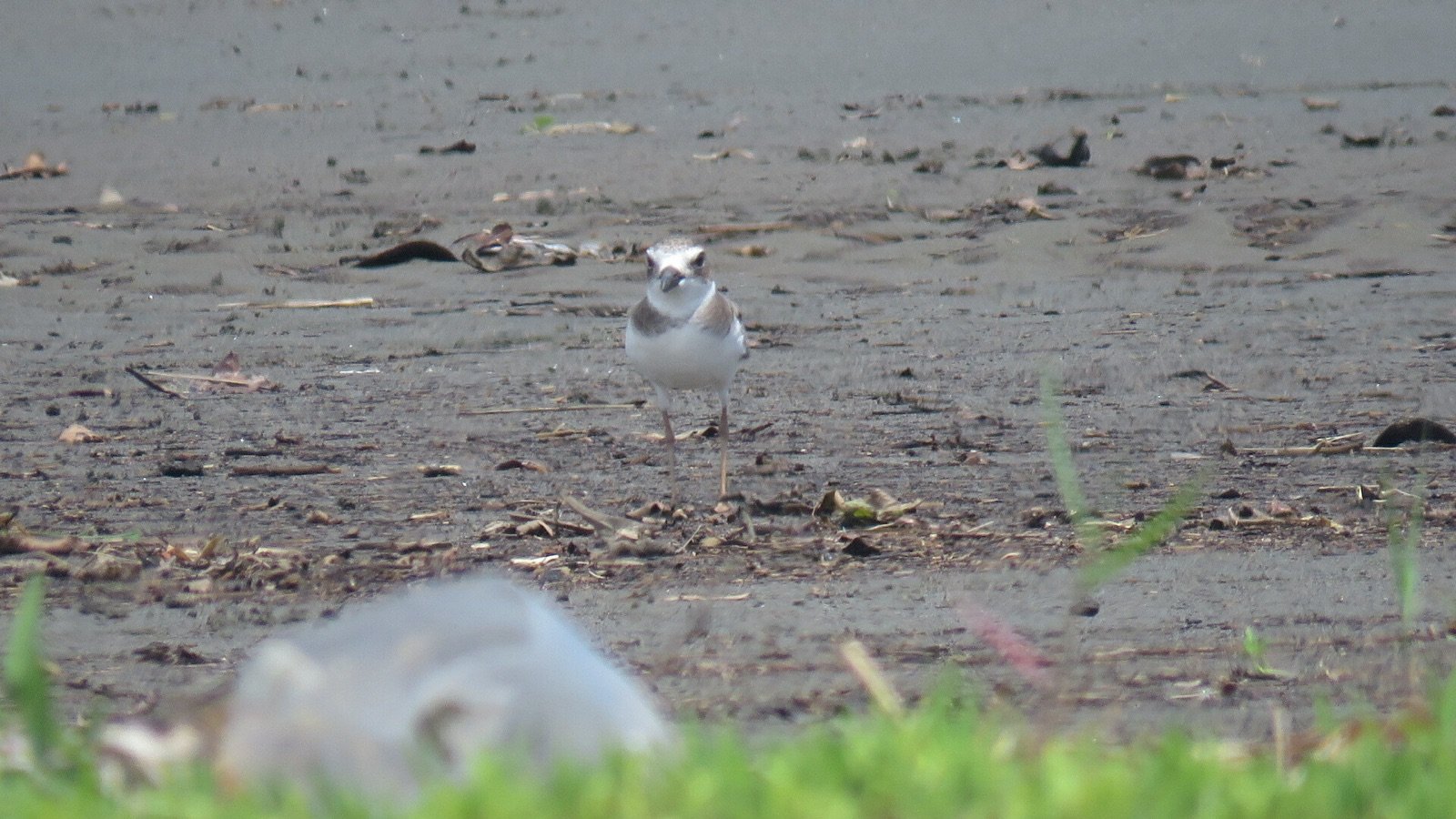
Wilson's Plover is the largest plover in Costa Rica with a single breast band, about 20 cm long. Its heavy black bill is the clue that sets it apart from its smaller cousins.
It lives year-round along the Pacific coast and breeds commonly around the Gulf of Nicoya. It is locally abundant on the Pacific side, including the Gulf of Nicoya and Golfo Dulce, and northern winter visitors also use both coasts.
On a trip we build, a salt pan or a sandy Pacific beach is the place to look. A weak, high whistle often tells you the bird is nearby before you see it.
How to find it
Head for the Pacific coast, where it is most reliable, and favour the Gulf of Nicoya or Golfo Dulce. Salt pans and estuaries are especially good, and pan dikes are where it likes to nest. Walk slowly and scan open sand and mud, because a crouching bird blends in. Listen for the thin whistle, which often gives it away first. Sort it from the other small plovers on the same beach by checking the heavy bill, squarish head and large eyes.
How to recognise it
Start with size and bill. This is the largest plover with a single breast band, about 20 cm long.
The bill is black and heavy, and the legs are flesh-pink. Breeding males have a black forehead and a black breast band. Females and non-breeding birds show brown or rufous where breeding males are black. Young birds have an incomplete breast band.
It also has a squarish head and large eyes, which help set it apart from other plovers on the same shore. Elsewhere in its range it looks like a small Killdeer, or a larger Semipalmated Plover with a bigger bill, and it has one broad breast band. The heavy black bill is the best single clue.
What it sounds like
Behaviour and diet
Wilson's Plover is usually solitary and crouches low when alarmed, which can make it hard to pick out against sand. It nests in a scrape in sand or loose soil, often on a salt pan dike, and lays 2 or 3 eggs. Pairs form from the start of the dry season.
Across its range it forages by sight, walking slowly across the beach, and hunts mainly fiddler crabs, by day and by night. Outside the breeding season, birds gather to roost and feed in groups, from a few birds to several hundred, mostly with other small plovers.
Where it lives
Look for it on sandy or rocky beaches, salt pans, estuaries, and mudbanks of large rivers near the coast. It is a bird of the shoreline rather than the forest.
It lives year-round along the Pacific coast, breeding commonly around the Gulf of Nicoya and locally at other coastal sites. It is locally abundant on the Pacific side, including the Gulf of Nicoya and Golfo Dulce. On the Caribbean side it is uncommon. A few birds stay all year there, but no breeding has been reported.
When to see it
Nesting runs from February to May or June, and pairs form from the start of the dry season.
Similar birds
In Costa Rica Wilson's Plover shares beaches and salt ponds with Semipalmated and Collared Plovers. The heavy black bill, squarish head and large eyes set it apart. Its single broad breast band and larger size also help against the smaller Semipalmated Plover.
Names and lore in Costa Rica
The official Spanish name is Chorlitejo Picudo. Costa Ricans also use Chorlito Gritón and Turillo. Turillo is also the nickname for the Semipalmated Plover and the Snowy Plover, so it is not unique to this species.
Status and conservation
The official Costa Rica list codes it as both a resident (R) and a migrant (M), and globally it is rated Least Concern.
How we know this 15 sources, each read on the date shown
- Aves de Costa Rica read 2026-11-04
https://www.avesdecostarica.com/Charadrius-wilsonia.html - Wikipedia read 2026-11-04
https://en.wikipedia.org/wiki/Wilson's_plover - All About Birds (Cornell Lab) read 2026-11-04
https://www.allaboutbirds.org/guide/Wilsons_Plover/id - Cornell Lab Land Trust read 2026-11-04
https://www.birds.cornell.edu/landtrust/wilsons-plover-wipl/ - Lista Oficial de las Aves de Costa Rica (AOCR) read 2026-11-04
https://listaoficialavesdecostarica.wordpress.com/lista-oficial/lista-oficial-online/ - Birdingcraft read 2026-11-04
https://birdingcraft.com/wordpress/2019/11/20/looking-for-year-birds-in-the-pacific-lowlands-of-costa-rica/ - Birding Places read 2026-11-04
https://birdingplaces.eu/en/birdingplaces/costa-rica/playa-carrillo - Aves Costa Rica (avesibericas.es) read 2026-11-04
https://www.avesibericas.es/costaricaaves2.htm - Wingspan Bird Tours read 2026-11-04
http://www.wingspanbirdtours.com/content/costa-rica - Field Guides trip list read 2026-11-04
https://fieldguides.com/triplists/cr118.html - Bird Watching Costa Rica read 2026-11-04
https://www.birdwatchingcostarica.com/ave/wilsons-plover/ - Birding Craft read 2026-11-05
http://birdingcraft.com/wordpress/2012/08/ - Nature Conservancy Species Management Abstract read 2026-11-05
http://obpa-nc.org/DOI-AdminRecord/0050281-0050289.pdf - NaturalistaUY read 2026-11-05
https://www.naturalista.uy/taxa/1505633-Anarhynchus-wilsonia - Birds of the World read 2026-11-05
https://birdsoftheworld.org/bow/species/wilplo/cur/introduction