Family Tyrannidae
Alder Flycatcher
Empidonax alnorum
In Spanish: Mosquerito de Charral
- Migrant
Common fall migrant, late August to early November, in scrub and edges.
The Alder Flycatcher (Mosquerito de Charral) is a small, plain northern migrant that Costa Rica sees only in passing. It breeds from Alaska and Canada to the northeastern USA and winters in South America, so Costa Rica is a stopover on its long journey.
Here it is a common fall migrant, passing from late August to early November. It does not stay long, rarely more than a day or two in one place.
For a beginning birder it is a lesson in humility: in the field it is practically impossible to separate from Willow Flycatcher, though a good look or a call can sometimes settle it.
How to find it
Plan around the fall passage, from late August to early November. Head for the Caribbean lowlands or the Central Valley, where migrants are most numerous. Check living fences, young regrowth, scrub and abandoned pastures, and scan low perches. Look through groups of small flycatchers, since migrants travel with Willow Flycatchers. Birds move on within a day or two, so timing matters, and a confident name may depend on hearing one sing or call.
How to recognise it
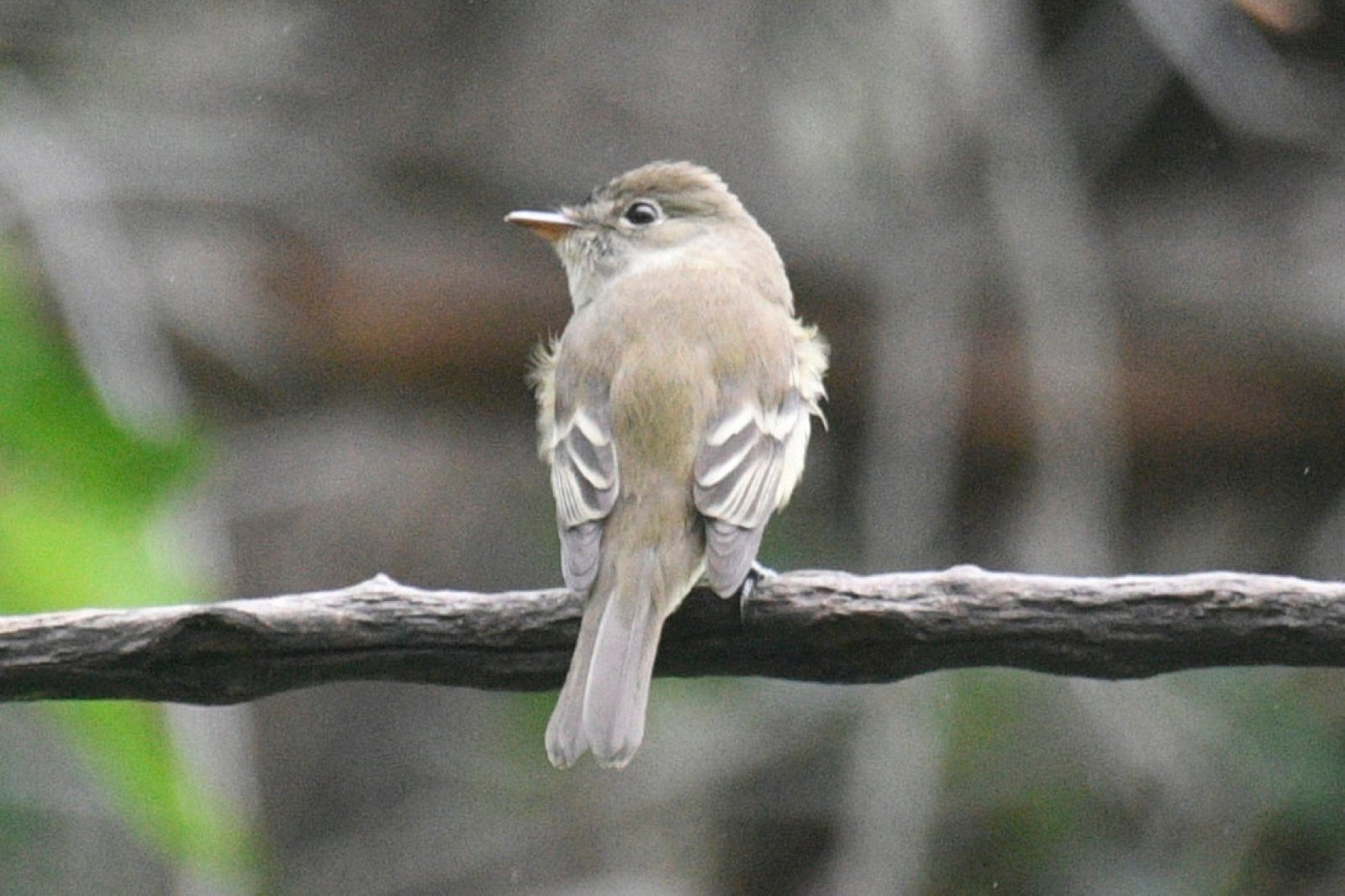
A small flycatcher, about 13 cm long. Look for these marks:
- dull grayish-olive upperparts
- a narrow whitish eye-ring
- two white wing bars
- a white throat and pale yellow belly
- an orangish lower bill and black legs
Unlike most Empidonax flycatchers it has only a faint pale eye-ring, a trait it shares with Willow Flycatcher.
Young birds are brighter olive above, with broader buffy wing bars and a wide white edge on the secondary feathers.
What it sounds like
Behaviour and diet
Migrants usually travel with Willow Flycatchers and pass through fast, rarely staying more than a day or two in one place. They usually stay near the ground.
Birds hunt by short, quick flights from a perch of a few metres at most, then return to the same area.
During the fall passage, adult Alder Flycatchers go through first, and most of the young birds arrive later.
Where it lives
In Costa Rica it uses forest edges, secondary forest, tree plantations, scrub, living fences, young regrowth and abandoned pastures, usually near the ground.
Fall migrants are most numerous in the Caribbean lowlands and across the Central Valley, and fewer pass through the Pacific lowlands. While migrating it sometimes climbs as high as 2000 m.
When to see it
It is a common fall migrant, passing from late August to early November. Records of it overwintering in the country are not confirmed.
Similar birds
Willow Flycatcher is practically impossible to separate in the field, though voice can help. In Costa Rica in fall Alder outnumbers it by roughly four to one, and birders often lump the two as Traill's Flycatcher. Quiet autumn birds are often best left unidentified. The resident White-throated Flycatcher is less likely to cause trouble: its rasping call is distinctive and it lives mostly in marshy places, such as lower areas below Irazú and Turrialba volcanoes in Cartago province.
Names and lore in Costa Rica
Costa Ricans call it Mosquerito de Charral. Charral means young scrubby regrowth, which matches the habitat it uses. Other countries use other names, such as Mosqueta Boreal in Argentina and Mosquero Ailero in Mexico.
Status and conservation
The AOCR lists it as a migrant (M), and Cornell lists its conservation status as Low Concern.
Photography tips
Watch for the short, quick sorties from a low perch, since the bird returns to the same area again and again. Scrubby edges and living fences where small flycatchers gather are good places to wait.
How we know this 10 sources, each read on the date shown
- Aves de Costa Rica read 2026-11-04
https://avesdecostarica.com/Empidonax-alnorum.html - Cornell Lab, All About Birds read 2026-11-04
https://www.allaboutbirds.org/guide/Alder_Flycatcher/overview - Wikipedia (Spanish) read 2026-11-04
https://es.wikipedia.org/wiki/Empidonax_alnorum - Wikipedia (Spanish) via Wikiwand read 2026-11-04
https://www.wikiwand.com/es/articles/Empidonax_alnorum - Animalia.bio read 2026-11-04
https://animalia.bio/es/alder-flycatcher - Birds for Beer read 2026-11-04
https://birdsforbeer.com/2022/04/06/white-throated-flycatcher-an-empidonax-flycatcher-resident-in-costa-rica/ - Birdfact read 2026-11-04
https://www.birdfact.com/birds/alder-flycatcher - Birdwatching Craft read 2026-11-04
https://birdingcraft.com/wordpress/2010/08/30/migrants-are-on-their-way-back-to-costa-rica/ - 10,000 Birds read 2026-11-05
https://www.10000birds.com/no-need-to-fear-the-flycatcher-in-costa-rica.htm - Avibase read 2026-11-05
https://avibase.bsc-eoc.org/species.jsp?avibaseid=33808812