Family Laridae
Heermann's Gull
Larus heermanni
In Spanish: Gaviota de Heermann
- A
An accidental Pacific gull: a sooty brown young bird far from home.
Heermann's Gull is not a bird to plan a trip around. The official Costa Rican bird list marks it A, accidental, so it is neither a resident nor a regular visitor here.
It still has a small place in the country's birding story. It was added to the official list in 2013, with photos as evidence, alongside two other gulls that were new that year. A first-year bird found in early March at a cruise ship dock was called the first documented sighting for Costa Rica, and local birders hired boats to reach it.
For a beginning birder, it is a good way to learn what a rare gull looks like, and why one turning up on the Pacific coast brings people out.
How to find it
Finding one is a matter of luck, not planning. The dock bird stayed well offshore, and birders got only distant views of a chocolate brown gull. Boat trips to the dock tip and the nearby buoys were how local birders reached it. A possible young bird at Chomes in 1985 was standing on a mudbank, so mudbanks are worth a look on the Pacific side. Watch gulls waiting near Brown Pelicans, and check plumage carefully, since a rare gull is easy to misjudge at a distance.
How to recognise it
Adults are easy to know:
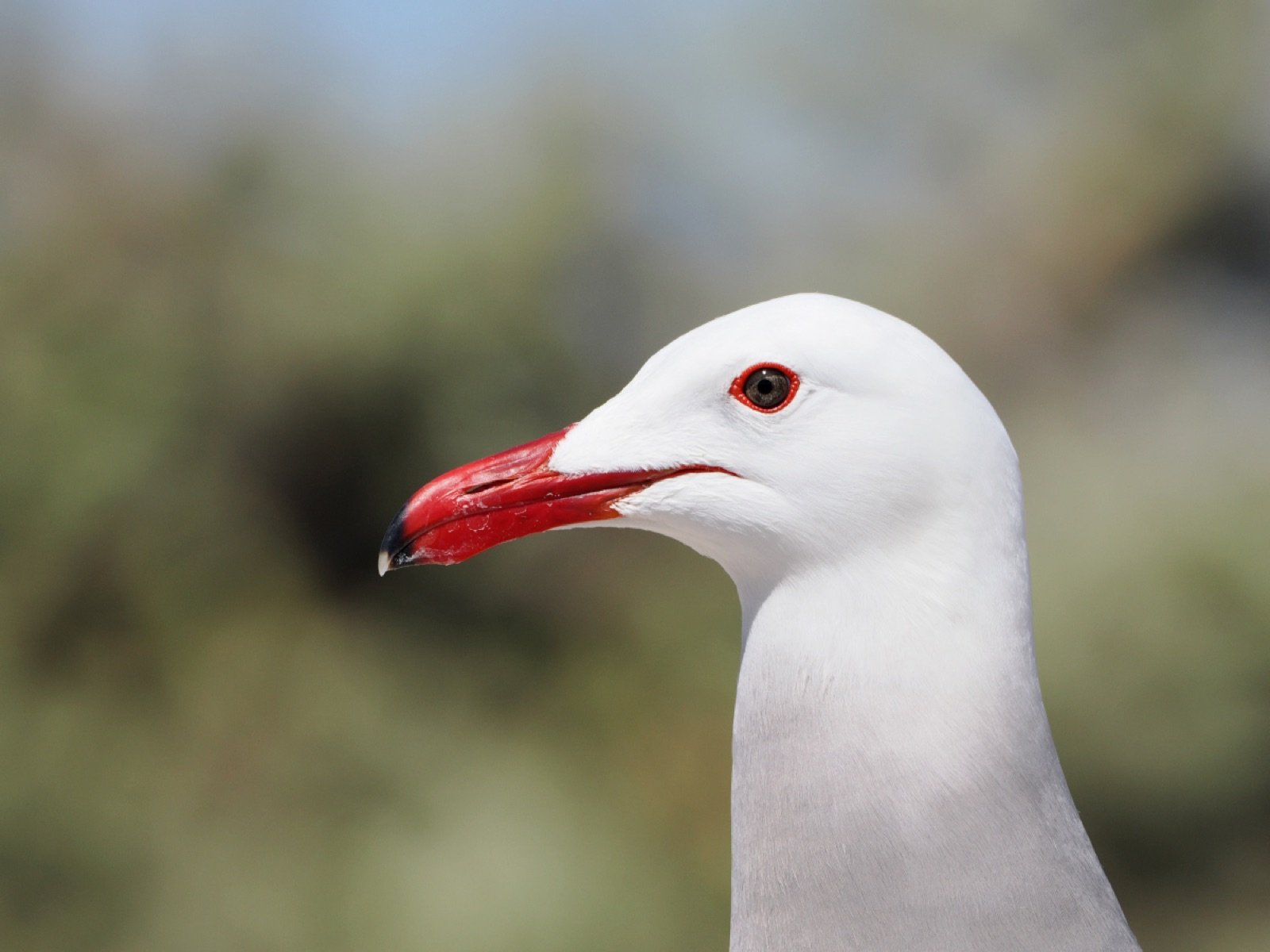
Breeding adults have a dark gray body, a white head, black legs and a red bill with a black tip.
Non-breeding adults look similar but have streaky heads.
No other gull on the North American west coast combines a white head with a gray body.
The plumage most likely to be seen in Costa Rica is the immature one. Immatures are very dark sooty brown overall, with little streaking or mottling, and a pale bill with a dusky tip.
It is a medium-sized, bulky gull, about 46 to 53 cm long, with long wings, a rounded head and a straight, fairly long bill.
What it sounds like
Behaviour and diet
Heermann's Gull feeds mainly on small fish taken near the water surface. It often chases other seabirds to steal their catch, and groups harass Brown Pelicans for fish in their pouches.
Birds often wait at the surface for a pelican to come up from a dive, then try to take fish from its pouch. The gull is small but aggressive toward other birds.
Where it lives
Across its range it favors the immediate coast: beaches, rocky shores, estuaries and coastal lagoons. It can also be far offshore, and it rarely visits inland ponds or dumps.
Almost the whole world population nests on Isla Rasa in Mexico's Gulf of California. Outside the breeding season it spreads along Pacific coastal waters from Mexico and the United States south to Guatemala. Costa Rica lies well beyond this normal range, which is why records here are so unusual. In Costa Rica it has turned up on the Pacific side, at Chomes and at Puntarenas.
When to see it
One Costa Rican source says the species may turn up mainly during the northern winter, though it gives no specific months. The one possible old record was on 6 December 1985, and the dock bird was found in early March.
Similar birds
A young Heermann's Gull in flight can look like a jaeger. Jaegers always show bold white patches in the wings, which this gull lacks. Other dark young gulls show heavy mottling, while Heermann's is a smoother sooty brown.
Names and lore in Costa Rica
The Spanish name on the Costa Rican bird list is Gaviota de Heermann, and one listing spells it Gaviota de Heerman. Elsewhere the species is also called Gaviota Mexicana, Gaviota Ploma and Gaviota Plomiza, but these are not specifically Costa Rican names.
Status and conservation
The official Costa Rican list marks Heermann's Gull A, accidental, and it was added in 2013 with photos as evidence.
Photography tips
The dock bird gave only distant views, so a long lens and a boat are what local birders relied on to get close.
How we know this 13 sources, each read on the date shown
- Lista Oficial de las Aves de Costa Rica (AOCR) read 2026-11-04
https://listaoficialavesdecostarica.wordpress.com/lista-oficial/lista-oficial-online/ - Wikipedia read 2026-11-04
https://en.wikipedia.org/wiki/List_of_birds_of_Costa_Rica - Aves de Costa Rica read 2026-11-04
https://avesdecostarica.com/Larus-heermanni.html - 10,000 Birds read 2026-11-04
https://www.10000birds.com/gullmania-in-costa-rica.htm - All About Birds, Cornell Lab of Ornithology read 2026-11-04
https://www.allaboutbirds.org/guide/Heermanns_Gull/id - Audubon Field Guide read 2026-11-04
https://www.audubon.org/field-guide/bird/heermanns-gull - Wikipedia read 2026-11-04
https://en.wikipedia.org/wiki/Heermann's_gull - iNaturalist Mexico (Aves de la Costa de Jalisco) read 2026-11-04
https://mexico.inaturalist.org/guide_taxa/78802 - Oiseaux-Birds read 2026-11-04
https://www.oiseaux-birds.com/card-heermann-gull.html - All About Birds, Cornell Lab of Ornithology read 2026-11-04
https://www.allaboutbirds.org/guide/Heermanns_Gull/sounds - Swartzentrover bird pages read 2026-11-04
http://www.swartzentrover.com/cotor/photos/hiking/birds/birdpages/HeermannsGull.htm - La Nación read 2026-11-04
https://www.nacion.com/ciencia/aplicaciones-cientificas/gaviotas-pato-y-ciguena-se-unen-al-club-oficial-de-aves-de-costa-rica/3GQALQQLMVHNFIHJR4ZYDIG2CU/story/ - Avibase read 2026-11-04
https://avibase.bsc-eoc.org/species.jsp?avibaseid=6996D540F05D2682