Family Bombycillidae
Cedar Waxwing
Bombycilla cedrorum
In Spanish: Ampelis Americano (Jilguero Chino)
- Migrant
Sleek, crested winter visitor, in big numbers only every 3 or 4 years
The Cedar Waxwing is a small, sleek bird with a swept-back crest and a bright yellow tail tip. In Costa Rica it is a sporadic winter visitor, arriving from December to April and in some years staying until mid-May.
Large numbers come only about every 3 or 4 years, mainly from the Central Valley southward. In other years few or none are seen, so this is a bird to enjoy if luck is with you, not one to count on.
On a trip we build, a fruiting tree in the central mountains or the Guanacaste lowlands is where we keep an eye out for a flock.
How to find it
Look for flocks of 5 to 20 birds high up. They visit fruiting trees, shrubs and epiphytes, especially in partly cleared areas, second growth and forest edges. Scan bare treetops, where they often perch between flycatching sorties. Listen overhead for the thin, high calls, since they call often in flight. Fruiting figs are worth checking in the northwest lowlands. Waxwings are also drawn to the sound of running water and like to bathe and drink in shallow streams, so a stream edge near fruiting trees is a good place to wait.
How to recognise it
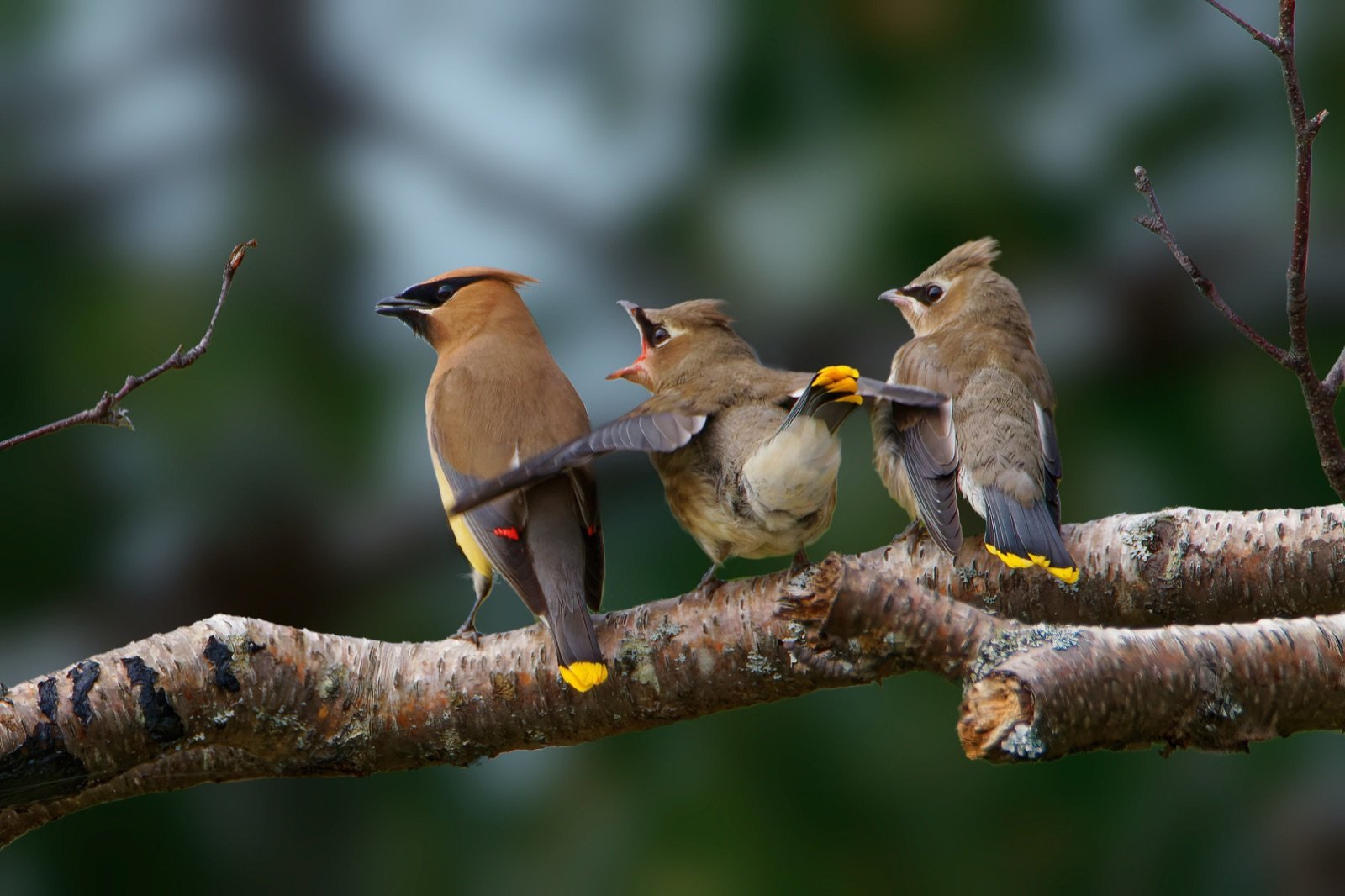
This is a small, sleek bird about 16.5 cm long.
Shape: a pointed crest swept back, a short thick bill, long wings and a fairly short tail.
Adults: a fawn-brown head and chest that fades to pale yellow on the belly, a grayish brown back, and slate gray wings, rump and tail.
Face and tail: a narrow black mask edged in white, with a black bill and legs. The tail tip is bright yellow and the undertail is white.
Young birds: a smaller black mask and streaked underparts. Some streaking can stay visible until January.
In flight: pointed wings and a short yellow-tipped tail stand out. Adults may also show small red waxy tips on the wing feathers.
What it sounds like
Recording: Steven J. Røste, CC BY 4.0, source, read 4 Nov 2026.
Behaviour and diet
Flocks often sit quietly for a while. Then they suddenly burst into calls and fly straight to another tree.
A bird will often perch on a bare treetop and make flycatching sorties from there, like a kingbird.
Across its range it eats berries and sugary fruits all year, and insects become important in the breeding season. Winter flocks are nomadic and follow fruit supplies, which helps explain why they appear in some places and years and not in others.
Where it lives
In Costa Rica it is mostly found between 500 and 2000 m, favoring the central mountains and the northern cordilleras.
It visits fruiting trees, shrubs and epiphytes, especially in partly cleared areas, second growth and forest edges.
In the northwest lowlands it is occasionally seen alone or in small groups. It can also turn up in the Central Valley region, as at Santa Barbara in Heredia.
When to see it
It shows up from December to April, and in some years it stays until mid-May. Young birds may still show some streaking until January.
Names and lore in Costa Rica
The Spanish name on the AOCR list is Ampelis Americano. Other Spanish names listed for it include Jilguero Chino, Chinito and Ampelis chinito.
Status and conservation
The AOCR lists it as M, a migrant, and the IUCN lists the species as Least Concern; in Costa Rica large numbers arrive only about every 3 or 4 years.
Photography tips
Bare treetops are the best bet, since the birds often perch there before flycatching sorties, and a flock feeding in a fruiting tree gives you time to watch. Check fruiting figs in the northwest lowlands.
How we know this 8 sources, each read on the date shown
- Aves de Costa Rica read 2026-11-04
https://www.avesdecostarica.com/Bombycilla-cedrorum.html - Área de Conservación Guanacaste (ACG) read 2026-11-04
https://www.acguanacaste.ac.cr/galerie/fotos/fauna-der-acg/26-fauna-del-acg/detail/406-fauna-del-acg?tmpl=component - Flickr (Costa Rica species account, Santa Barbara, Heredia) read 2026-11-04
https://www.flickr.com/photos/jobando/39767852615/ - Wikipedia en español (mirror) read 2026-11-04
https://es-academic.com/dic.nsf/eswiki/182217 - Wikipedia en español read 2026-11-04
https://es.wikipedia.org/wiki/Bombycilla_cedrorum - iNaturalist guide (Birds of Fort Bowie NHS) read 2026-11-04
https://mexico.inaturalist.org/guide_taxa/186446 - iNaturalist (Wikipedia text) read 2026-11-04
https://www.inaturalist.org/taxa/7428-Bombycilla-cedrorum - iNaturalist Mexico read 2026-11-04
https://mexico.inaturalist.org/taxa/7428-Bombycilla-cedrorum