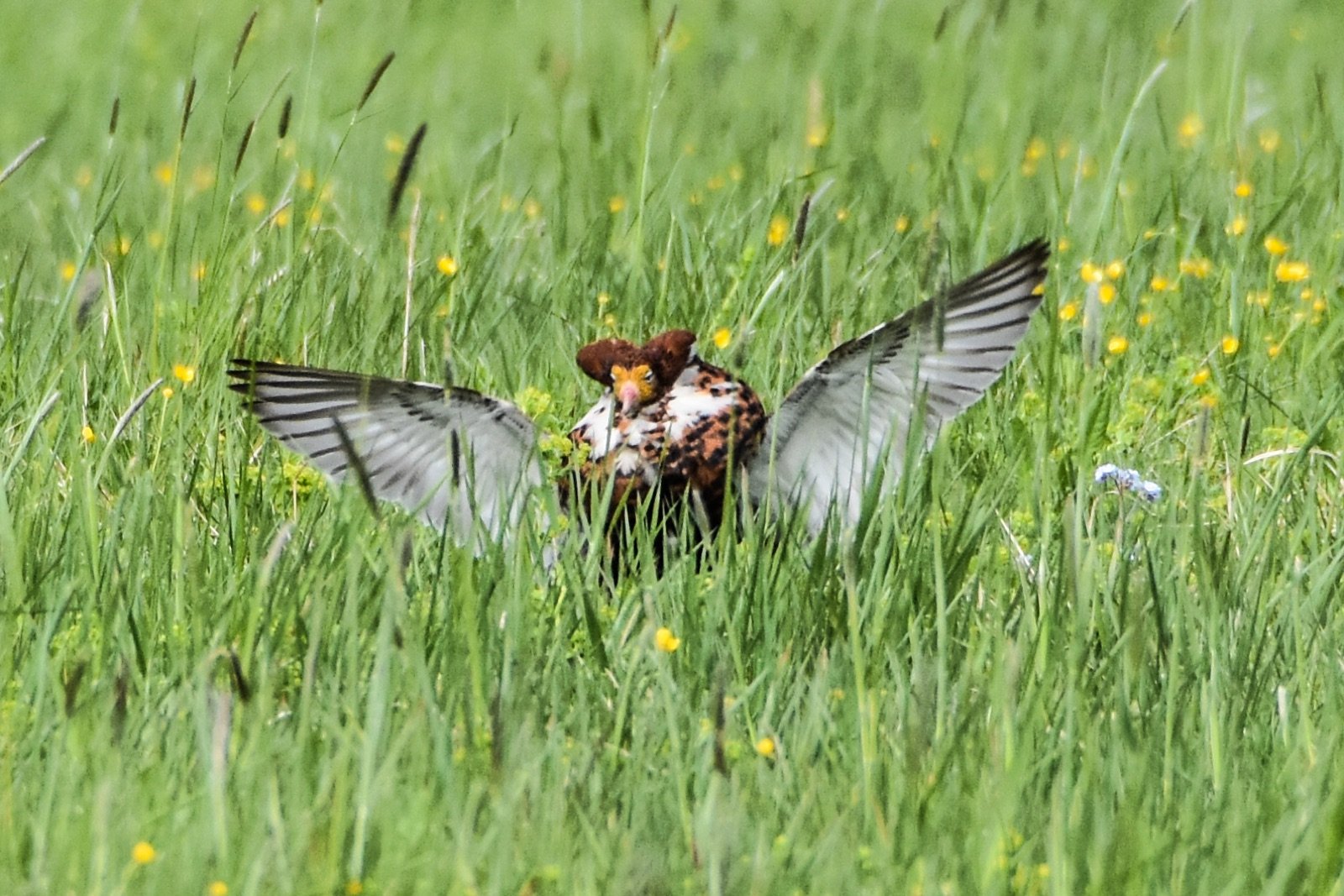
Family Scolopacidae
Ruff
Calidris pugnax
In Spanish: Combatiente
- Migrant
A pot-bellied sandpiper photographed once in Costa Rica, in Guanacaste rice fields.
The Ruff breeds across northern Eurasia and has only wandered to Middle America. In Costa Rica it is a vagrant, and the AOCR list gives it the status code M. This is a bird to know about, not one to plan a trip around.
The first photographed record came on 5 November 2019, in flooded, muddy rice fields near the Taboga Forest Reserve, Guanacaste. The bird stood with other small sandpipers, exactly where a patient observer would need to look.
Before that, the country had only two old reports from Chomes on the Gulf of Nicoya, with no photo, specimen or date. The species sat on the list of unconfirmed birds until that November.
How to find it
Check flooded rice fields and other shallow, muddy wetlands, starting in Guanacaste where the one photographed bird was found. Seasonal wetlands like these draw migratory and resident birds, so they reward patient scanning. Go through each flock of small sandpipers slowly. Pick out a Ruff by its shape, even in plain plumage: small head, long neck and rounded body. Then check leg colour and compare its size with the birds around it.
How to recognise it
Look at the shape first. A Ruff looks pot-bellied, with a small head, a medium-length bill, a longish neck and a heavy body.
The birds a visitor to Costa Rica would meet are in non-breeding plumage:
- grey-brown upperparts
- mostly white underparts
- grey mottling on the breast and flanks
Legs are pink to orange in adults and dark greenish in juveniles. Males are clearly larger than females, so size can vary from bird to bird.
Behaviour and diet
Ruffs forage in wet grassland and soft mud, probing or picking items by sight. They eat mostly insects, but on migration and in winter they also take plant food such as rice and maize.
The Costa Rican bird stood with other small sandpipers rather than alone, a useful reminder to work through flocks of small shorebirds one bird at a time. The same observer found it again at the same rice fields on 7, 8 and 14 November 2019, so it stayed in the area for at least about a week.
Where it lives
Outside the breeding season, Ruffs use shallow wetlands such as irrigated fields, lake edges and flooded land. They use dry grassland, tidal mudflats and the seashore less often.
In Costa Rica the one photographed bird was in flooded rice paddies in Guanacaste. Rice fields near Taboga turn into seasonal wetlands, which give food and shelter to both migratory and resident birds, including this rare visitor.
When to see it
The only photographed Costa Rican record was made on 5 November 2019, with the same bird seen again on 7, 8 and 14 November. No regular season is given for the species in the country.
Similar birds
In plain winter plumage a Ruff looks like a Sharp-tailed Sandpiper, but it is much larger and longer legged, and looks big-bellied with a small head. Buff-breasted Sandpiper is smaller and browner, and lacks the white patches on the rump and the wing bar. Pectoral Sandpiper is smaller, with a sharper breast streak band and no pot-bellied shape. Yellowlegs have brighter yellow legs and a slimmer build.
Names and lore in Costa Rica
The official Costa Rican Spanish name is Combatiente, the name most Spanish-speaking countries use. Venezuela uses Rufo, and Mexico and Peru also use Playero Combatiente. The Latin name Philomachus means a lover of fighting, and both Combatiente and the species name pugnax point to the fighting dances of breeding males.
Status and conservation
The AOCR list gives the Ruff the status code M; in Costa Rica it is a vagrant, while worldwide it is Least Concern because very large numbers breed in Scandinavia and the Arctic.
Photography tips
Shape is the quickest way to pick out a Ruff, even in plain plumage: small head, long neck and rounded body. Scan each flock of small sandpipers slowly, then compare size and leg colour with the neighbouring birds.
How we know this 13 sources, each read on the date shown
- Zeledonia (Astorga Acuña 2020) read 2026-11-04
https://www.zeledonia.com/uploads/7/0/1/0/70104897/calidris_pugnax.pdf - Dialnet (Zeledonia article summary) read 2026-11-04
https://dialnet.unirioja.es/servlet/articulo?codigo=7604772 - Wikipedia read 2026-11-04
https://en.wikipedia.org/wiki/Ruff_(bird) - New Zealand Birds Online read 2026-11-04
https://www.nzbirdsonline.org.nz/species/ruff - Bird Identifier read 2026-11-04
https://birdidentifier.com/encyclopedia/ruff - Lista Oficial de las Aves de Costa Rica (AOCR) read 2026-11-04
https://listaoficialavesdecostarica.wordpress.com/lista-oficial/lista-oficial-online/ - Birds Colombia read 2026-11-04
https://birdscolombia.com/2019/09/18/combatiente-ruff-calidris-pugnax/ - Mitochondrial genome paper, PMC read 2026-11-04
https://www.ncbi.nlm.nih.gov/pmc/articles/PMC7510813/ - Thai National Parks (Ruff summary) read 2026-11-04
https://www.thainationalparks.com/species/ruff - NaturaLista Colombia (IUCN data) read 2026-11-04
https://colombia.inaturalist.org/taxa/339593-Calidris-pugnax - DocNatureBlog read 2026-11-04
http://docnatureblog.blogspot.com/2020/10/un-ave-limicola-con-un-peculiar-y.html - Avespedia read 2026-11-04
https://avespedia.com/combatiente-calidris-pugnax/ - Avibase read 2026-11-05
https://avibase.bsc-eoc.org/species.jsp?avibaseid=2DABF98FBEEAB7BB